The Ministry of Internal Affairs and Communications (MIC) has drafted changes to the filings that telecom operators designated under Japan's critical-infrastructure regime make when they introduce key equipment or hand its critical maintenance to another company. The draft would give the intermediaries that sit between an operator and its equipment supplier their own section in the introduction-plan form and add corporate numbers to their entries. The current form already asks for intermediary details within the plan's contents. The draft would take effect on 12 January 2027 if adopted, and comments are open from 1 to 31 October 2026.
The draft accompanies the start of some provisions of Act No. 38 of 2026, which amends the Economic Security Promotion Act and the Japan Bank for International Cooperation Act. MIC describes the aim as improving the items and procedures for filings under the critical-infrastructure system.
Intermediaries and corporate numbers
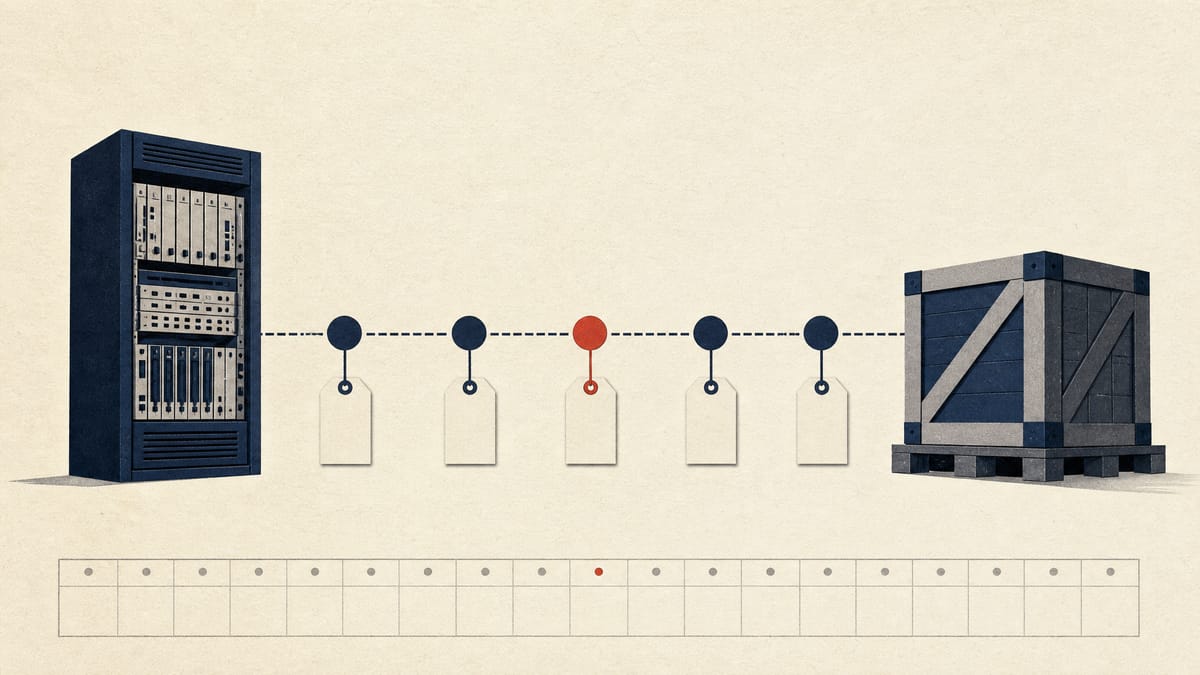
For introduction plans, the draft sets out the "persons involved in introduction" as a separate section: parties that handle the equipment between the supplier and the operator. The draft covers two kinds. One is a party placed between operator and supplier with an important role, such as managing the equipment's supply chain. The other is a party that checks whether cybersecurity measures have been carried out and could alter the equipment's function. Each would be listed with its name, representative, address, corporate number, country or region of incorporation and its role in the introduction. The current form asks for the same details except the corporate number.
Corporate numbers would also be added for equipment suppliers, component suppliers, maintenance contractors, subcontractors and the holders of 5% or more of a supplier's voting rights. The current text already asks for each holder's name, the country or region of incorporation (or nationality, for an individual), voting share and confirmation date. The form leaves the corporate-number field blank for individuals and for companies without a number.
The draft also adds to the "important changes" that must go through the proposed-change filing: additions of equipment suppliers, component suppliers, subcontracting counterparties and intermediaries. A change in an intermediary's address is listed as a minor change.
Longer windows
In the introduction-plan form, the date on which a supplier's 5% shareholders' voting ratios are confirmed could fall up to six months before filing. The current text says two months. Most supporting documents without a validity period could be dated up to six months before filing, up from three. The draft sets the same six-month wording in the maintenance-outsourcing plan form, whose current text specifies no look-back for the voting ratio.
Succession and cloud
A new provision covers mergers, company splits and business transfers. For the messaging-service designation test, which asks for 60 million or more average monthly users in the previous year and use for national or local government business, the transferred business's user record would count for the successor and be deducted from the transferor.
On cloud services, the draft would let filers record a cloud service's region in place of a prefecture, and would require the provider's name next to the location of any cloud service or data center used. The form notes for ISMAP-registered cloud services, the government's cloud-security registration scheme, read the same in the current and proposed text. They ask for the service's name and function, and let filers omit the supplier-ownership and related sections.
Timetable
Comments must be in Japanese and arrive by 31 October, including by post. MIC prefers submission through e-Gov, accepts email and mail, and asks for a summary of any comment over 1,000 characters. MIC says it will move quickly on the amendment procedures once comments are in. The press release gives no date for finalisation.