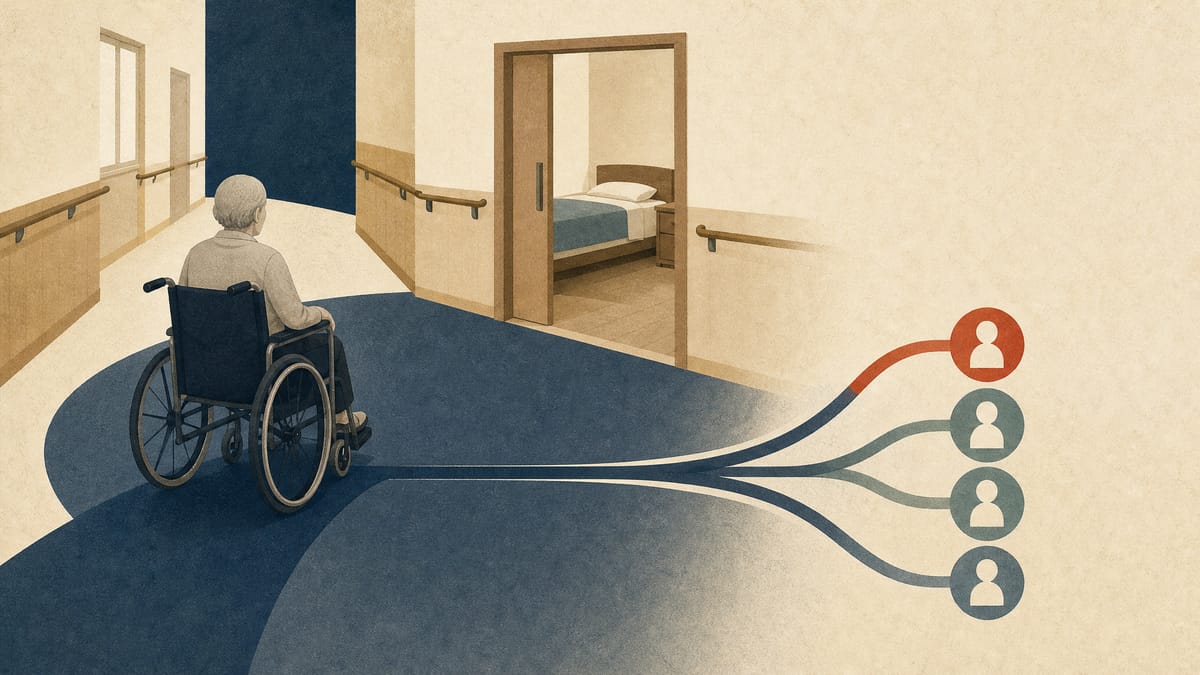
Japan's health ministry has published draft rules that would make some fee-based elderly homes register with their prefecture and bar them from tying residents to affiliated care providers. The Ministry of Health, Labour and Welfare's elderly support division is taking public comment from November 13 to December 13, 2026. Promulgation is planned for late December 2026 and enforcement for December 1, 2027.
Who must register
The amended Act on Social Welfare for the Elderly introduces prefectural registration for homes that take in residents with moderate-to-severe care needs, where the need for resident protection is judged highest. The draft ordinance fills in the standards. A separate cabinet order, planned for promulgation in December 2026, defines the care-need categories that trigger registration.
What the standards say
On contracts, a registered home could not require residents to use care, medical, home-visit nursing or pharmacy providers that are adjacent, affiliated or partnered with it. It could not force changes of family doctor or care manager, or offer rent discounts for using those providers. It also could not impose terms such as changing a resident's room or ending the contract without agreement because of hospitalization or a change in condition.
On staffing, homes would need at least one manager and one life counsellor, a staffing structure that does not hinder stable care, and night and emergency cover by on-site staff or an on-call arrangement. On facilities, rooms would be single occupancy in principle, with at least 13 square metres per resident. Corridors would have to allow safe wheelchair movement. Existing buildings that cannot comply could use alternative measures, explained to residents, under a transitional exception for the time being.
The operating rules target what the ministry calls "kakoikomi", the practice of confining residents to the operator's own services. Homes would have to keep home-care support offices' contracts and care managers independent of the residence contract, tell residents about nearby care providers, and keep the home's accounts separate from those of related care businesses. They could not set referral-agency fees by a resident's care level or medical need in a way that might be read as encouraging improper use of social security money.
Applications and exits
Applicants would file a business plan, a contract template, financial statements and an explanation of how care management stays independent. Homes already designated for specified-facility care or registered as senior housing with services could file less, using their existing designation or registration numbers. Operators closing or suspending a home would have to notify residents by the day 30 days before the stop date.
A related cabinet order
A second draft, a cabinet order from the ministry's dementia policy and community care division, takes comments to December 12. It adds two service types created by the amended law, registered facility care support and care prevention support. It extends related provisions in several welfare laws and sets transition periods for existing home-care support providers. Promulgation is planned for mid-January 2027 and enforcement for December 1, 2028.
Comments must be in Japanese, with reasons, through the e-Gov portal, email or post.