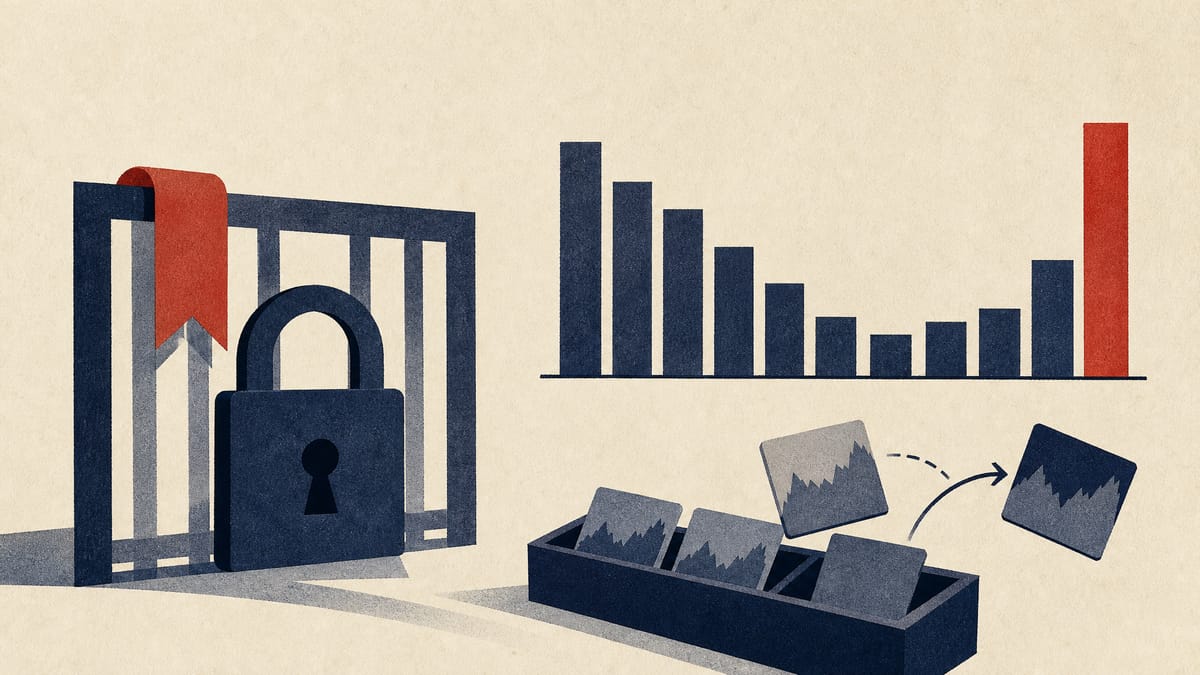
Unauthorized trades in Japanese internet brokerage accounts climbed to 139 in October from three in September, according to the Financial Services Agency's latest update to its warning on unauthorized access and trading. The figures, posted on 13 November 2026, show a fresh rise after a quiet summer.
October breaks the lull
The agency's monthly table counts unauthorized access attempts that got into accounts, and the subset that went on to trading. Access cases fell to 18 in July, then ran at 42 in August and 43 in September. In October they reached 168.
Trades followed the same path: five in July, 25 in August, three in September and 139 in October. The number of securities firms hit rose to ten in October from three in September. The amounts sold inside victim accounts were about ¥4.8bn in October, against about ¥0.2bn in September, and purchases were about ¥3.2bn.
Still well below the spring 2025 peak
The worst month in the series was April 2025, with 5,490 unauthorized accesses, 3,033 unauthorized trades and about ¥162.5bn of sales inside affected accounts. Sixteen firms reported unauthorized trading in May 2025, the most in any month. Since the series began in January 2025, the table totals 19,427 unauthorized accesses and 10,782 unauthorized trades, with about ¥441.9bn of sales and ¥386.9bn of purchases.
What the amounts mean
The FSA attaches three caveats. The figures are provisional, based on the date each incident occurred and on reports from securities firms so far, and further cases may not yet be known. Sale and purchase amounts are summed within affected accounts, so repeated trading in one account accumulates. They do not equal customer losses.
The agency describes the usual pattern: a third party gets into an account, sells the holdings, and uses the proceeds to buy small-cap stocks, in Japan and abroad, that then stay in the account. The page says the stolen login IDs and passwords come from phishing sites imitating real brokers. The table gives no breakdown by firm and no customer loss figure.
What the FSA tells customers
The agency says this can happen at any brokerage. It tells investors not to open links in emails or text messages, even from familiar senders, and to reach their broker through a bookmarked address. It also asks them to switch on multi-factor authentication and notifications, avoid reusing passwords, and check accounts often. It notes that brokers are moving to make phishing-resistant multi-factor methods such as passkeys mandatory, and asks customers to enable them as soon as they are offered.