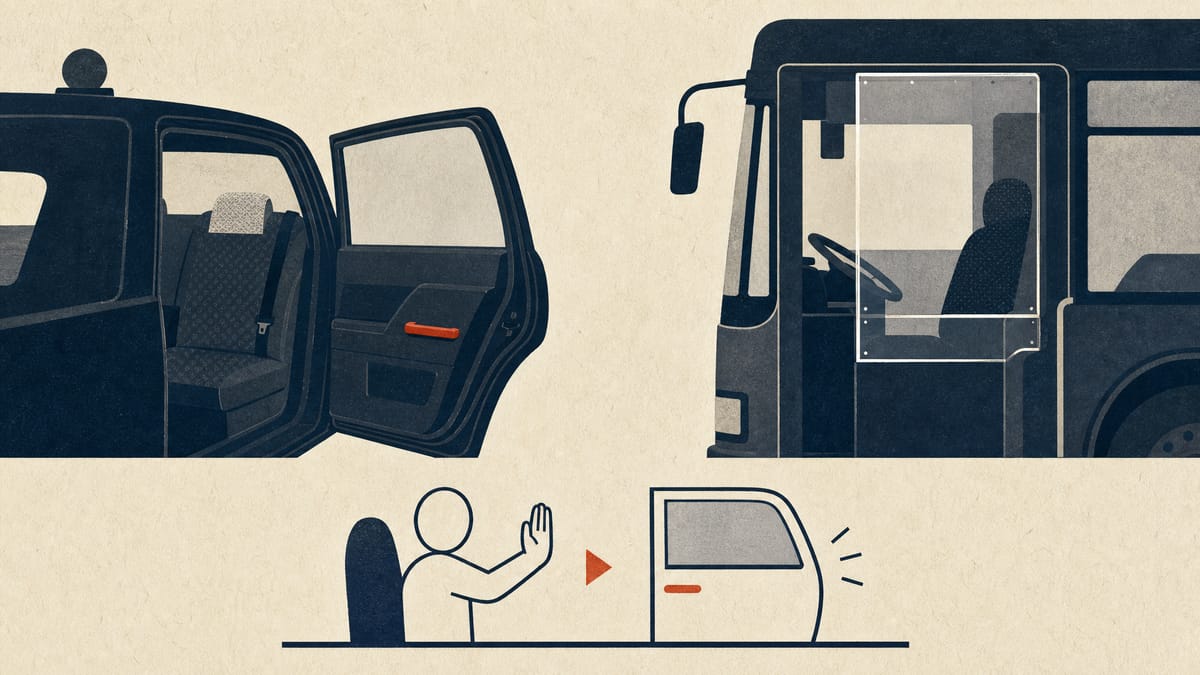
Japan's transport ministry wants taxi and bus passengers to know that abusing the crew can cost them the ride. The Logistics and Automobile Bureau opened public comment on 5 October on a draft notice that would amend the standard carriage terms for taxis, route buses and charter buses. Comments are due by 5pm on 3 November.
What the draft adds
The ministry's overview says each of the three sets of terms would gain new provisions. Passengers would be asked to refrain from customer harassment toward drivers and other crew. Crew could ask a passenger to stop. If the passenger does not comply, the operator could refuse to accept the carriage or to continue it. The overview also provides for other necessary amendments but does not itemise them.
The terms in question are the standard terms for general passenger car transport (taxis), general route buses and general charter buses. They are published under Article 11, paragraph 3 of the Road Transport Act.
Why now
The trigger is a labour law change. An act amending the Labor Policy Comprehensive Promotion Act and related laws (Act No. 63 of 2025) took effect on 1 October 2026. It requires employers to take employment-management measures, including deterrence, against customer harassment. The ministry defines the term as words or actions by customers, counterparties, facility users or others connected to the business that exceed what is socially acceptable given the nature of the work and harm workers' environment.
The ministry says the point of amending the terms is to make clear to users that such conduct is not tolerated. The overview does not spell out what conduct would trigger a refusal beyond that statutory definition.
Timing and how to respond
The ministry's schedule is for promulgation and enforcement on 1 December 2026, a date it labels as planned. That leaves less than a month between the close of comments and the target date.
Submissions can go through the e-Gov form, by email to the passenger division's comment desk, or by post to the ministry in Kasumigaseki. Telephone comments are not accepted. The ministry says it will use the comments as reference material but will not reply individually. It may publish the name of a submitter, though a person may ask to stay anonymous when submitting. The ministry's passenger division handles inquiries.
The invitation PDF prints the comment period as running to 3 November of Reiwa 7, a year before the period starts. The e-Gov listing gives 3 November 2026, which this article uses.