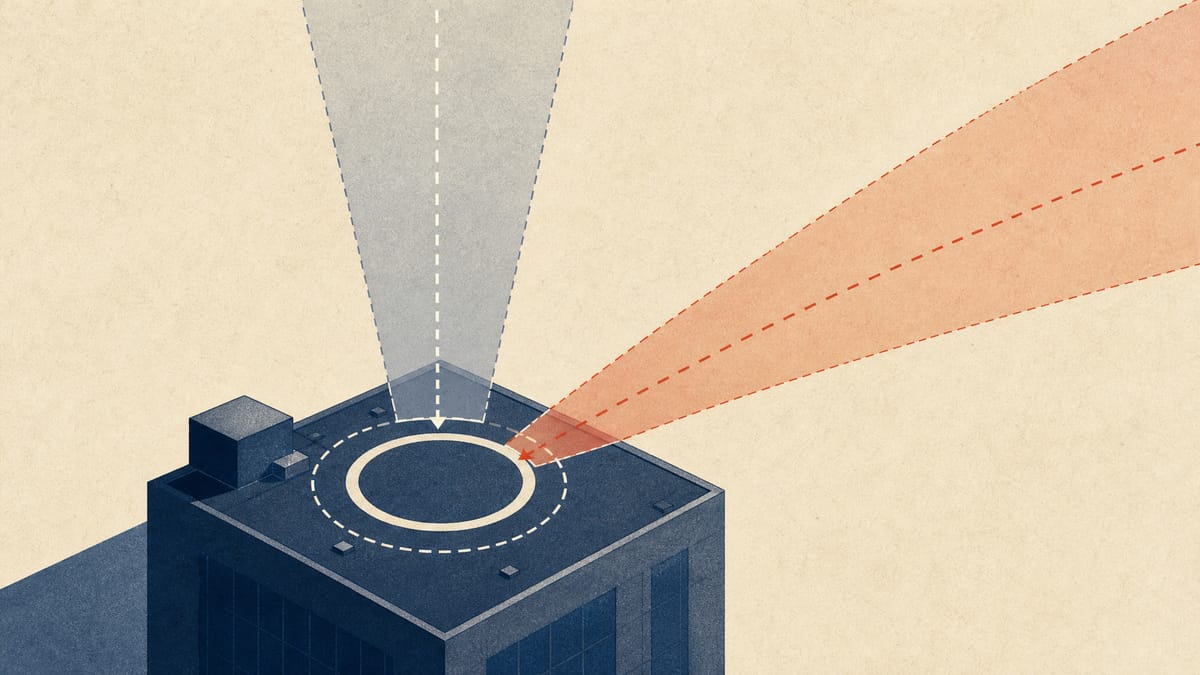
Japan's Ministry of Land, Infrastructure, Transport and Tourism (MLIT) has opened public comment on draft changes that make vertiport design more flexible and write that flexibility into the permit process for flying-car landings away from airports. Comments run from 9:00 on 18 November to 17:00 on 18 December 2026, and must arrive by then. The draft sets planned application from January 2027.
Three texts are in play: the Vertiport Development Guideline, the Regional Civil Aviation Bureaus' processing standards for off-site takeoff and landing permission, and the fourth operations-information chapter of the Aviation Safety Services Processing Rules. The guideline is interim guidance issued in December 2023, because international standardisation was not expected until around 2028. Until domestic standards exist, flying-car landings are allowed through permission under the proviso to Article 79 of the Civil Aeronautics Act.
What the guideline draft changes
The draft makes the transitional surface optional. Operators would need at least one Protected Side Slope, unless they set a transitional surface. The draft still requires a transitional surface when a lateral-movement procedure is needed immediately after takeoff or during final landing. It defines that procedure as a sideways shift during vertical climb or descent to keep the landing surface in view.
The draft adds a second slope design category for shortened approach surfaces. Under it, the approach surface runs 245m immediately after takeoff and 830m in a second section, 1,075m in total, against 1,220m in the existing table; gradients are 1/12.5 and 1/6.25. The draft rounds the 152.5m end height to 152m.
Approach and departure paths would normally stay in the same direction. They may cross at less than 135 degrees, or the approach may be one-way, only after a safety evaluation finds no serious effect on safety and regularity. The vertiport manager would carry out that evaluation with the operator, covering airspace and terrain, obstacles, aircraft performance and operating conditions, and weather. The existing text leaves how to judge such cases to later work.
The draft also appends a Housing Bureau view on rooftop vertiports under the Building Standards Act. Whether a rooftop pad counts as a building or a structure changes what the developer must do. The text says a specific plan is judged by the designated administrative body according to actual use.
Permit rules and the discretion clause
The permit standards would carry over the Protected Side Slope exemption when a transitional surface is set and the revised lateral-movement wording. They would also allow approach and departure paths to cross at less than 135 degrees, or the approach to be one-way, where operational safety is not seriously affected. The Aviation Safety Services Processing Rules gain a clause letting the heads of the Safety Policy Division or the Unmanned Aircraft Safety Division set procedures separately. MLIT's explanatory note says flying cars differ from conventional aircraft and are still in development, so existing permit criteria may be hard to apply.
The drafts do not certify any aircraft, operator or site. The existing Article 79 permit criteria require that use of the site be unavoidable for the flight purpose and that the site meet the listed standards. The new clause lets the division heads set application handling separately, notwithstanding the existing criteria. Permission does not give land-use rights: where a site is on someone else's land, the owner's or manager's consent is needed, and the applicant's authority to use the land is checked.
MLIT will not answer comments individually. Submissions go through e-Gov, email or post, in Japanese. The submitter's name may be published, and anyone who wants anonymity or non-publication of the comment should say so when submitting.
| Item | Detail |
|---|---|
| Comment window opens | 18 November 2026, 9:00 |
| Comments due | 18 December 2026, 17:00 (must arrive) |
| Planned application | January 2027 |
| Legal basis | Article 79, Civil Aeronautics Act |