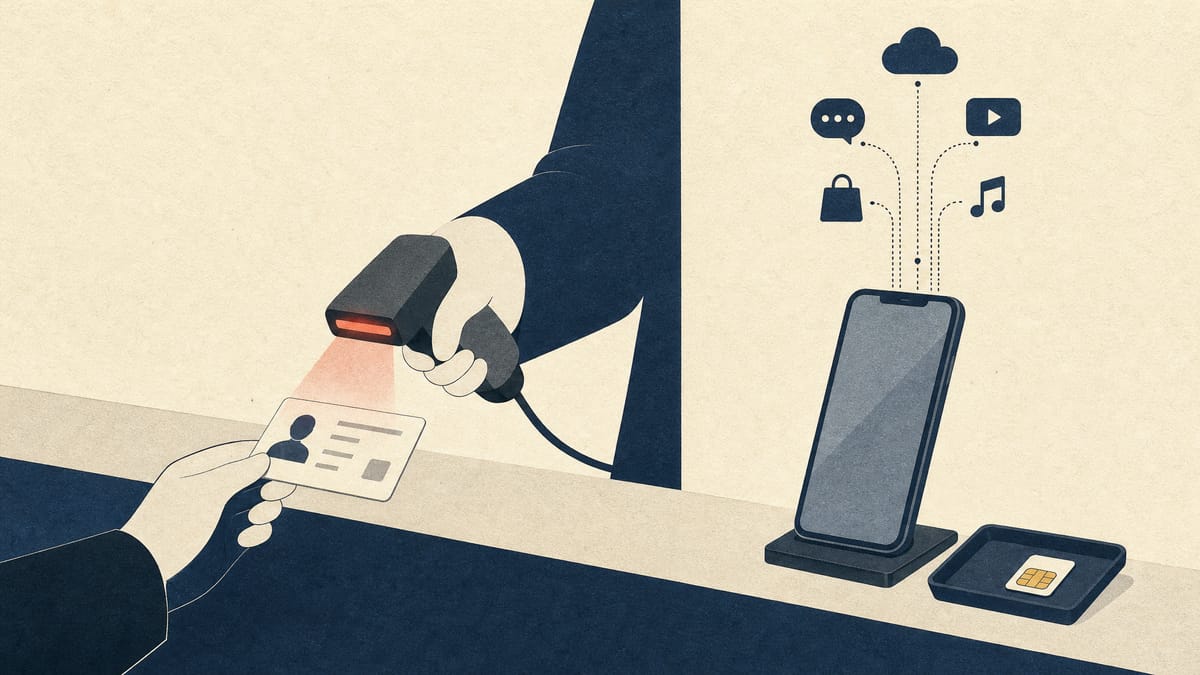
Japan's ID-check regime for mobile contracts is being widened from voice to data services, and the government is now asking for comment on the cabinet order that tidies up around it. The comment period runs from November 20 to December 21, 2026. The order is scheduled to take effect on April 1, 2027, the day the amended law starts.
What the law changed, and what the order does
The change in coverage comes from the statute, not from the draft order. Act No. 25 of 2026 amends the law on identity checks and prevention of unauthorized use of mobile voice services. The Diet passed it on May 22 and it was promulgated on May 29. It adds mobile data communication services to the services for which providers must verify customers at contract signing, because misuse of telecom services for mobile terminals has become more varied and sophisticated, according to the comment guidelines.
The draft order is a set of consequential amendments. It changes three existing instruments:
- the order listing the crimes specified under Article 8(1)(2) of the law;
- the order naming the laws covered by the Whistleblower Protection Act annex;
- the National Police Agency organisation order.
The law's title drops the word "voice" and refers to mobile communication providers and services. The order listing offences is retitled to match. In the other two instruments the draft changes the references: entry 408 in the whistleblower order and the wording of the police officer's duties now use the new law title. The officer is the investigation support analysis manager, who handles prevention of unauthorized use of mobile services under the law.
The crime list
The substantive edits are to the list of crimes specified by cabinet order. The current list includes offences under the Penal Code, drug laws, the moneylending law and the organized crime law. The draft adds two groups of offences:
- Article 11, and Article 12 items 1, 2 and 4, of the law prohibiting unauthorized computer access;
- Articles 26 to 31, and Article 32 paragraphs 1 to 3, of the law on prevention of transfer of criminal proceeds.
It also extends the existing organized-crime entry to cover Articles 10 and 11 of that law. These offences are defined in other statutes; the order only lists them for the purposes of Article 8(1)(2) of the mobile law. The draft does not say what the listing triggers.
| Step | Date |
|---|---|
| Amending law (Act No. 25 of 2026) passed | May 22, 2026 |
| Amending law promulgated | May 29, 2026 |
| Comment period opens | November 20, 2026 |
| Comment period closes | December 21, 2026 |
| Draft order and amended law take effect | April 1, 2027 |
Who can comment, and how
Comments must be in Japanese. Submissions of more than 1,000 characters need a summary, and each comment should name the part of the draft it addresses. Filing is through the e-Gov form, by email, by post or by fax. Postal comments count if postmarked by the deadline, and individual replies will not be given.
The Ministry of Internal Affairs and Communications' usage environment division and the NPA's investigation support analysis manager jointly handle the consultation, and the other office will be informed of a comment sent to either. Providers that would be newly covered for data services have until December 21 to say whether the drafting works for them.