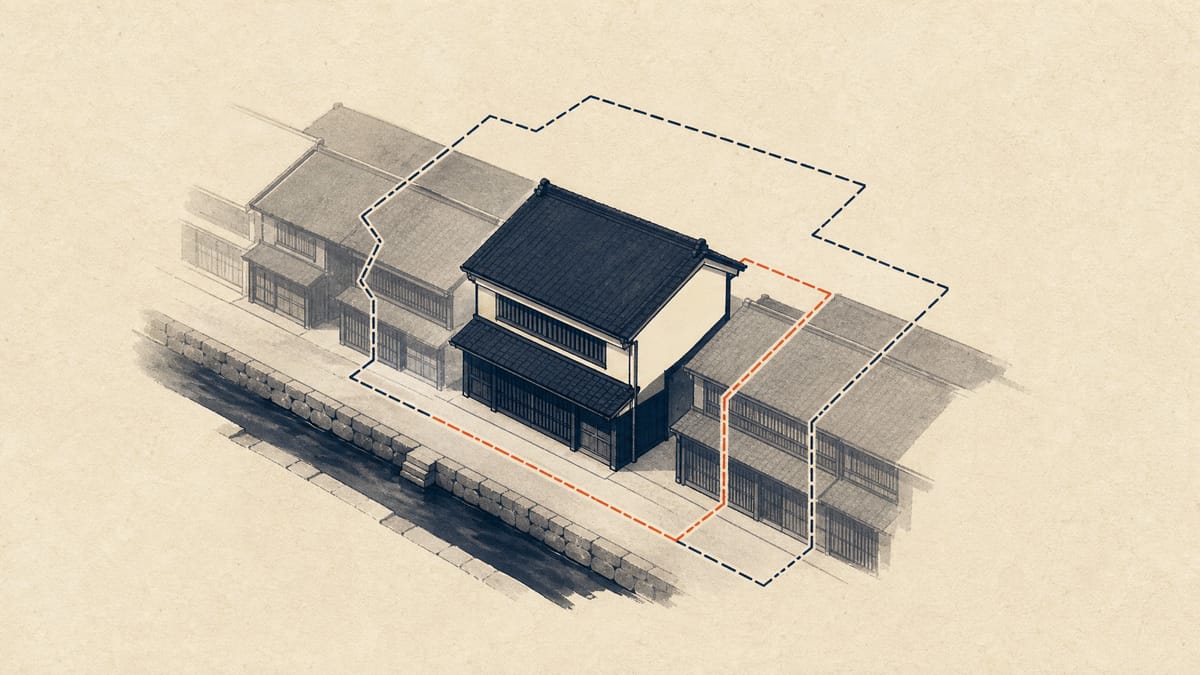
Japan's culture, agriculture and land ministries are asking for public comment on a draft revision to the national policy that governs municipal historic-townscape plans. The draft widens the cultural properties that can anchor a plan's priority zone, and attaches conditions to some of the additions. Comments are open from 29 September to 18:00 on 28 October 2026.
What the draft changes
The policy implements a law that defines "historic character" as the good urban environment built up by people's activities reflecting a locality's own history and tradition, together with historically valuable buildings and the surrounding streets. Under that law, a municipality drafting a plan must designate a priority zone, and the zone must meet set requirements tied to protected cultural property.
The ministry summary says the amended law enlarged the types of cultural-property buildings that qualify. Added were important cultural landscapes, nationally registered tangible cultural properties, registered tangible folk cultural properties, registered monuments and cultural properties designated by local governments. The draft policy writes these into its chapter on setting priority zones. The existing text anchored a zone on designated important cultural property buildings and important preservation districts for groups of traditional buildings.
Conditions on the additions
Two limits apply. Nationally registered tangible cultural properties qualify only if they have also been designated important landscape buildings under the Landscape Act, which the summary describes as a way to secure protection for the building as the core of the historic character.
The second limit is a certification test. The ministry summary says that where a priority zone includes the newly added types, the plan must show at certification that the core cultural property is the core of the area's historic character. The full revised policy applies that test to registered cultural properties, preservation districts for groups of traditional buildings designated by town plan or ordinance, and buildings and cultural landscapes designated by local governments. It excludes land in nationally selected important preservation districts. The ministers certify plans against the policy, so the wording sets the standard municipalities will be held to.
Coordination with heritage plans
The draft also adds a line on cultural property conservation and utilization regional plans under the Cultural Properties Protection Act. A municipality that has made or is making one, and applies for certification of a historic-townscape plan, is asked to coordinate the two, including by aligning their content.
Timing
The summary gives the schedule as promulgation and enforcement in late November 2026, on the date the amended law takes effect. The amended law, Act No. 23 of 2026, amended the Urban Regeneration Special Measures Law and other statutes and was promulgated on 27 May 2026. The draft notice leaves the enforcement day blank. The notice does not say how many municipalities hold plans or could newly qualify.