Web View
Ueda says the BoJ will keep raising rates, JT expects a ¥1.377tn Russia loss, Anthropic prices at $83
Ueda says the BoJ will keep raising rates from around 1.25%, JT expects a ¥1.377tn Russia loss on units it still legally owns, and Anthropic's Japan tranche prices above range. Heavy numbers, early.
MARKETS
Market pulse
Tokyo equities softened while the 10Y JGB yield nudged lower.
Sourced from Nikkei, JPX, BOJ, MOF - values, not commentary.
TSE Prime investor flows
| Investor | Week ending |
|---|---|
| Foreign net flow | −¥306.4bn |
| Individual net flow | −¥354.6bn |
| Trust-bank net flow | +¥389.3bn |
Japan Exchange Group, investor-type weekly trading value (TSE Prime)
lead
Ueda Keeps the Rate Path Open
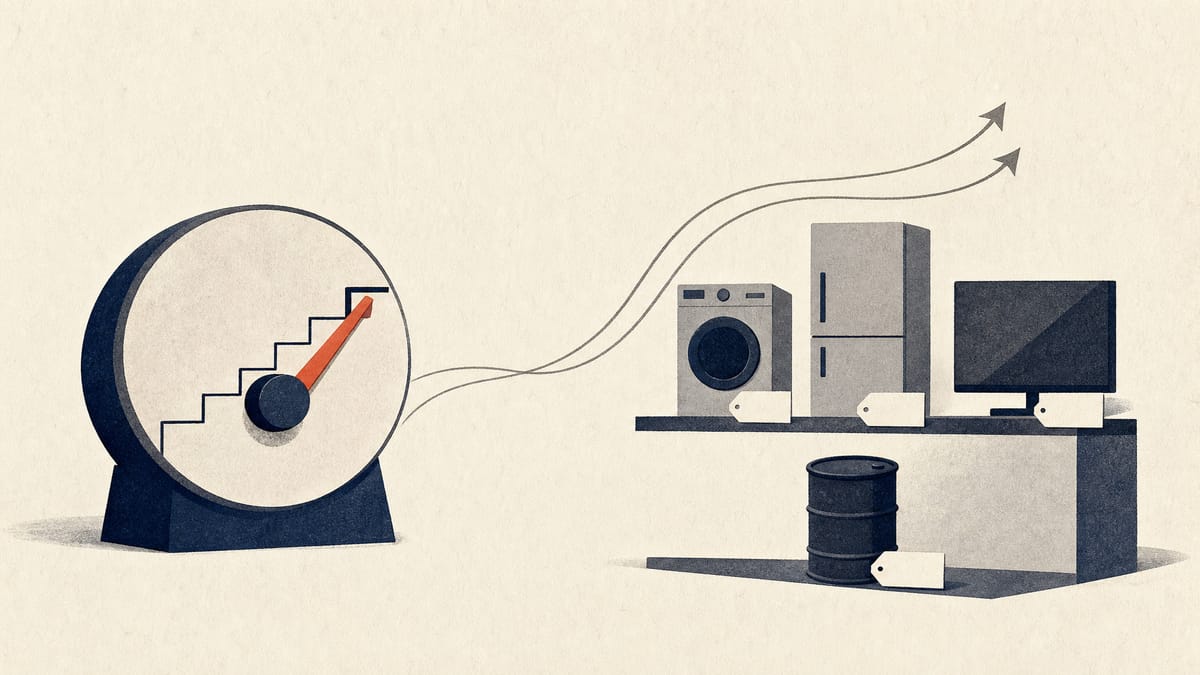
Ueda tells senators the BoJ will keep raising rates, citing upside inflation risk
Governor Kazuo Ueda told the Senate Committee on Financial Affairs on 19 November that the Bank of Japan “will continue to raise the policy interest rate and adjust the degree of monetary accommodation.” The statement concerns the bank's Semiannual Report on Currency and Monetary Control, which the bank submits to the Diet every June and December, and it gives no date or size for the next increase.
What happened: At last month's meeting the bank held its guideline for the overnight call rate at around 1.25%. Ueda gave two reasons for continuing to raise it: underlying consumer price inflation is “generally consistent” with the 2% target, and financial conditions have been accommodative.
The number: Inflation excluding fresh food has recently been at around 2%, even with government measures to ease household energy bills. Ueda said it is likely to accelerate to a level clearly above 2%. He pointed to four factors: continued pass-through of wage increases to prices, higher crude oil prices, higher semiconductor and other prices tied to global AI-related demand, and the yen's depreciation so far.
What to watch: The bank lists the Middle East, AI-related demand and foreign exchange as factors to watch. Ueda said firms' shift toward raising wages and prices carries a risk that medium- to long-term inflation expectations rise and underlying inflation overshoots 2%, which is why he called stabilizing it around 2% important. The bank will consider the timing and pace of adjustment while examining the likelihood of its baseline outlook and the risks around it.
secondary
Balance Sheets and Capital Markets

JT expects ¥1.377tn loss on Russian units it says it still owns
Japan Tobacco says it lost effective control of its seven consolidated Russian subsidiaries on 6 November and expects to book a loss of about ¥1.377tn in the year to December 2026. It says it still holds the units legally but can no longer run them as before.
What changed: Presidential decrees signed on 5 and 6 November put the units under temporary management. JT describes that regime as one that restricts a shareholder's exercise of rights without transferring ownership of the property, so it removed the units from consolidation under IFRS. Its investor presentation says the step does not mean giving up or selling legal ownership, or withdrawing from the Russian business.
By the numbers: JT's presentation lists the expected accounting treatment: about ¥1.5tn of assets and about ¥200bn of liabilities would leave the balance sheet, with an expected cash outflow of about ¥400bn. JT forecasts a ¥724bn loss attributable to owners and a basic loss of ¥407.80 a share, while adjusted operating profit is forecast to fall only to ¥1.047tn. The annual dividend forecast is now ¥204, a ¥136 interim payment plus ¥68 at year-end, against ¥272 in the earlier forecast.
What to watch: For later years JT intends for now to use a 70% payout ratio as its guide and says it is confident of raising the dividend from ¥204. The board resolved to cut 50% of monthly base pay for two months for the chairman, vice chairman and three representative directors, and to pay no 2026 bonus to representative directors. JT says it is still gathering information on the local situation and will promptly announce anything that requires disclosure.
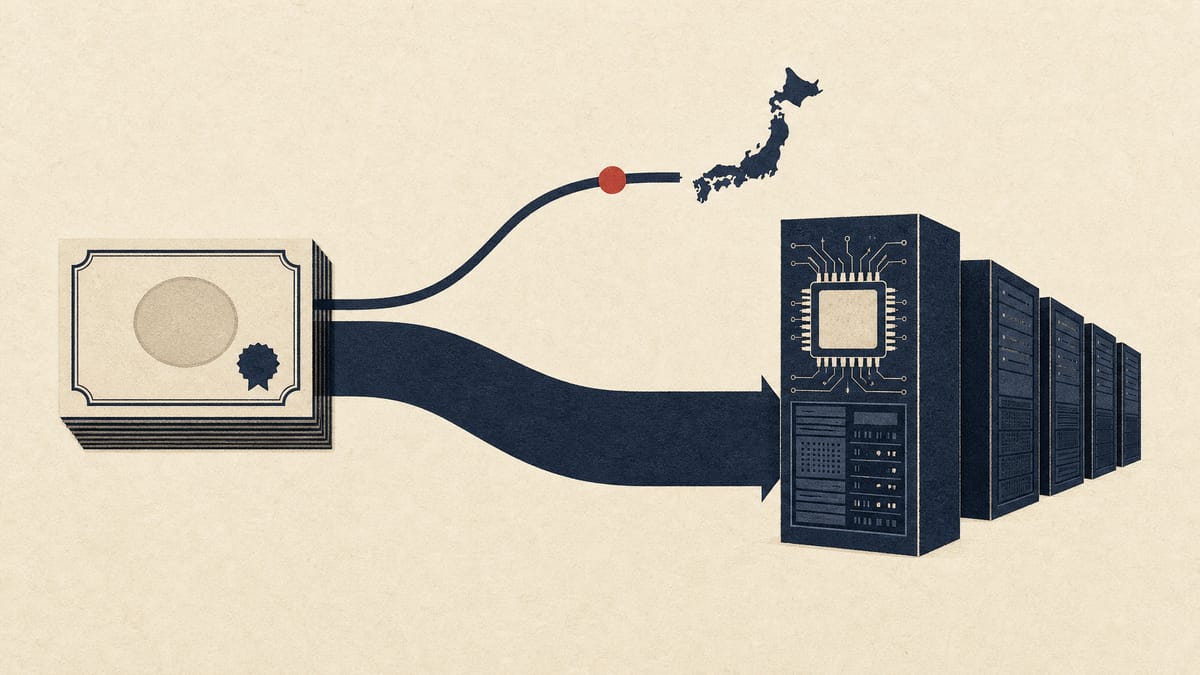
Anthropic prices its Japan share offering at $83, above the earlier $70 to $78 range
Anthropic, PBC set the Japan tranche of its Nasdaq listing at $83 a share on 19 November, according to an amended securities registration statement. The price sits above the top of the $70 to $78 range printed in the pre-amendment text.
What changed: The Japan offering is 36,144,580 Class A shares, fewer than the 38,461,539 to 50,000,000 estimated before, for an aggregate issue value of $2.98bn (¥470.7bn). Mizuho Securities leads it, with Rakuten Securities and SBI Securities running lottery-based retail sales alongside institutional channels.
The number: The Japan shares sit inside a global offering of 956,351,354 company shares and 23,648,646 shares from existing holders. Estimated net proceeds from the global deal and a concurrent private placement are about $104.8bn (about ¥16.55tn), or about $117bn if the over-allotment option is fully exercised. Goldman Sachs and Morgan Stanley lead the international portion.
What to watch: Anthropic says the money goes to working capital, compute and infrastructure and hiring, plus an expected $3.8bn tax withholding and payment obligation tied to RSU issuance. It has no agreement on any material acquisition. The over-allotment option covers up to 147,000,000 shares for 30 days, and Nasdaq trading is due to begin the business day after pricing.
Tokio Marine's interim profit rises 7.9% while comprehensive income falls 63.7%
Tokio Marine's profit attributable to owners rose 7.9% to ¥478.4bn in the six months to 30 September 2026, but total comprehensive income fell to ¥269.5bn from ¥742.5bn.
The number: Management steers by adjusted net profit, which rose 8.8% to ¥524.8bn. It is defined as profit attributable to owners less ALM and hedge-related gains and losses, capital gains and losses, and business-investment-related items.
Why it matters: Other comprehensive income swung to a loss of ¥244.9bn from a gain of ¥274.4bn a year earlier. Investments in debt instruments lost ¥530.6bn, against a ¥48.9bn loss a year earlier, while changes in insurance-contract discount rates added ¥338.5bn. The yen 10-year discount rate rose to 3.10% from 2.43% at the end of March.
What to watch: Full-year adjusted net profit is now forecast at ¥970bn, up from ¥950bn. The board approved a buyback of up to ¥280bn, running from 20 November 2026 to 30 April 2027. The economic solvency ratio was 276% at the end of September and would be 266% after the full repurchase, against a target of at least 190%.
secondary
Policy and Data

Japan's core machinery orders slip 0.3% in September, but the Cabinet Office keeps its upbeat view
Core private machinery orders fell 0.3% in September from August, the first decline in two months, yet the Cabinet Office left its assessment at orders showing signs of picking up. The three-month moving average rose 0.3%, its second straight gain.
Details: Total orders, which include ships and power, rose 0.0% in September and fell 4.8% over July to September from the previous quarter. Core private orders rose 1.2% over the same quarter. By customer, external demand rose 6.2% in September while public-sector demand fell 1.3%.
What to watch: Manufacturers forecast total orders up 8.8% in October to December and core private orders up 4.3%. The Cabinet Office said the forecast basically sums the figures from 280 machinery makers surveyed at the end of September. Those are projections until the October to December orders arrive.

Japan proposes letting carriers pay switching perks in monthly installments for up to a year
An advisory council to Japan's communications ministry has opened a public comment period on a draft that would let mobile carriers pay switching perks of up to ¥20,000 before tax in monthly installments over as long as 12 months. Comments run from 19 November to 18 December 2026.
The move: Under current rules a fee discount is generally banned, with an exception for a trial discount of up to six months and ¥20,000. The draft keeps the ¥20,000 ceiling but allows discounts and other benefits in monthly installments, equal or front-loaded. Back-loaded splits stay banned, and a carrier can stop paying if the customer cancels. Where a handset is bought too, the combined cap is generally ¥40,000, varying with the handset's price.
Why it matters: The target is “hopping”, repeated short-term switching to collect perks. The ministry's summary notes cancellation fees are capped at ¥1,000, and says the expert committee judged it appropriate not to raise that cap or lower the perk ceiling for now.
What to watch: The draft would also cover any virtual operator with more than 4% of contracts in the regulated services and strike 14 carrier affiliates from the designated list, cutting it from 20 entries to six. As of July 2026 no independent virtual operator crosses 4%. The draft names 1 February 2027 as its start date.
secondary
Deals and Orders

Harmonic Drive's first-half orders rise 70.7% to a record, fastest in North America
Harmonic Drive Systems says first-half consolidated orders rose 70.7% from a year earlier, a record for a first half. North America grew fastest at 135.7%, ahead of the company's Japan region, which includes Asia excluding China, at 67.7%, Europe at 52.7% and China at 0.5%.
The number: By application, medical orders grew 185.3% and semiconductor manufacturing equipment 147.4%, while industrial robots rose 38.5%. First-half sales were ¥36.1bn and operating profit was ¥4.2bn, up from ¥465mn. The full-year forecast was raised on 11 November to sales of ¥78.0bn (from ¥74.5bn) and operating profit of ¥10.2bn (from ¥8.5bn).
What to watch: Humanoid robots explain little of the record. Orders for AI and humanoid robots rose 30.6% to about ¥1.5bn. Gearheads for humanoids are due on the market in March 2027 and actuators in December 2027. For customised products for vertically integrated customers, the company envisages full-scale mass production in 2028 to 2030.

JBIC lends Itochu up to $972mn toward half of Aviation Capital Group's parent
The Japan Bank for International Cooperation signed a loan agreement on 17 November with Itochu, capped at about $972mn for its own portion. The loan is co-financed with Mizuho Bank and Sumitomo Mitsui Banking Corporation in a syndicate of about $1.945bn.
What changed: The money funds part of Itochu's purchase of 50% of TC Skyward Aviation U.S., Inc., the holding company of US aircraft lessor Aviation Capital Group. Itochu and Tokyo Century are to manage the lessor jointly through that holding company. JBIC says the lessor ranks in the world's top 10 by aircraft owned, managed and on order and has operated under Tokyo Century since 2019.
Why it matters: JBIC argues the loan supports Japanese-run aircraft leasing and Japan's economic security, because lessors own about half of the world's commercial aircraft. The syndicate total is a financing figure, and JBIC's release gives no price for the shares.
M&A Capital Partners board opposes Panah's ¥29.1bn special dividend
M&A Capital Partners' board voted to oppose all six proposals from Panah Master Fund for its shareholder meeting on 23 December 2026. Panah's lead proposal is a special dividend of ¥916 a share.
The number: Panah puts the payout at ¥29.1bn and says it would cut cash from ¥49.1bn to ¥20bn. The board says that on top of its own proposed ¥74.18-a-share dividend the payout ratio would reach about 400%, and that the special dividend equals about 54% of the ¥54.24bn in cash, equivalents and time deposits at 30 September.
The catch: Directors say cash is a working resource for acquisitions and cite return on equity of 17.0% against a cost of equity of 7% to 8.5%. Panah's five other proposals include an independent board chair, a nine-year cap on outside director tenure and a majority of independent outside directors. Two of the six directors are independent today.
quick hits
Quick Hits
MAFF drafts rice rules on storage quality and buyer checks
Read moreJapan's agriculture ministry is consulting until December 18 on a draft ordinance that would have large rice shippers and sellers track their stock, and make efforts to preserve quality and to seek filing confirmation from buyers they do not trade with regularly, from April 1, 2027.
Mitsui & Co. plans a ¥2bn retail security-token bond with a 1.80% to 2.40% provisional coupon
Read moreMitsui & Co. proposes a roughly ¥2bn retail bond recorded on a blockchain ledger, with a provisional coupon of 1.80% to 2.40% to be fixed on 5 January 2027 and resale barred outside narrow cases such as inheritance or disaster.
NGK sets 2.650% and 3.303% coupons on ¥20bn of bonds for Digital Society capex
Read moreNGK will borrow ¥20bn through five-year and ten-year bonds at 2.650% and 3.303%, with about ¥19.9bn of net proceeds earmarked for Digital Society equipment spending to September 2029; the supplement separately lists a ¥70bn plan for semiconductor-equipment product facilities.
Kyocera to sell 38.97 million KDDI shares, booking a parent-only profit gain
Read moreKyocera plans to sell 38,968,400 KDDI shares, 0.97% of issued shares, on 20 November, booking a standalone extraordinary gain; under IFRS the consolidated gain goes to other comprehensive income, not the income statement.
AI storm reverses its clean control verdicts for 2023 to 2025 after used-truck probe
Read moreAI storm has amended its internal control reports for the years ended December 2023, 2024 and 2025 to say controls were ineffective, citing no conflict-of-interest review of certain deals, an internal auditor involved in the transactions and chassis-number mismatches that were not escalated.
Suntory agrees to keep its 12.70% Watami stake out of Wisdom's bid and to reinvest after a squeeze-out
Read moreSuntory's 12.70% Watami holding is unchanged, but a November 13 agreement bars it from tendering or selling the shares, commits it to back the squeeze-out and provides for reinvestment in Wisdom's non-voting shares once that process is complete.
Tokyu Construction joint venture wins Dhaka metro package worth about ¥76.4bn
Read moreA joint venture of Tokyu Construction and Max Infrastructure Limited signed the CP04 package on Dhaka's MRT Line 1 on 4 November, valued at about ¥76.4bn, with 60 months of work from around April 2027 and completion planned for 2032.
Stanley Electric's sales jump 22% on new consolidations while operating profit stays flat
Read moreStanley Electric's half-year sales rose 22.0% to ¥303.0bn, helped by ¥38.9bn from two newly consolidated businesses, while operating profit stayed at ¥18.4bn and net profit fell 14.8%.