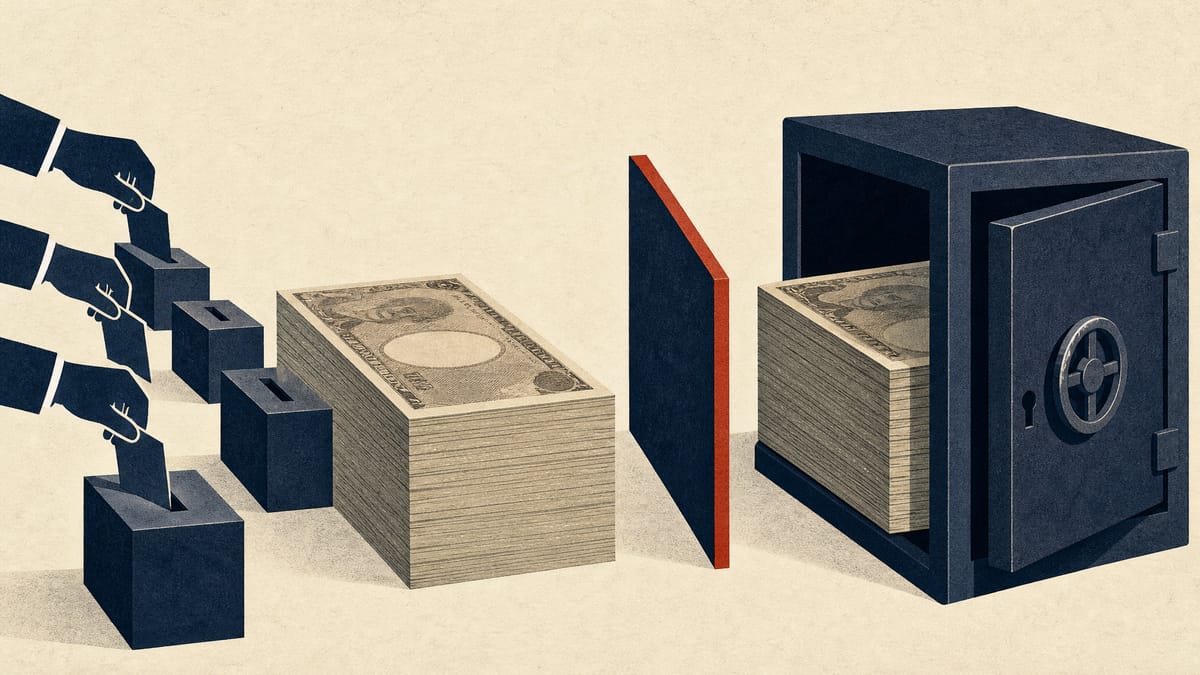
M&A Capital Partners' board has voted to oppose all six proposals from Panah Master Fund for the company's 21st annual shareholder meeting, scheduled for December 23, 2026, according to a November 19 board opinion notice.
The cash at stake
Panah's lead proposal is a special dividend of ¥916 a share on top of any dividend the board proposes and shareholders approve at the meeting (¥989 if the board proposes none). It would pay out ¥29.1bn, and by Panah's calculation cash would fall from ¥49.1bn to ¥20bn, which Panah describes as about three years of selling and administrative costs. Panah says the company held ¥49.1bn in cash at June 30, 2026, equal to about 84% of total assets and about 36% of market value at September 30. It says the company earned about 0.55% a year on its average cash balance of ¥45.5bn over the 12 months to June 30.
The board puts the same payout at ¥29,127,590,880, based on 31,798,680 shares at September 30. Added to its own proposed ¥74.18-a-share dividend (¥2,358,826,082), the board says the payout ratio would reach about 400%. It also says the special dividend equals about 54% of the ¥54.24bn in cash, equivalents and time deposits at September 30.
The board's case
Directors say cash is a working resource for acquisitions and that speed matters more than raising outside funding later. They cite a plan to split the September 2026 cash and about ¥33bn of operating cash flow over the next three years between growth investment or shareholder returns and a reserve of 24 months of fixed costs, with about ¥9.5bn of dividends at a 30% payout target. Dividends per share rose from ¥40 in the year to September 2024 to the board's proposed ¥74.18 for the year to September 2026, with ¥89.39 forecast for the next year. Return on equity was 17.0%, against a cost of equity the company puts at 7% to 8.5%.
Governance proposals
Panah also seeks a dividend floor in the articles of association, an independent board chair, an end to the cumulative-voting exclusion, a nine-year cap on outside director tenure, and a majority of independent outside directors. Two of the six directors are independent. The board says the company has no controlling shareholder as defined by the Tokyo Stock Exchange, though its president holds more than 40%. It argues that a formula floor and a majority rule would restrict flexibility.