Web View
Sixty days to pay: Japan's watchdog warns 1,135 firms
Japan's fair-trade watchdog is counting the days on supplier payments, Honda plans a US$3bn Ohio plant, and a finance minister has plans for the BOJ's expected ¥1tn of ETF-sale profit.
MARKETS
Market pulse
Tokyo equities advanced while the 10Y JGB yield nudged higher.
Sourced from Nikkei, JPX, BOJ, MOF - values, not commentary.
lead
The 60-Day Clock

JFTC warns 1,135 firms over payment terms beyond 60 days ahead of April 2027 rule
The Japan Fair Trade Commission has sent advisory letters to 1,135 businesses that set payment terms longer than 60 days, ahead of a rule that will require buyers to pay within 60 days of receiving delivery. The letters are not sanctions: the JFTC describes them as a way to prevent late payment and encourage voluntary improvement.
What changed: The JFTC's payment notification (Notification No. 3 of 18 June 2026) takes effect on 1 April 2027. It covers manufacturing and related outsourcing, and reaches transactions outside the subcontracting payment law. Separately, the JFTC inspected 415 consignors on site from August to October 2026 and told those whose conduct might fall under the notification that similar conduct after it takes effect could lead to Antimonopoly Act problems.
The number: The JFTC's web survey went to 150,000 businesses in 47 industries and drew 35,734 responses, a 23.8% rate, so the results describe respondents, not all Japanese companies. The median period from delivery to the payment point was 35 days. Among buyers with any term over 60 days, the median longest term was 145 days in telecommunications and 120 days in 15 industries, including pulp and paper products. Asked why, 1,331 respondents cited cash flow (32.8%), being paid by their own customers after more than 60 days (32.2%) and the subcontracting law not applying (25.6%).
Why it matters: Some firms are paid on terms beyond 60 days by customers outside the law, yet must pay their own suppliers within 60. The ban on paying by bill for orders placed from 1 January 2026 already applies. The release does not say what counts as a justifiable reason for longer terms.
What to watch: For procurement and finance teams, the check before April 2027 is whether any supplier terms exceed 60 days from receipt, including suppliers the subcontracting law does not cover.
secondary
Policy Desk
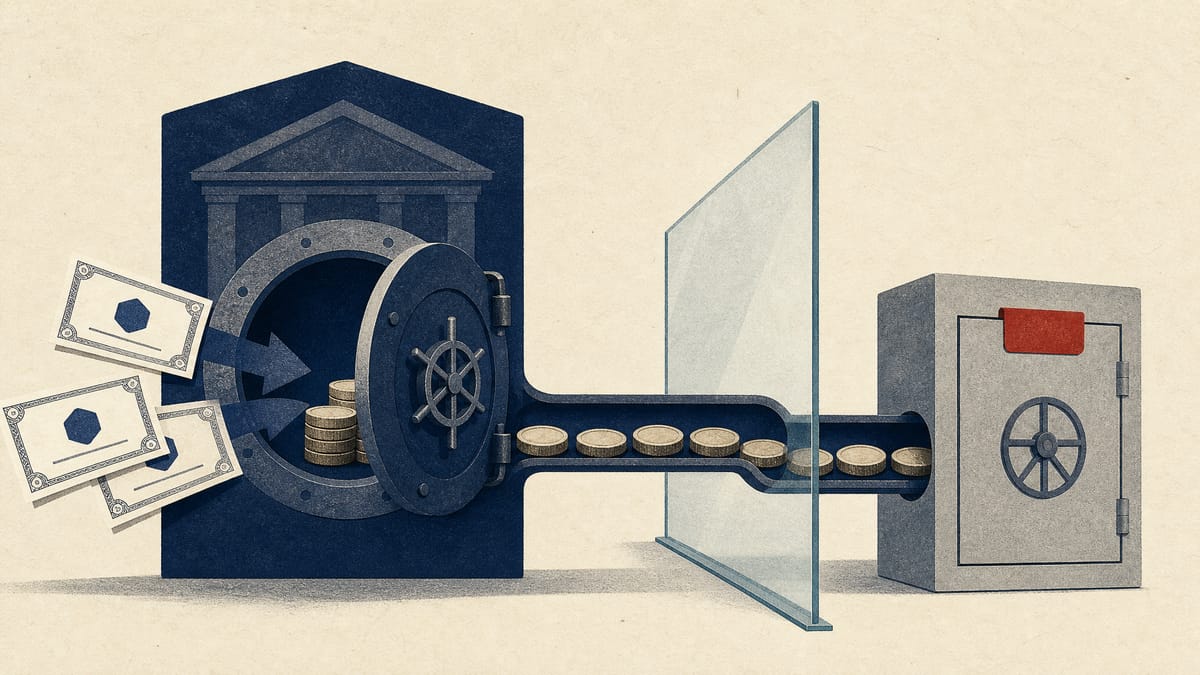
Japan's finance minister backs BOJ ETF profits for a new economic-security account
Japan's finance minister said on 10 November that the additional profit the Bank of Japan expects from selling exchange-traded funds should pay for a new special account tied to economic security. The BOJ puts that profit at about ¥1tn, and the minister confirmed only that estimate. How much the government will count on is a budget matter, the minister said, and no precise figure could be given.
Why it matters: The minister said the government's expectations for the money will not shape BOJ operations, and that how ETFs are handled is for the BOJ to decide under the Bank of Japan Act. The remarks give no figure for the transfer the budget would assume and no mechanism protecting the account if profits fall short.
What to watch: The detailed design of the account is to be worked out during budget compilation.
secondary
Capital and Control
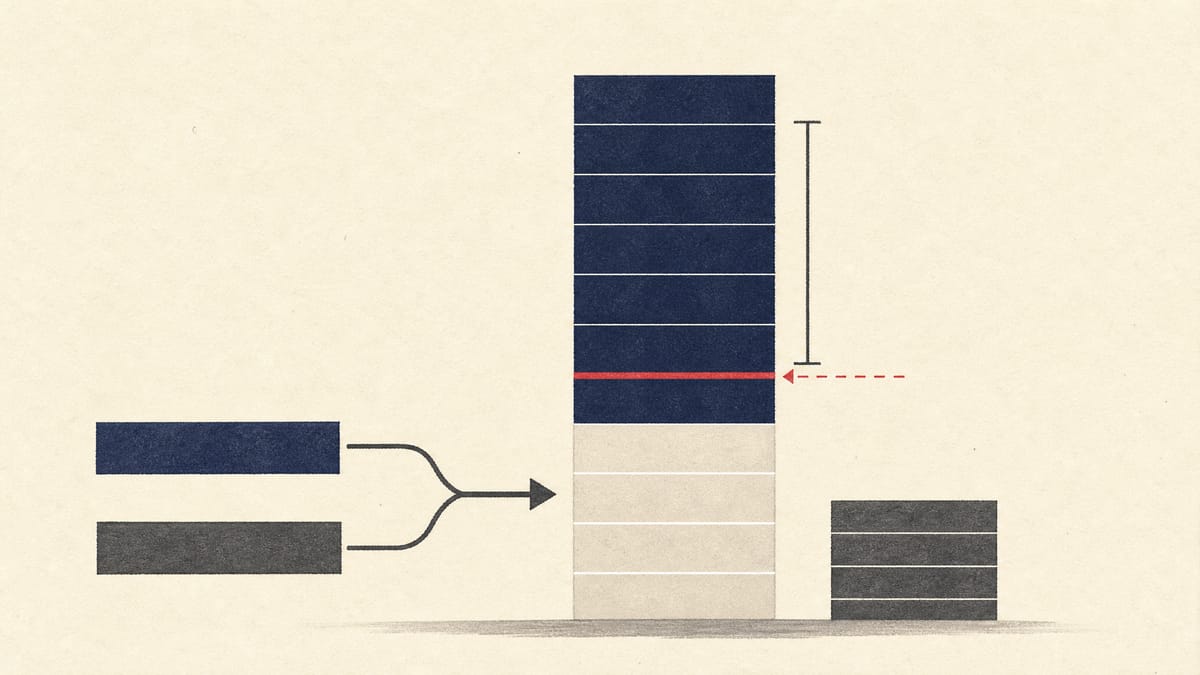
Bain Capital offers ¥4,180 a share to take Hokuriku Electric Industry private
Hokuriku Electric Industry's board resolved on 10 November to recommend that shareholders tender into a ¥4,180-a-share offer from BCJ-116, a new vehicle indirectly owned by funds advised by Bain Capital Private Equity. The price is 71.88% above the 9 November close of ¥2,432. The offer runs from 11 November to 23 December 2026, and the company expects to be delisted if the deal proceeds.
The catch: BCJ-116 will buy nothing unless it receives at least 5,232,600 shares, or 66.67% of the share base it uses. Four holders have agreed to tender 1,495,965 shares, or 19.06%. SMBC Nikko Securities put its discounted-cash-flow range at ¥3,056 to ¥4,324, and the special committee's adviser, Plutus Consulting, gave ¥2,539 to ¥4,130. The company says it obtained no fairness opinion from either adviser.
What to watch: If the offer closes without delivering all shares, BCJ-116 says it plans to force out the remaining holders at ¥4,180 a share. Below 90% of votes, that route runs through an extraordinary meeting currently pencilled in for around February 2027 to approve a share consolidation. BCJ-116 plans up to ¥12bn of equity and up to ¥21bn of bank debt, with loan terms still to be agreed. The company also cancelled its interim dividend and, if the offer succeeds, its year-end payout.

Takara board opposes all six ValueAct proposals for 16 December meeting
Takara Holdings' board resolved on 10 November to hold an extraordinary shareholders' meeting at 10am on 16 December in Kyoto and to oppose every item on the agenda. All six come from ValueAct Japan Master Fund, L.P. Items one to three would remove three sitting outside directors; items four to six would elect one candidate each. The record date is 11 November.
What changed: ValueAct says funds managed by ValueAct Capital Management hold about 39.4mn Takara shares, roughly 20.0% of shares in issue. It argues that the previous mid-term plan missed every financial target and that return on equity fell to 4.6% last fiscal year. The board replies that the three targeted directors were elected on 26 June with 93.76%, 93.74% and 93.70% of votes, and that it has met the shareholder more than 30 times since April 2020.
Why it matters: The board ties its case to a restructuring still in motion. Takara Bio is now a wholly owned subsidiary, and the board expects ¥2.957bn of fixed-cost savings against an original target of about ¥2.8bn by the year to March 2028. On 2 November Takara signed a basic agreement with the Sumitomo Chemical group to hand over its GMP cell processing contract business. The board says it will decide within about two years whether the Japanese food business stays a growth business and whether to continue the CDMO and gene medicine units. That is the board's own account; ValueAct's response is not in the notice.
secondary
Plants, Profits and Charges
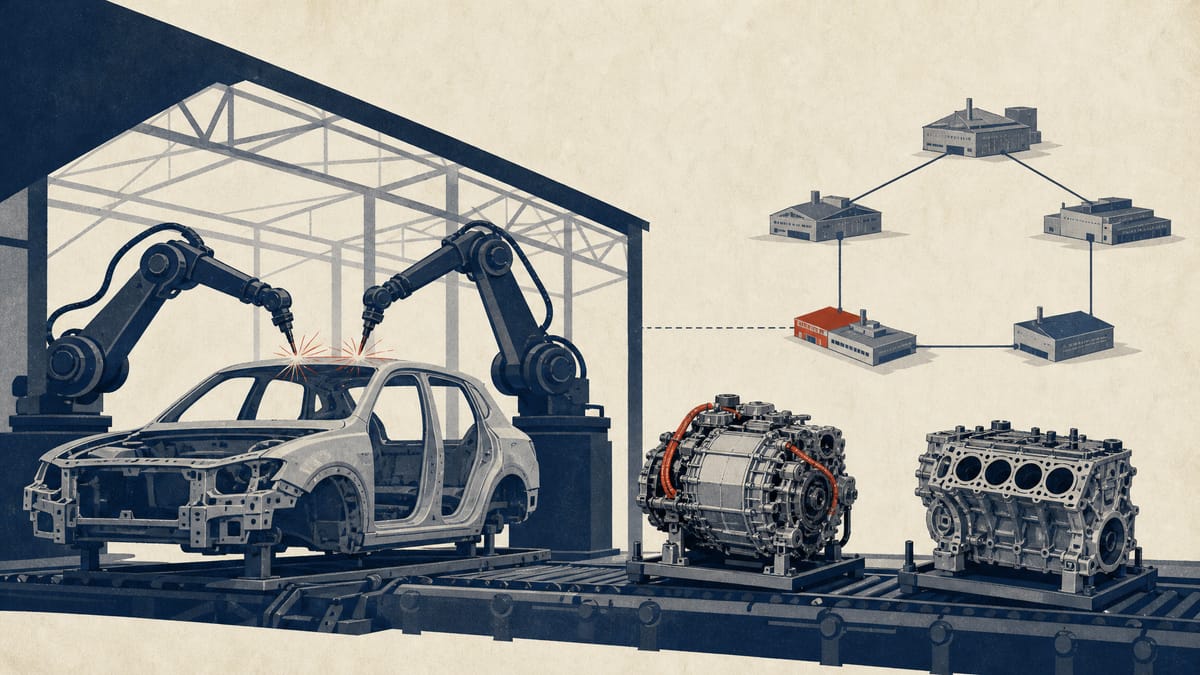
Honda decides on US$3bn Ohio plant to lift North American car capacity
Honda Motor has decided to build a new car plant in Ohio, with hybrids as the stated reason. The plant is planned for annual capacity of up to 240,000 vehicles, with operations targeted to start during 2029 and about 2,000 new workers. Honda puts the investment at about US$3bn and says North American car capacity rises from 1.67 million units to 1.91 million.
The move: Honda also plans spending at existing sites. The Alabama car plant will renew equipment for large hybrids planned for North American sale from 2029, and the Anna engine plant in Ohio will reorganise lines to make engines for next-generation hybrid systems. Honda says the reorganised Ohio transmission plant will lift hybrid system capacity about 3.5 times over the next few years. The US$3bn covers only the Ohio plant; the notice gives no cost for the upgrades.
Bottom line: Honda says the effect on its consolidated results for the year to March 2027 is minor. The 2029 start, the capacity and the jobs are plans or targets.

Mitsui Kinzoku commits ¥190bn to a Malaysian copper-foil plant, with output phased in from April 2031
Mitsui Kinzoku decided on 10 November 2026 to build a copper-foil plant in Malaysia at a total investment of about ¥190bn, paid from its own funds and borrowings. Operation begins in stages from April 2031. The money covers land (about ¥14bn), buildings (about ¥32bn) and production equipment and other items (about ¥144bn).
What changed: The plant will make MicroThin, a carrier-attached ultra-thin copper foil, and VSP, an electrolytic copper foil for high-frequency circuit boards. The results presentation ties VSP to AI servers. Half-year operating profit rose 44.7% to ¥57.5bn on sales of ¥431.1bn, and the full-year operating profit forecast went to ¥99bn from ¥94bn.
Read-through: The board also raised its dividend-on-equity target to 4.0% from 3.5%. The presentation does not name the Malaysian site, give an expected return on the ¥190bn, or state the split between cash and borrowings.
Sumitomo Metal Mining takes ¥42.6bn Coral Bay nickel charge as half-year pretax profit rises 91.9%
Sumitomo Metal Mining recorded a ¥42.6bn impairment loss at Coral Bay Nickel Corporation, its Philippine nickel smelting subsidiary, in the six months to September 2026. Group pretax profit for the period still rose 91.9% to ¥149.4bn, and group sales rose 34.8% to ¥1.06tn.
What changed: The charge follows a change in the estimate of Coral Bay's asset retirement obligation. The company now expects Coral Bay's production to end within the period of its next medium-term plan and, in the half-year, reviewed its approach to restoration duties. It cites weak nickel and cobalt prices, rising production costs and declining ore quality. The smelting segment swung to a ¥1.4bn pretax loss.
The number: Full-year pretax guidance fell to ¥260bn from ¥324bn, and profit attributable to owners of the parent to ¥161bn from ¥216bn. The smelting segment is now forecast to lose ¥23bn for the year, against a profit of ¥63bn in the earlier guide. The impairment is an accounting charge, and the interim results are not subject to auditor review.
Olympus guidance now includes a tariff refund, after FDA warning letter on six sites
Olympus received a warning letter from the US Food and Drug Administration on 7 October (US time), covering six facilities in Japan, Germany and the US. On 19 October the FDA published an import alert on certain products made at three of the Japanese plants. Olympus says it does not foresee additional impact on this year's consolidated results from the import alert.
By the numbers: Olympus puts the sales reduction from FDA-related import alerts and voluntary shipment halts at about ¥9bn in the July to September quarter and about ¥21bn for the half. Half-year operating profit rose 84.2% to ¥85.0bn, but a US tariff refund helped: Olympus cut ¥17.1bn of tariff principal from cost of sales and booked ¥713mn of interest as finance income. Without the refund, operating profit was ¥67.8bn.
The catch: The full-year refund is about ¥20.3bn. Excluding it, adjusted operating profit guidance is ¥167.0bn to ¥179.5bn, against an earlier range of ¥160.5bn to ¥179.5bn, so the floor rose and the ceiling did not. The disclosures give no date for lifting the alerts or closing out the warning letter.
Sumitomo Realty raises profit forecast on Tokyo office rents, but property sales add more
Sumitomo Realty & Development raised its profit forecast for the year to March 2027 on 10 November and pointed to Tokyo office rents. Operating profit is now expected at ¥330.0bn, up from ¥320.0bn, ordinary profit at ¥315.0bn, up from ¥300.0bn, and net profit at ¥230.0bn, up from ¥223.0bn.
What changed: Leasing operating profit is forecast ¥10.0bn higher at ¥234.0bn, but property sales operating profit rose by ¥12.0bn to ¥93.0bn, a larger share of the raise. Rent revisions on existing leases averaged +12% in April to September, against an average of +7% for the previous year, and office vacancy fell to 3.3% from 5.4% a year earlier. That is one landlord's disclosure, not an independent rent index.
Why it matters: Half-year net profit rose 18.4% to ¥140.1bn against an 8.4% rise in operating profit, helped by ¥30.3bn of gains on investment securities. The dividend forecast is ¥55 for the year; the ¥100 dividend and ¥400bn ordinary profit goals are five-year targets, not forecasts.
quick hits
Quick Hits
Papyless puts Renta outage at ¥2.4bn of lost sales and ¥500mn of lost profit
Read morePapyless estimates the Renta e-book store suspension will cut sales by about ¥2.4bn and operating and ordinary profit by about ¥500mn each, and plans a phased restart without giving a date.
Japan's reserve assets rose $723 million in October to $1.18tn
Read moreSecurities of $834,555 million and gold worth $106,437 million anchor Japan's reserves, which grew by only $723 million in October; the Ministry of Finance gives no breakdown of what drove the change.
Resona raises full-year profit target to ¥340bn after record interim profit
Read moreResona Holdings raised its target for the year to March 2027 by ¥10bn to ¥340bn after interim profit of ¥173.6bn, while comprehensive income fell 24.8% and credit costs rose.
Shionogi borrows ¥300bn from SMBC for IntraBio, to be refinanced by October 2027
Read moreShionogi drew an unsecured ¥300bn bridge loan from Sumitomo Mitsui Banking Corporation on 10 November to fund its IntraBio purchase, and plans to refinance it into longer-term funding before the 29 October 2027 repayment date.
Regulator urges action against a ¥3.5bn recycled EV battery fund manager
Read moreThe securities watchdog found that a one-person Tokyo manager of 40 recycled EV battery funds, with about ¥3.5bn raised, had no qualifying institutional investor, took money from ineligible backers and could not confirm the batteries exist; it recommended administrative action.
Steel decarbonisation subsidy opens to 11 December, covering up to a third of capex
Read moreJapan's steel makers can apply until noon on 11 December for aid of up to one-third of costs for fuel switches or electric-arc-furnace conversions, but only if they commit to cutting emissions by at least half.