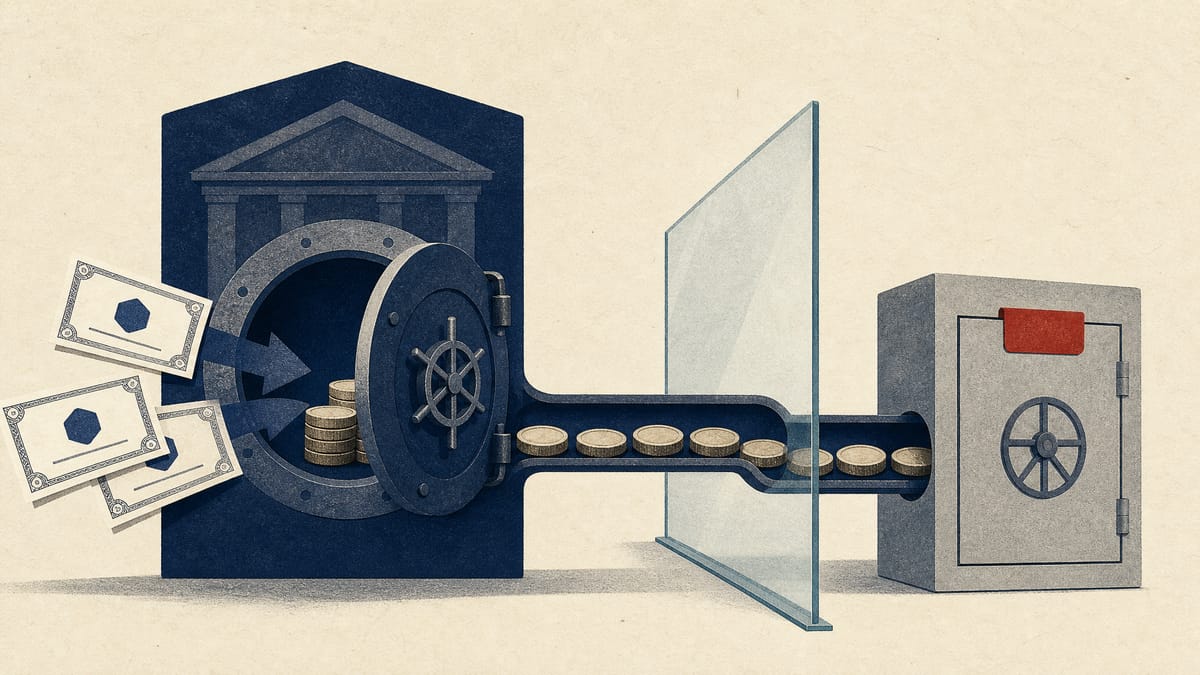
Japan's finance minister said on 10 November that the additional profit the Bank of Japan expects from selling exchange-traded funds should pay for a new special account tied to economic security. The minister also said the government's expectations for that money will not shape BOJ operations. The remarks came at the post-cabinet press conference at the Ministry of Finance.
What the minister said about the money
The prime minister set out the idea on 6 November, in Diet answers and again at a growth strategy council that evening. The minister said the prime minister described the BOJ's additional ETF-sale profit, which the BOJ puts at ¥1tn, as the "fruit of Japan's growth". In the prime minister's view it should be reinvested in crisis-management and growth investment to produce a further round of growth.
The proposed destination is a new special account. It would sit within the government's "Strong and Prosperous Japan" investment allocation and would carry projects in fields especially important for economic security. The minister said the same case was put on a television recording the previous day.
The question put to the minister went further. It described the structure as bridge bonds issued through the economic-security special account, with the ETF profits earmarked as the source for redeeming them. It also cited BOJ material from the end-October monetary policy meeting, where the bank decided to accelerate its ETF sales. That material put additional sales profit at about ¥1tn a year.
An estimate, not a budget line
The minister confirmed only that the BOJ says the profit is about ¥1tn. How much the government will count on, calculated at year-end, is a budget matter, the minister said, and no precise figure could be given. The minister added that the outlook had come from the party concerned. The detailed design of the account is to be worked out during budget compilation, and the minister has already been instructed to do so.
The reporter asked whether building the profits into redemption funding could distort BOJ decisions if share prices fall or rate rises make the BOJ's payments to the national treasury harder to forecast. The minister did not engage with those scenarios. Monetary policy methods, including how ETFs are handled, are for the BOJ to decide under the Bank of Japan Act, the minister said, adding that the government's expectation of BOJ payments will not, in the minister's view, affect the bank's specific market operations.
The answer is a statement of the government's position. It gives no figure for the transfer the budget would assume and no mechanism protecting the account if the profits fall short.
Other items at the same briefing
The minister was also asked about the consumption tax and support payments bill, which passed the lower house on 6 November. A reporter noted that four Liberal Democratic Party members left the chamber during the vote, reportedly over funding concerns. The minister said it is not the minister's place to comment on individual lawmakers' votes.
On the upper house debate, the minister said the lower house deliberations ran more than 30 hours and that the minister gave 556 answers. The minister wants as many parties as possible to back the bill and is open to constructive proposals, citing figures already in circulation: a 30% figure, and amounts of ¥530,000, ¥740,000 or ¥1mn. The minister acknowledged that data constraints have not been fully lifted.
On retail government bonds, the minister pointed to a 5 November study group on national debt management. There the ministry set out directions for review: a compound-interest product, longer maturities, a new rate-setting method for the floating-rate 10-year bond, smaller purchase units and changes to early redemption. The aim, the minister said, is to widen the buyer base, including younger people. Smaller regional lenders have voiced concern that money shifting into bonds will make deposits harder to gather. The ministry aims to firm up the details by the end of this year.
On tax treatment, the minister said the Financial Bureau and the Financial Services Agency have submitted requests, and the ministry will largely leave the question to the ruling party. The ministry, the minister said, will neither force the issue nor settle on a fixed answer.