Web View
Three brewers, one antitrust agency, and the BOJ on AI
Japan's antitrust agency acts against Sapporo, Kirin and Asahi beer units, the BOJ's Uchida calls AI a demand shock he cannot yet size, and ABC-Mart banks only its first-half beat.
MARKETS
Market pulse
Tokyo equities softened while the 10Y JGB yield nudged higher.
Sourced from Nikkei, JPX, BOJ, MOF - values, not commentary.
lead
Three Brewers Face JFTC Action

Japan's antitrust agency acts against Sapporo, Kirin and Asahi beer units
Sapporo, Kirin and Asahi each disclosed Japan Fair Trade Commission action on October 7; Sapporo describes the suspicion as price restraint among four major alcohol makers, and all three say the earnings impact is unknown.
What changed: Sapporo Breweries said it received an on-site inspection from the Japan Fair Trade Commission over a suspected Antimonopoly Act violation, which it described as an unreasonable restraint of trade on the selling prices of alcohol by four major alcohol makers. Kirin Holdings said its subsidiary Kirin Brewery was searched that day. Asahi Group Holdings said its subsidiary Asahi Breweries received a compulsory investigation, with no date given in its notice.
The catch: The three notices confirm that the commission acted against the three companies' beer units and that the suspicion is of an Antimonopoly Act violation. They do not confirm that any violation occurred, and Sapporo's description of the conduct is the company's own account of the suspicion, not a finding. Kirin's and Asahi's notices do not describe the suspected conduct.
Why it matters: Each company says the effect on earnings is unknown at this point and that it will promptly announce matters requiring disclosure. All three say they will cooperate fully with the commission.
What to watch: Further company notices on the investigation, and any announcement from the commission itself.
secondary
Policy and Macro Watch

BOJ's Uchida calls AI a positive demand shock, and says its effect on the neutral rate is hard to gauge
Deputy Governor Shinichi Uchida said AI has already put upward pressure on the economy and prices, while its effects on the neutral rate and unemployment are hard to gauge.
What changed: Speaking at the ECONDAT 2026 Fall Meeting on October 5, Uchida called AI "a big positive demand shock" and said it now features in the bank's Monetary Policy Meetings. He listed four channels: demand; supply, where higher productivity and capital accumulation might affect the neutral rate (r*); financial conditions, where AI-driven stock gains ease them and large bond issuance by AI-related companies lifts long-term rates; and labor. The remarks opened a research conference and do not address the policy rate.
The catch: Uchida said the directions are understood but the extent and timing are not: "We don't have a clear answer yet." His tentative reading is that demand has come first and made financial conditions more accommodative on balance, with a risk of correction if profits do not follow. The effects on r* and on the natural unemployment rate (u*) are "hard to gauge".
Why it matters: He said conventional statistics may not keep up with the speed of AI adoption and that alternative data may help, as he put it, "I hope".
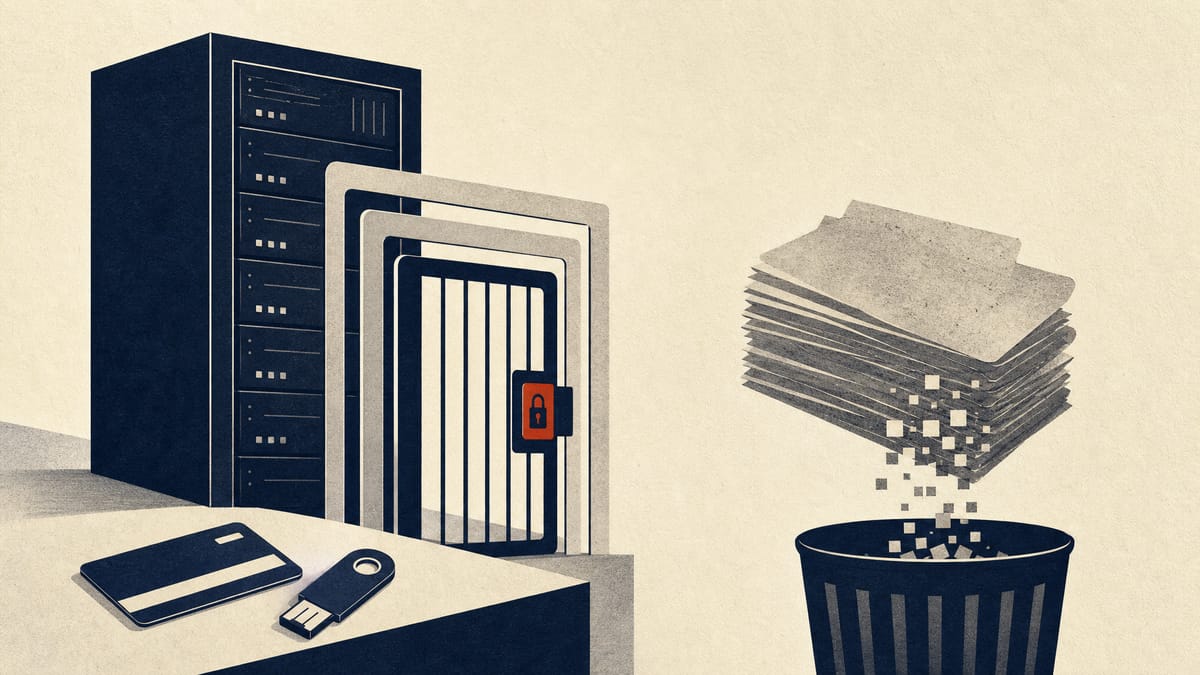
Japan's privacy regulator tells big data holders to delete stale records and previews revised security examples
The Personal Information Protection Commission cautioned holders of large personal-data stores to delete records they no longer need and previewed revised technical-security examples that it plans to finalise next April.
What changed: On 7 October the commission cautioned businesses with a high industry share in widely used services, holders of highly sensitive data and others whose leaks would likely harm individuals. It said it has seen cases where widely used services handling large volumes of personal information were hit by unauthorised access. The caution names no company and announces no new penalty.
Details: The draft technical measures sit under five headings, from access control to detecting unauthorised access. Examples include multi-factor authentication, including phishing-resistant forms, for outside, administrator and important-data access; access to personal data only from devices that meet the organisation's standards; regular log analysis; and detection tools such as IDS/IPS and EDR. The commission separates "measures that must be taken", where failure can be judged a violation, from examples a company need not adopt in full.
Why it matters: Article 22 asks businesses to delete personal data without delay once it is no longer needed, and the commission said failure to delete has made some leaks more serious. The revised examples stay a draft until the planned finalisation next April.
Regulators convene a new supplier-pricing panel after surveys find rules slow to take hold
The Japan Fair Trade Commission and the SME Agency are convening a closed-door study group because their surveys show price pass-through lagging in deeper supply-chain tiers, with minutes to be published promptly.
What changed: On 7 October the two bodies said they will convene a corporate transactions study group, following a December 2024 study group report. It is a forum for discussion, not a new enforceable rule, and the release makes no finding against any company.
Why now: Citing the SME Agency's follow-up survey to its price negotiation promotion month and the commission's special survey on price pass-through, the agencies say problems remain on three fronts: slow adoption of the rules, weaker pass-through the deeper a company sits in the supply chain, and obstructive practices in individual industries. The release says the logistics designation and the payment notice take effect in April 2027.
What to watch: Meetings will be closed, and the agencies promise to publish minutes promptly. The release gives no first meeting date, so the minutes are where purchasing and supplier-compliance teams will first see the direction of debate.
secondary
Earnings and Guidance
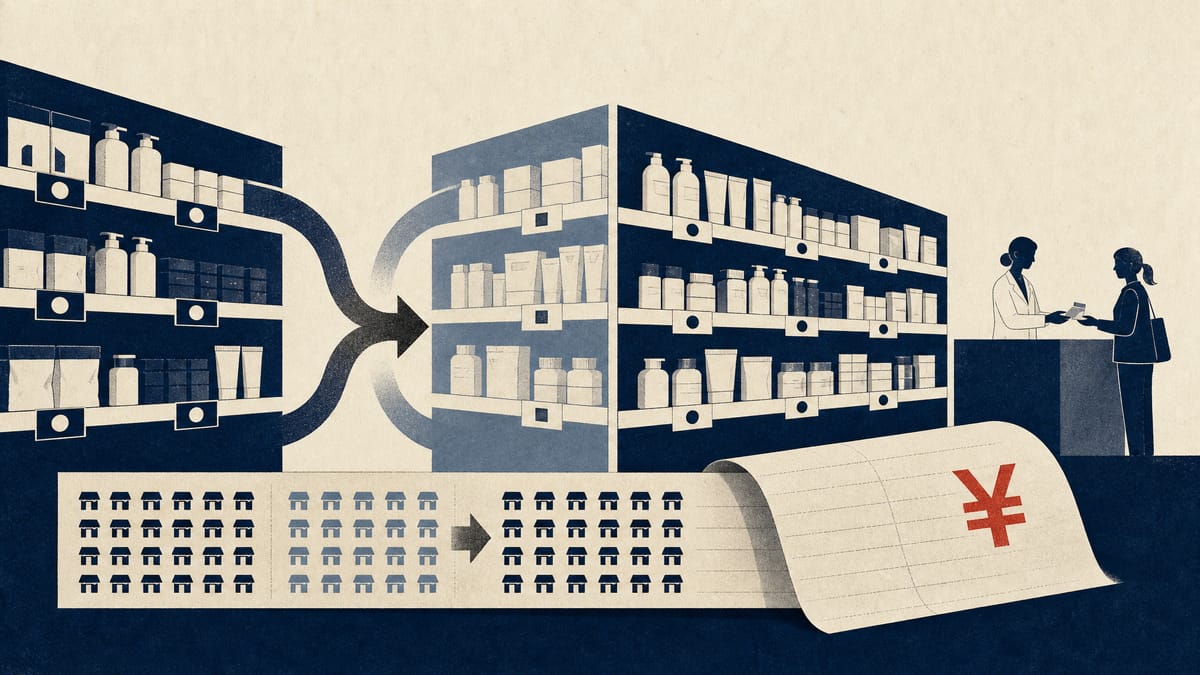
Tsuruha's first half since the Welcia deal: sales hit ¥1.28tn, profit growth lags
Tsuruha's six-month sales rose 128.7% to ¥1.276tn against a half that ended before the Welcia integration, with operating profit up 92.6% and full-year guidance left unchanged.
What changed: In its first interim results since combining with Welcia Holdings on 1 December 2025, Tsuruha reported sales of ¥1.276tn for the six months to 31 August 2026. The prior-year half ended before the combination, so the growth rate compares a combined group with a pre-integration one. Operating profit was ¥54.77bn, up 92.6%, and profit attributable to owners of the parent was ¥30.25bn, up 48.5%. Goodwill amortisation was ¥12.34bn, against ¥1.41bn a year earlier.
The catch: Operating activities used ¥17.02bn of cash, against a ¥47.1bn inflow a year earlier, and a ¥71.68bn fall in trade payables was the largest negative item. Cash and deposits fell ¥60.69bn, which the release attributes partly to the prior year-end landing on a bank holiday. The equity ratio was 56.4%.
What to watch: Full-year guidance is unchanged at sales of ¥2.555tn, operating profit of ¥99.4bn and net profit of ¥41.5bn, which is 2.7% lower than the previous year. Tsuruha is merging buying departments and building common systems, and expects to file its half-year report on 14 October 2026.

ABC-Mart raises full-year forecast by its first-half overshoot and leaves the second half unchanged
ABC-Mart raised its operating profit forecast by ¥1.6bn to ¥67.2bn but left second-half plans unchanged, pointing to possible weaker consumer sentiment and a November change to Japan's tax-free system.
What changed: The footwear retailer revised its April 8 guidance on October 7. Sales are now forecast at ¥403.0bn, up ¥2.2bn, and operating profit at ¥67.2bn, up from ¥65.6bn. The increase covers only the first half; management kept the second-half plan as set at the start of the year. The full-year dividend forecast stays at ¥80.
The number: For March to August, sales rose 6.4% to ¥202.3bn and operating profit rose 7.4% to ¥36.1bn. In Japan, same-store sales rose 4.5%, and ABC-Mart said a weaker yen drove strong sales to inbound visitors. Overseas sales rose 10.8% to ¥58.7bn, with Korea up 11.3% to ¥37.5bn.
Why it matters: The second-half plan assumes domestic same-store sales up 2.9%. Management names two risks: weaker consumer sentiment as prices rise, and Japan's tax-free system moving to a refund method from November. These are one retailer's assumptions, not independent consumer data.
Warabeya Nichiyo cuts profit guide as Middle East costs hit domestic food and an Ohio plant halts
Warabeya Nichiyo now expects operating profit of ¥6.0bn for the year to February 2027, down from ¥7.7bn, as packaging and energy costs rise, while a separate Ohio plant loss pulls net profit to ¥3.5bn.
What changed: The maker of convenience-store rice balls, bento and sandwiches cut operating profit guidance to ¥6.0bn from the April forecast of ¥7.7bn, below last year's ¥7.44bn. It says packaging material prices and energy costs are now expected to exceed its assumptions because of the prolonged Middle East situation. Of the ¥1.70bn cut, domestic food accounts for ¥1.55bn, overseas ¥120mn and related businesses ¥30mn.
The catch: The first half had already missed. Operating profit fell 25.0% to ¥3.97bn against a ¥4.35bn forecast, on sales up 1.0% to ¥120.85bn. The company cites higher raw material and labor costs and the effect of the Sapporo plant's suspended operations.
The number: Net profit is now forecast at ¥3.5bn, down 27.1% from ¥4.8bn. The company attributes that to the operating pressures plus a special loss for halting operation of its new plant in Columbus, Ohio, which the earnings presentation puts at ¥700mn. Production planned for that plant will move to the Virginia plant. The dividend forecast stays at ¥120 a share.
secondary
Deals and Stakes
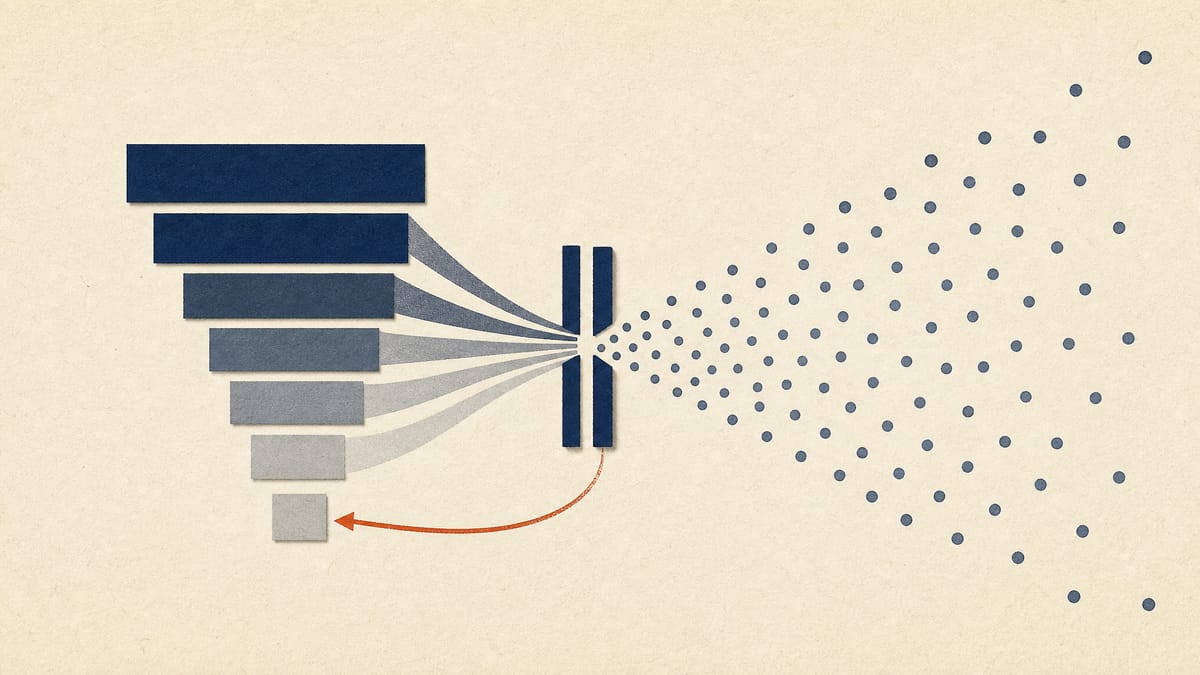
CKD's bank and insurer shareholders sell 3.57mn shares as the company lines up a ¥5bn buyback
Seven financial-institution shareholders will sell 3,570,800 CKD shares at a price set between October 19 and 22, and the company has authorised buying back up to 1.3mn shares or ¥5bn.
What changed: This is a sale of existing shares, not new stock. Sumitomo Mitsui Trust Bank is the largest seller with 1,000,000 shares. CKD says Japanese shareholders are reviewing policy-held shares as governance tightens, that it held talks mainly with the financial institutions that own its stock, and that they agreed to sell. It wants to broaden and diversify its shareholder base. Daiwa Securities and SMBC Nikko Securities are joint lead managers and the underwriters take all the shares.
The move: The buyback is capped at 1.3mn shares, equal to 1.94% of shares outstanding excluding treasury stock, and at ¥5bn. CKD cites capital efficiency and shareholder returns, and easing the effect of the sale on supply and demand for its shares. Purchases run on the Tokyo Stock Exchange through December 30, and some or all of the shares may not be bought.
By the numbers: Daiwa may sell up to 535,500 borrowed shares as an over-allotment, with a greenshoe option running to November 20, 2026. The price will be the Tokyo closing price on the pricing date, between October 19 and 22, multiplied by 0.90 to 1.00 for a provisional range, then adjusted for demand. One selling Sumitomo Mitsui bank has agreed to a lock-up of about 180 days from delivery.
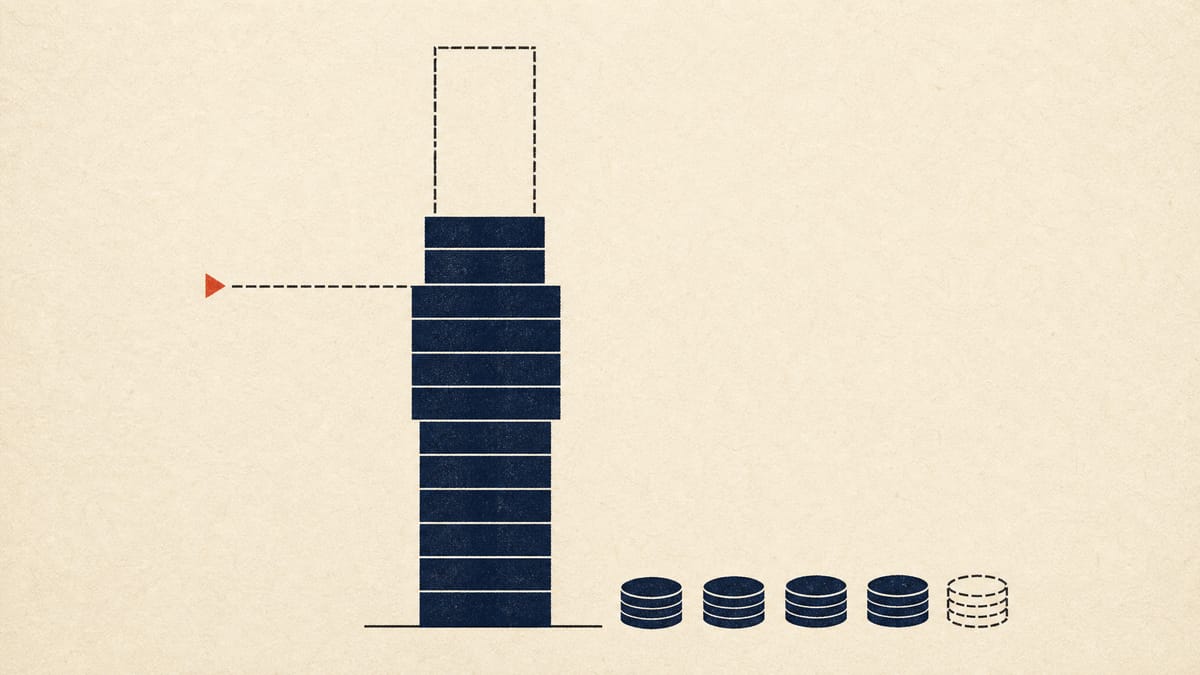
Oasis lifts its en inc. stake to 15.63% and keeps further buying open
Oasis Management's holding in en inc. rose from 14.54% to 15.63% on daily market purchases, and its filing says it plans to add more than 5 percentage points if the shares look undervalued.
What changed: A large-shareholding change report filed on 7 October shows Oasis holding 7,769,539 shares against 49,716,000 outstanding as of 30 September 2026. The 60-day schedule shows daily on-market buying from 3 August to 30 September, stepping up from 42,000 to roughly 60,000 shares a day. Total acquisition funding was ¥12.09bn, all fund money, with no borrowing.
The move: The filing says Oasis is already making proposals to en inc. on delisting and on material changes to capital policy. It lists further proposal categories it plans over the next 12 months, including disposal of important assets, dismissal of a representative director and changes to dividend policy. These are statutory categories, and the report does not say en inc. has agreed to anything.
What to watch: Oasis says it plans to raise its holding by more than 5 percentage points, only if it judges the market price undervalued. Price, quantity and timing are still under consideration, and it plans to act within three months of 30 September but says it could go beyond that window.
quick hits
Quick Hits
Falcom forecasts record profit on strong game sales and lifts dividend plan to ¥60
Read moreNihon Falcom raised its operating profit forecast for the year to September to ¥2.8bn from ¥2.2bn, crediting sales of its recent releases, and plans a ¥60 dividend including a ¥30 commemorative payout.
Harima Chemicals to exit loss-making New Zealand pine chemicals plant
Read moreHarima Chemicals Group will stop production at LAWTER (N.Z.) on 30 June 2027 and close the plant in May 2028, expecting a roughly ¥2.8bn special loss after three years of operating losses at the unit.
Nissan Chemical registers a wholly owned Chinese subsidiary to make chip coating materials near customers
Read moreNissan Chemical has registered a wholly owned subsidiary in Zhangjiagang with 210mn yuan of registered capital to make BARC and multilayer semiconductor materials near Chinese customers, with a first remittance of 89mn yuan planned for 15 October.
coconala buys 51% of AI consultancy Acrosstudio for ¥867mn
Read morecoconala will pay ¥867mn for 51% of Acrosstudio, a 63-person AI consultancy with ¥1.13bn in sales and ¥46mn operating profit in the year to June 2026, with the transfer scheduled for October 30.
Mitsubishi Motors settles US subsidiary lawsuit, to book cost in July-September quarter
Read moreMitsubishi Motors said a settlement ended the lawsuit against Mitsubishi Motors North America on October 6 US time, will book the cost in the quarter to September, and kept its earnings forecast unchanged, with no amount disclosed.
Otsuka completes US filing seeking full approval for IgA kidney drug VOYXACT
Read moreOtsuka's US arm completed its rolling submission on October 6 seeking traditional FDA approval for VOYXACT in adult IgA nephropathy, a drug already approved on an accelerated basis; the company kept its 2026 forecast unchanged.
NPC sets 60% sales floor outside First Solar in five-year plan with ¥4bn investment
Read moreNPC's five-year plan targets at least 60% of sales from customers other than First Solar, about ¥4bn of investment and a 25% dividend payout ratio, with perovskite and panel recycling as the growth bets.
METI proposes JC-STAR Level 1 label for internet-connected solar, wind, battery and fuel cell equipment
Read moreA draft ANRE guideline would require JC-STAR Level 1 labels on IP-capable equipment in new solar, battery, wind and fuel cell projects, starting between April 2027 and April 2028, with comments due by November 6.
Japan invites private firms to name the public services they could take over
Read moreBusinesses and local governments have until 4 November to say which state and municipal functions private operators could run, ahead of a 2027 revision of the policy that governs market testing.