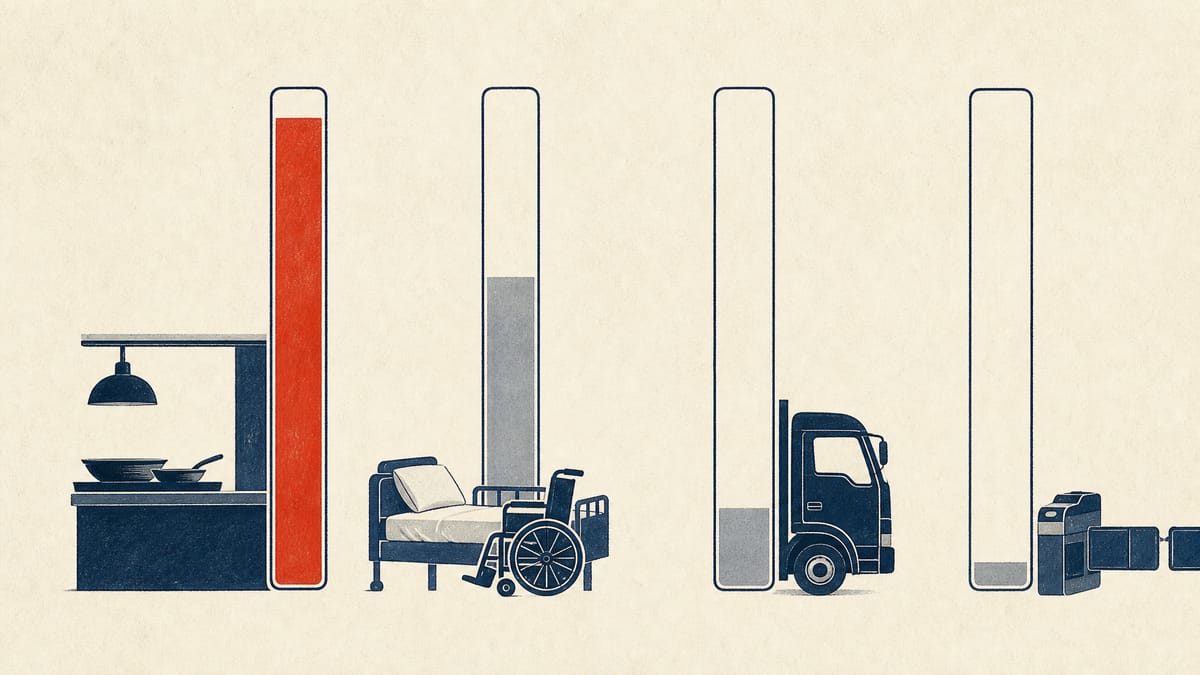
The number of foreign workers on Japan's Type 1 Specified Skilled Worker visa reached 432,016 at the end of July 2026, up 89,093 from a year earlier, according to preliminary figures from the Immigration Services Agency. That is 53.6% of the 805,700 "expected acceptance" figure the cabinet set on 23 January 2026 for the period to March 2029. See also: Japan's Restaurants Near Their Foreign-Worker Cap While Truckers and Rail Barely Touch Theirs.
Where the growth came from
Nursing care added the most people: 24,402 over the year, to 81,436, or 64.2% of its 126,900 figure. Food manufacturing was next with 15,567 more, reaching 101,922 and 76.3% of a 133,500 figure. Food service added 12,107 and now has 49,290 residents against a cap of 50,000, or 98.6%.
Industrial products manufacturing has the largest figure of any sector, 199,500, and is among the least filled of the big ones: 63,032 residents, or 31.6%, after a rise of 10,768. Agriculture added 8,891 (44,952 residents, 61.3%) and construction 7,937 (52,366 residents, 68.9%).
| Sector | Cap | Residents | Fill rate | Annual increase |
|---|---|---|---|---|
| Nursing care | 126,900 | 81,436 | 64.2% | 24,402 |
| Food manufacturing | 133,500 | 101,922 | 76.3% | 15,567 |
| Food service | 50,000 | 49,290 | 98.6% | 12,107 |
| Industrial products manufacturing | 199,500 | 63,032 | 31.6% | 10,768 |
| Construction | 76,000 | 52,366 | 68.9% | 7,937 |
| Agriculture | 73,300 | 44,952 | 61.3% | 8,891 |
| Road transport | 22,100 | 703 | 3.2% | 681 |
| Rail | 2,900 | 73 | 2.5% | 52 |
| Logistics warehousing | 11,400 | - | - | - |
| Total | 805,700 | 432,016 | 53.6% | 89,093 |
Sectors barely started
The transport sectors remain far from their figures. Road transport had 703 residents against 22,100, or 3.2%, after an increase of 681. Rail had 73 against 2,900 (2.5%), up 52. Accommodation had 2,771 against 14,800, or 18.7%.
Logistics warehousing, with a figure of 11,400, and resource recycling, with 900, were added to the eligible fields in January 2026 according to the document's footnotes. Both show a dash instead of a resident count. Forestry has 19 residents against 900, and the timber industry 99 against 4,500.
Caveats
The figures are labelled preliminary. The document does not say what happens when a sector reaches its expected acceptance figure, which matters most for food service, already at 98.6% of its figure.