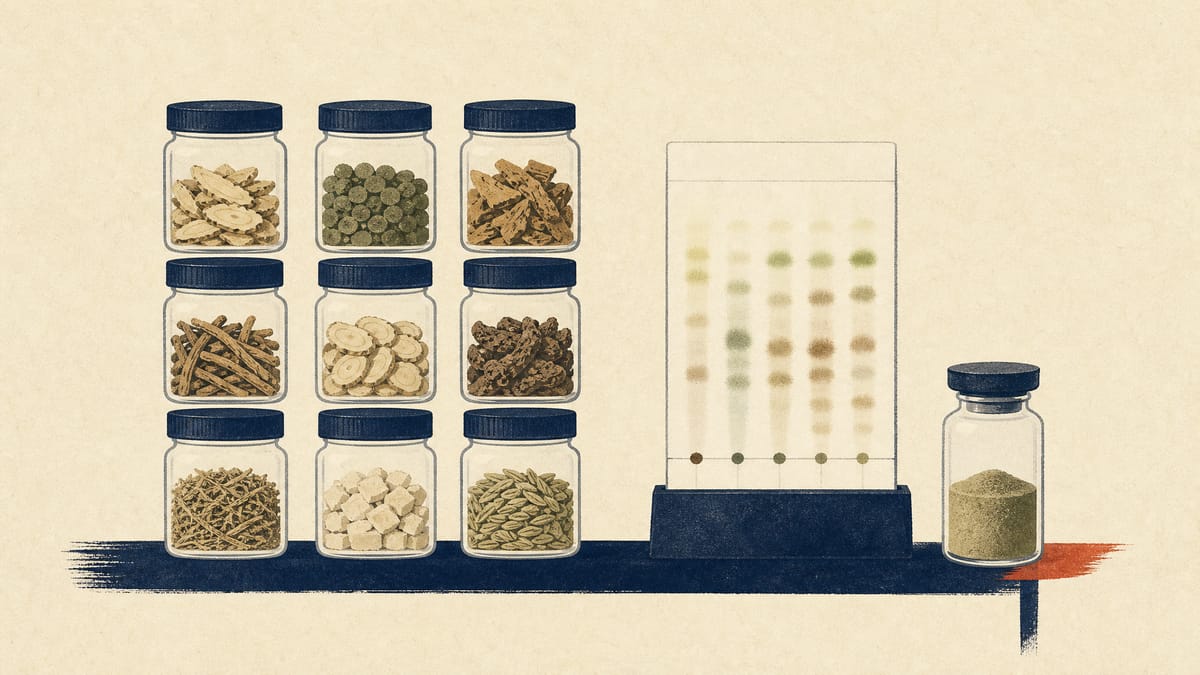
The health ministry has proposed adding nine items to its Japanese standards for non-Pharmacopoeial natural drugs and revising 18 existing entries, with publication planned for December 2026 and a transition period of about one year and six months from the publication date.
What the draft covers
The collection covers crude drugs used as pharmaceutical raw materials that are not listed in the Japanese Pharmacopoeia. It sets out the herbal specifications that marketing authorization holders must define when developing products. The ministry's Pharmaceutical Evaluation Division is revising the 2022 version, issued by notification on March 8, 2022.
The new entries are eight crude drugs and powdered crude drugs plus one extract. The eight are Guarana, Artemisia Annua Herb, Mistletoe, Fermented Soybean, Lophatherum Herb, Dodder Seed, Powdered Dodder Seed and Plantago Ovata Husk. The extract is Senna Extract.
The 18 revised items mostly change confirmation tests or crude-drug descriptions. Two assay methods are revised, for Uncaria Hook Extract and Citrus Unshiu Peel Extract. The acid-insoluble ash entry is revised for Powdered Oriental Bezoar, and Coltsfoot Flower also gets a revised loss-on-drying entry. The draft text gives test methods and limits, such as a minimum total sennoside content for Senna Extract, but it is a quality specification, not a finding on efficacy or an approval of any product.
Timing and how to comment
The consultation is voluntary and not a procedure under the Administrative Procedure Act. The ministry's notice sets the comment period from October 6 to November 4, 2026, with submissions required to arrive by then. The e-Gov listing shows the cutoff as 0:00 on November 5.
Comments must be in Japanese, with reasons, through the e-Gov form, by email or by post. The ministry says it will not reply to individual comments and may publish them without names and contact details.
The ministry plans to publish the final standards in December 2026. The transition period of about 18 months runs from that publication date.