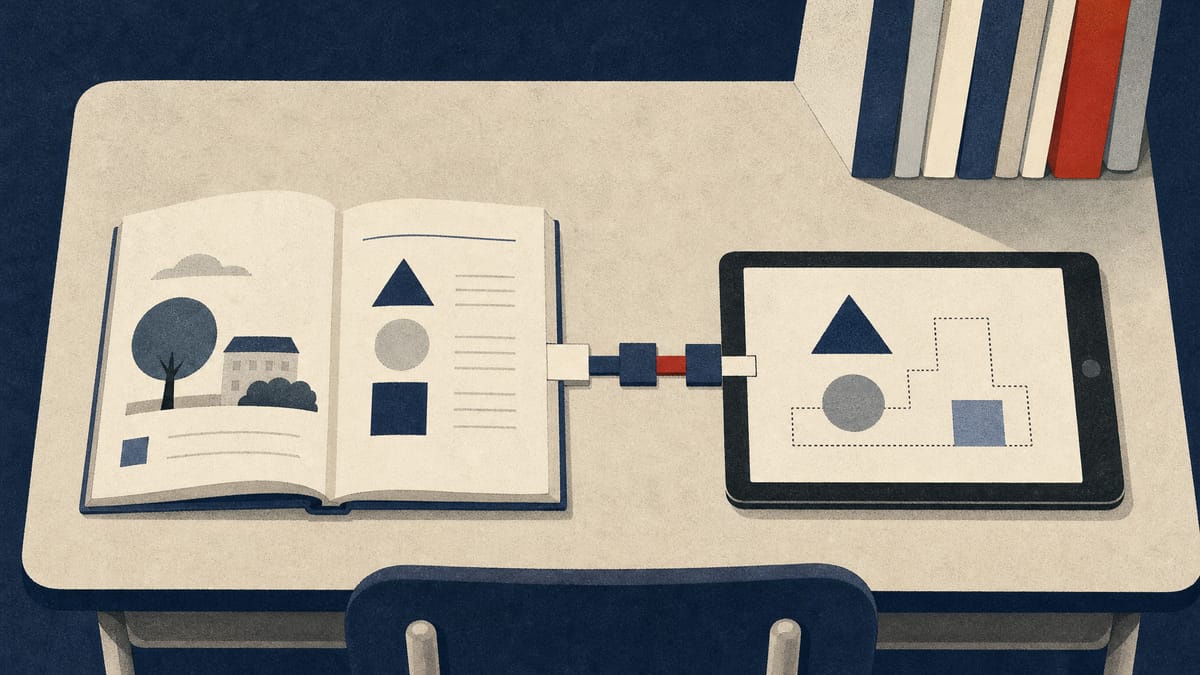
The education ministry's draft guidelines on publishing and adopting textbooks with digital components expect hybrid paper-and-digital books to play the central role in every grade and subject. All-digital textbooks would be allowed only in some grades and subjects. The ministry opened a voluntary public comment round on October 23, with submissions due by 23:59 on November 8. The draft is a proposal, and its date line is still blank.
Where all-digital is allowed
The draft rules out all-digital textbooks for lower and middle primary grades and would permit them only from upper primary onward. By subject, it limits them to foreign languages and some practical subjects: upper primary music and arts and crafts, junior high music, art and technology (the technology field of technology and home economics), and high school arts (excluding calligraphy), information and specialised-course subjects. Where all-digital books are not allowed, hybrid textbooks should be mainly paper, with digital content supplementary; lower and middle primary books should be largely paper.
The ministry's survey of adoption authorities backs the hybrid default. Hybrid was preferred by 88.3% for primary, 86.3% for junior high and 78.4% for high school. Demand for all-digital books was 5.5%, 7.1% and 4.7% respectively.
What publishers and adopters face
The ministry says it does not intend to require publishers to issue the same content in several forms. Publishers must follow technical standard specifications for the digital part and viewer software, covering accessibility, printing and download functions and dissemination-prevention features. Certification criteria are to come from the textbook screening council. At adoption, the draft would bar supplying non-textbook materials, such as links to linked digital teaching tools, alongside the textbook, and would have publishers list digital functions for adopters.
Schools could not use only the paper part of a hybrid book, and the draft sets network readiness as a precondition: about 64% of schools had the required speed in December 2025, and about 95% of school operators are expected to by fiscal 2028.
Timeline
The amending law (Act No. 37 of 2026) takes effect on April 1, 2027. Textbooks with digital parts arrive in stages from primary schools from fiscal 2030, with adoption from fiscal 2029. Comments go through the e-Gov form or by post to the ministry's textbook division.