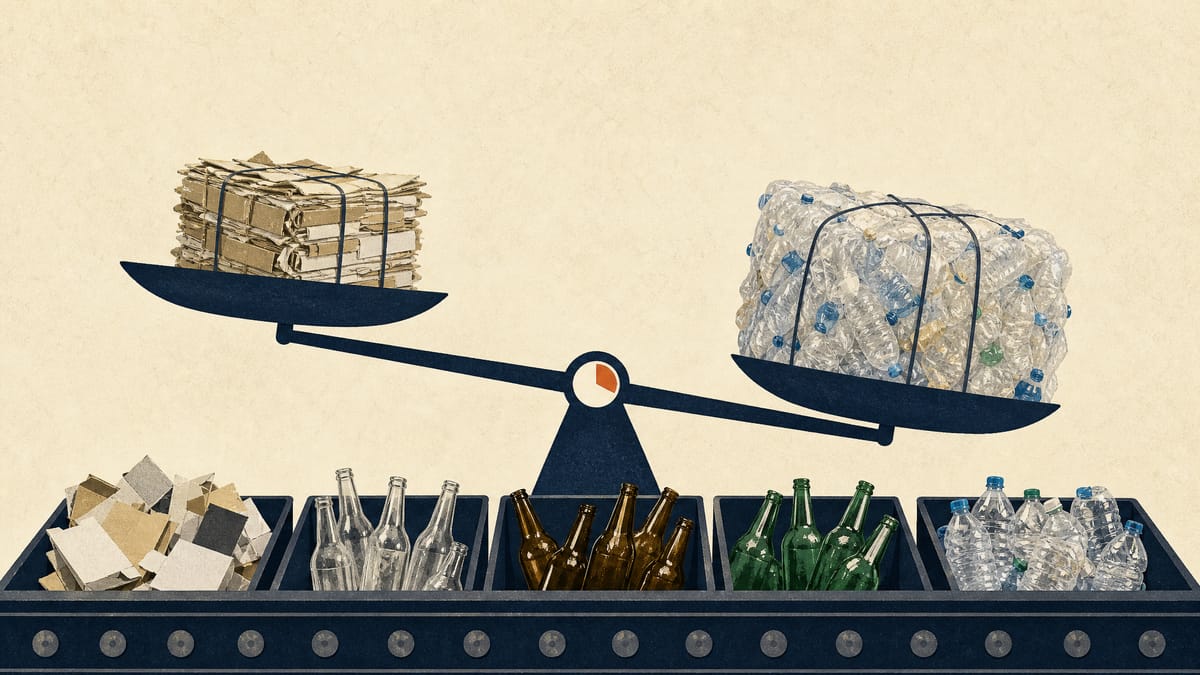
Japan's ministries have proposed new recycling quotas under the Containers and Packaging Recycling Law, and the draft moves in opposite directions for paper and plastic. The total recycling obligation for paper packaging would fall to 16,830 tonnes from 27,720 tonnes, while plastic packaging would rise to 732,600 tonnes from 702,900 tonnes.
What the drafts set
The law requires three groups of businesses (users of specified containers, makers of them, and users of specified packaging) to recycle a set quantity of their container and packaging waste every year. The ministers set the figures used to work out each company's share by ordinance or notice.
The package covers two draft ministerial ordinances plus eight notices, opened for public comment on 22 October 2026. The drafts would take effect on 1 April 2027 and reset the values for the fiscal year beginning that day. The ministries say they are updating the figures in light of surveys of container and packaging use and manufacturing, and of the composition of packaging waste.
| Material | Proposed (tonnes) | Current (tonnes) |
|---|---|---|
| Glass bottles, clear | 90,250 | 92,120 |
| Glass bottles, brown | 84,390 | 89,890 |
| Glass bottles, other colours | 108,900 | 111,930 |
| Paper packaging | 16,830 | 27,720 |
| PET bottles | 183,000 | 184,000 |
| Plastic packaging | 732,600 | 702,900 |
The obligation for PET bottles would ease slightly to 183,000 tonnes from 184,000 tonnes. Each of the three glass-bottle colours would also fall.
Who carries the plastic
The share of the total that falls on container users and makers (the specified-container ratio) would rise for paper packaging to 89.53% from 88.44%, and dip for plastic packaging to 93.17% from 93.51%. Glass bottles and PET bottles stay at 100%, because the draft says they are specified containers only and have no specified-packaging component.
The expected waste from users of specified packaging would move the same way as the totals. For plastic packaging it would rise to 106,911 tonnes from 99,299 tonnes. For paper packaging it would fall to 83,125 tonnes from 87,973 tonnes.
The drafts also reset sector-level ratios and expected-waste volumes across eight industry categories, from food and soft-drink makers to alcohol, pharmaceuticals, cosmetics and retail. The movements differ by sector and material. A company's own obligation depends on which category it falls into and which containers it uses.
How to respond
Comments are open until 18:00 on 21 November 2026. The ministries ask commenters to read the full comment guidelines and draft texts before submitting. The contact point is the resource circulation economy division of METI's Innovation and Environment Bureau.