IRISO Electronics' third-party committee says it cannot conclusively establish that money paid to a local lawyer in an overseas labour dispute went to judges. It does say the circumstances make that possible. The connector maker published a partly redacted version of the committee's report on 29 September 2026, and the findings that are firmly established sit elsewhere in it.
Tokyo Brief reported in July that the company had no release date for two straight earnings reports.
The payments the committee could not pin down
The first case involves a labour dispute, running since 2008, at an overseas subsidiary. The subsidiary paid its retained lawyer about ¥27mn in March 2021, ahead of a high court ruling, and about ¥50mn in August 2025, in connection with a supreme court ruling in the same dispute.
The committee found no direct evidence that any of the money reached judges, so it did not make that finding. It pointed to what the lawyer said before each payment. He described "lobbying" and, for 2025, said three judges were needed as intermediaries. A March 2021 entry in an employee's work log read "Labor Cart ¥20mn (winning over judges)", which the committee took as the lawyer putting that figure on the table. The 2025 invoice listed a "Labor Relations Assistance" charge far larger than the legal fees, and the lawyer did not provide a breakdown when asked.
Both payments were approved by internal circulation, not by a board vote. The committee says the 2025 payment clearly required approval from both the parent and subsidiary boards. It also found that senior executives knew, or could easily have known, that the money might go to judges.
Customs payments, by contrast, are confirmed
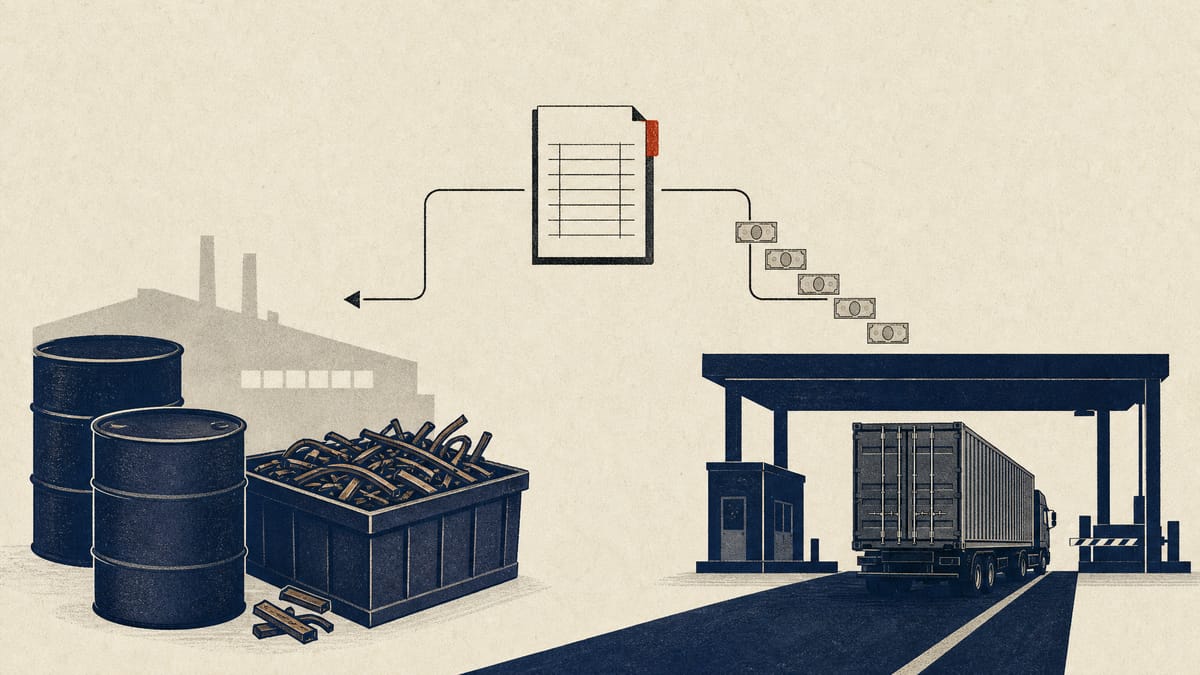
At a second overseas subsidiary, the committee confirmed that improper cash payments to customs officials ran for a long period, to smooth export and import clearance. Part of the sale proceeds from metal scrap was pooled on the side of an outside contractor, and some was returned to the subsidiary in cash to fund the payments.
The committee's rough tally puts the payments from April 2012 to March 2026 at about ¥123.5mn, converted at IMF monthly rates. It warns the figure could be too low because of data gaps or too high because legitimate spending is mixed in. From May 2024 the cash was left out of the accounting system and tracked in spreadsheets, and older paper approvals were slated for disposal after six months.
Accounting and quality lapses
The committee also found that the consolidated statements were prepared using figures from one overseas subsidiary whose year-end closing was unfinished. The auditor was told of turmoil in that subsidiary's accounting but was not proactively told the closing was incomplete.
Two subsidiaries booked March 2023 sales for goods shipped in April or later, and one of them also booked sales in the years ended March 2023 and March 2024 despite knowing deliveries had slipped. The committee said sales-target pressure may have played a part.
| Fiscal year ended March | Effect on sales |
|---|---|
| 2023 | Down ¥571mn |
| 2024 | Up ¥472mn |
| 2025 | Up ¥99mn |
Other accounting errors were confirmed, but the committee found nothing showing they were made deliberately to manipulate profit. On quality, it found that test reports were produced from past data and random-number functions, and that out-of-spec results were excluded or rewritten.
What comes next
The auditor's review continues. IRISO Electronics plans to announce results for the year to March 2026 and corrections to earlier earnings summaries on 30 September. That is also the extended deadline for its annual securities report, and the company plans to file amended past reports by the same date. The company says recurrence-prevention measures will be announced later.
The committee stresses that its work rested on voluntary cooperation, and that its assessments do not by themselves create legal liability for the group or any individual.