Web View
Japan's GDP slipped 0.0%, and the verdict stayed 'moderate'
The Cabinet Office kept its 'moderate recovery' verdict while real GDP slipped for the first time in four quarters, and Toyota intends to tender 10mn JTEKT shares.
MARKETS
Market pulse
Tokyo equities softened while the 10Y JGB yield nudged lower.
Sourced from Nikkei, JPX, BOJ, MOF - values, not commentary.
lead
The Verdict Holds, the Quarter Doesn't

Cabinet Office keeps its recovery call as consumption stalls and real GDP slips
The Cabinet Office's November report holds its 'moderate recovery' verdict, but real GDP fell for the first time in four quarters and its wording on consumer spending is softer. The report, dated 24 November, keeps its headline verdict that the economy is recovering at a moderate pace as a whole, with attention due to the effects of the situation in the Middle East. Real GDP for July to September fell 0.0% from the previous quarter, which the report puts at 0.1% on an annualised basis. Net exports, private consumption, public investment, housing and government consumption subtracted; business equipment and private inventories added. Nominal GDP rose 0.4%, a tenth straight quarterly gain.
What changed: Private consumption fell 0.3% in real terms in the quarter. In September the macro consumption index fell 0.1% on the month, the household-level index fell 1.9% and retail sales fell 0.6%. The report says real total employee income is rising gradually, but consumer sentiment shows a pause in its recovery.
Why it matters: Jobs are the support. The unemployment rate fell 0.1 percentage point to 2.4% in September, and the Bank of Japan's Tankan employment conditions index for all industries, which gauges firms' sense of labour shortage, was minus 38, a shortage 1 point wider than in June. Domestic corporate goods prices rose 0.9% in October, and core consumer prices excluding fresh food rose 0.5% on the month in September. The report expects consumption to pick up as jobs and incomes improve, while flagging the drag from higher prices.
What to watch: The government has carried out emergency measures to curb sharp swings in fuel oil prices, and says alternative crude procurement and stockpile releases will help secure a stable crude supply when the situation requires it. It repeats that it expects the Bank of Japan to reach the 2% price target sustainably. The report gives no figure for how large a drag the Middle East situation could be; it lists it as a risk to exports, imports, production and the outlook for corporate profits.
secondary
Rules, Drafts and Enforcement
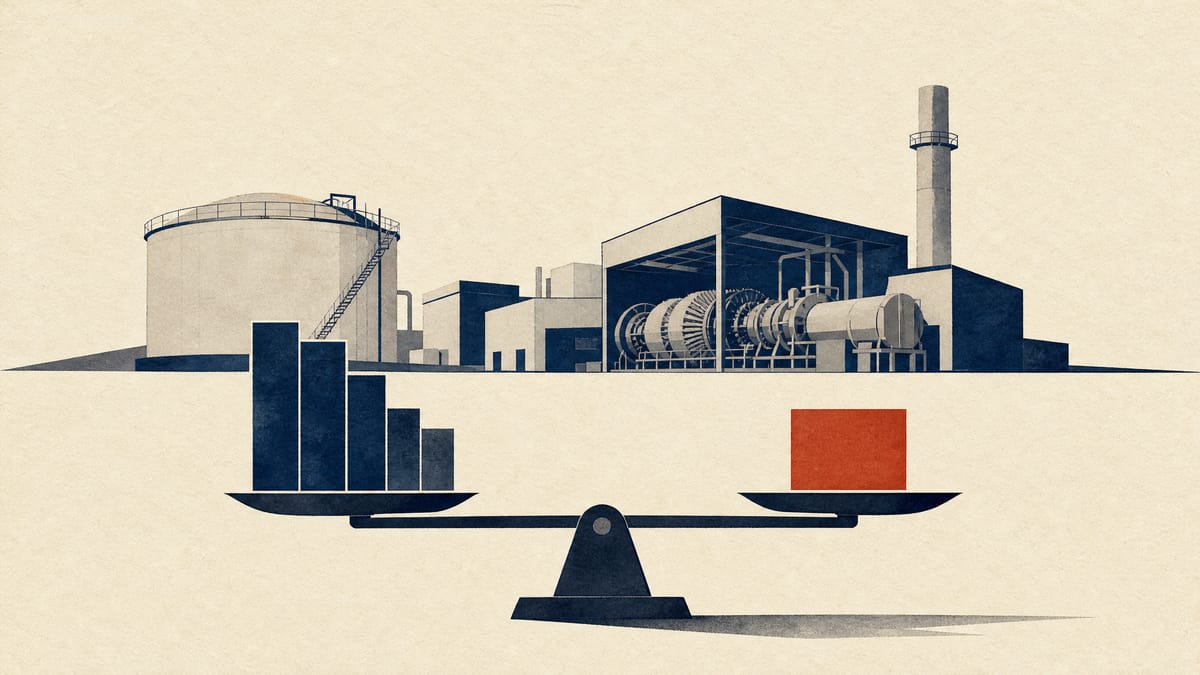
METI draft lets LNG-only power bidders fix refunds at ¥9,900 per kW a year for five years
LNG-only winners of the fourth long-term decarbonized power auction could opt for a refund fixed in advance, at ¥9,900 per kW a year on a five-year basis or ¥8,300 on a ten-year basis, in place of returning about 90% of actual other-market profit.
What changed: The Agency for Natural Resources and Energy opened a consultation on 24 November that runs to 23 December. The draft keeps the current route, where winners return about 90% of their actual other-market profit to OCCTO, the market administrator, and adds a second option for LNG-only plants: a refund level fixed for five or ten years and adjusted each year by core consumer prices. The two quoted levels apply to plants starting supply by the year to March 2035. The choice is made once, in the year the plant starts supplying capacity: operators who pick the actual-based route cannot later switch, while fixed-refund plants can choose again after each five- or ten-year period. Revenue from other uses of supported assets, such as third-party use of an LNG terminal, would still be refunded on actuals.
The catch: The draft is neither a final rule nor an awarded term. The guideline draft's footnotes say the fixed-refund level and how it is set remain under council review. A working-group meeting on 14 July had been shown ¥8,000 per kW a year, and the draft's two figures are both above that.
Details: The draft seeks 6 million kW of LNG-only capacity in the fourth round and raises the price cap from ¥55,000 per kW a year to as much as ¥92,000 for projects that include building a new LNG terminal.
Japan revokes two intern-supervisor licences and 11 employers' training approvals
The justice and labour ministries pulled two supervising cooperatives' licences over audit failures on 25 November, while the Immigration Services Agency and the labour ministry cancelled training-plan approvals at 11 employers.
What happened: A cooperative in Ibaraki prefecture lost its licence for failing to audit member employers properly and for filing an audit report with false content. A cooperative in Imari, Saga prefecture, lost its licence for filing a false training-plan application, for not supervising member employers in line with approved plans, and for a false audit report. A Kagoshima cooperative and BestBrains cooperative in Saitama prefecture were ordered to improve.
Details: Five employers lost approvals for what the authorities call acts that seriously infringed interns' human rights. Three, in Aichi, Ibaraki and Gifu, were cited for making foreigners work illegally, and a Fukuoka employer was cited after a final fine under the Occupational Safety and Health Act. Other cases cited wages not paid in line with approved plans and training not run according to them. The 11 is a count of employers, not interns, and the release does not say how many interns were affected.
Japan's FSA puts AI agent liability and quantum risk on a new study group's agenda
The Financial Services Agency's new study group on the sound use of AI is due to examine how AI agents could amplify market swings and who bears the loss when one acts beyond its authority.
What changed: The group's first meeting was set for 24 November. The secretariat's slides give it five themes: how financial institutions use AI, including agents; effects on financial stability and inclusion; ways to verify an agent's identity and delegated authority; the risk that quantum computers weaken blockchain cryptography; and legal questions about responsibility and contract validity when a customer-facing agent errs or exceeds its authority.
Context: The secretariat matched problems to remedies from 11 reference items published by bodies including the IMF, the Bank of England and the Financial Stability Board. The IMF warned that AI models acting alike could amplify market volatility and proposed circuit breakers and revised margin practice. The Hong Kong Monetary Authority said it would consider an industry-level register of critical AI agents.
What to watch: The group is one of two research groups under the FSA's on-chain finance initiative, and the slides say the wider on-chain finance forum will hold a second meeting in early 2027 to produce an interim summary and a public-private roadmap. Supervisory guidance for financial institutions' use of AI is planned, drawing on the AI group's discussions, but the slides give no date.
secondary
Control, Capital and Corporate Deals
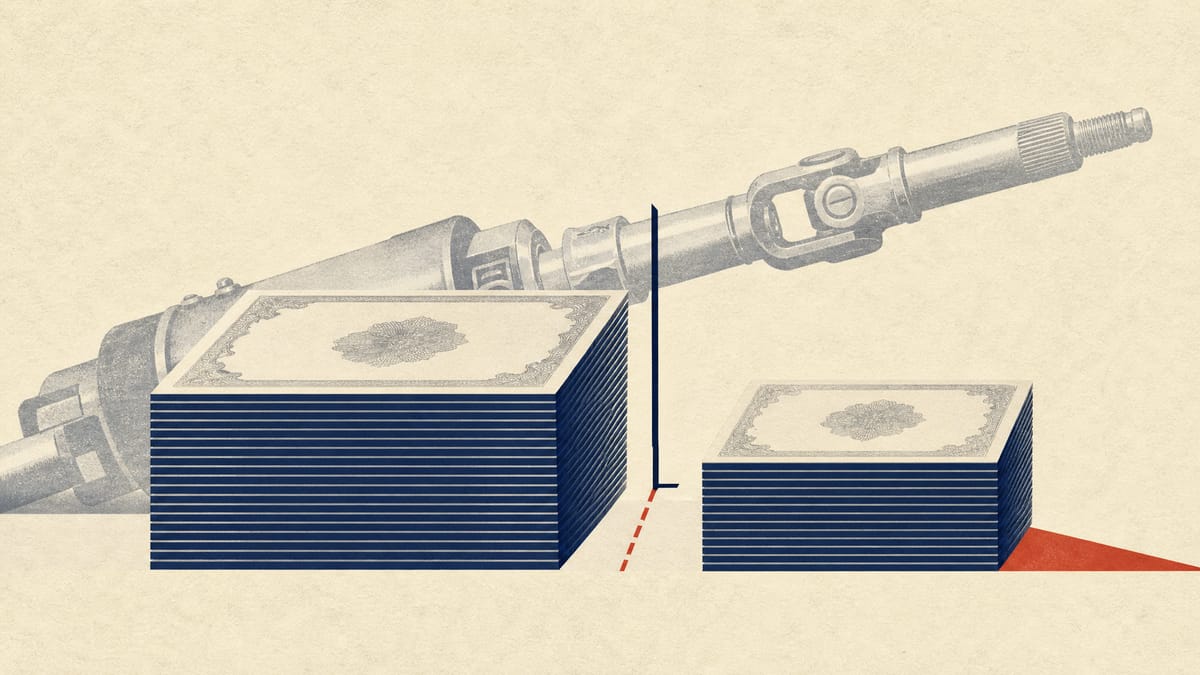
JTEKT tender targets 11mn shares as Toyota says it will offer 10mn
JTEKT plans to buy back 11mn of its own shares at ¥1,733 each in a tender offer, and Toyota, which holds 24.26%, has said it intends to tender 10mn of them.
The move: The board resolved on 25 November to buy 11 million shares, 3.45% of the total, at ¥1,733, a 10% discount to the 24 November close of ¥1,925. The offer runs from 26 November to 23 December, with settlement starting 21 January 2027. JTEKT expects to need about ¥19.1bn and will pay from its own cash.
Details: Toyota holds 77,235,087 shares and told JTEKT it intends to tender 10 million, or 3.14% of the total. The two sides have not signed a tender agreement. Talks began with a plan for Toyota to tender 9 million; JTEKT said the share price since its first approach on 26 October would have left spending short of the ¥20bn it had in mind on that number, so it asked about 10 million on 13 November and Toyota agreed on 25 November. If acceptances exceed 11 million shares, purchases are pro rata, so part of Toyota's tendered stake would go unbought. A JTEKT director who holds a senior Toyota post stayed out of the board's deliberation and vote, as did the president, who spent 30 years or more at Toyota.
What to watch: JTEKT plans to cancel 9.5 million of the repurchased shares on 15 February 2027, but only if it acquires more than 9.5 million in the tender.
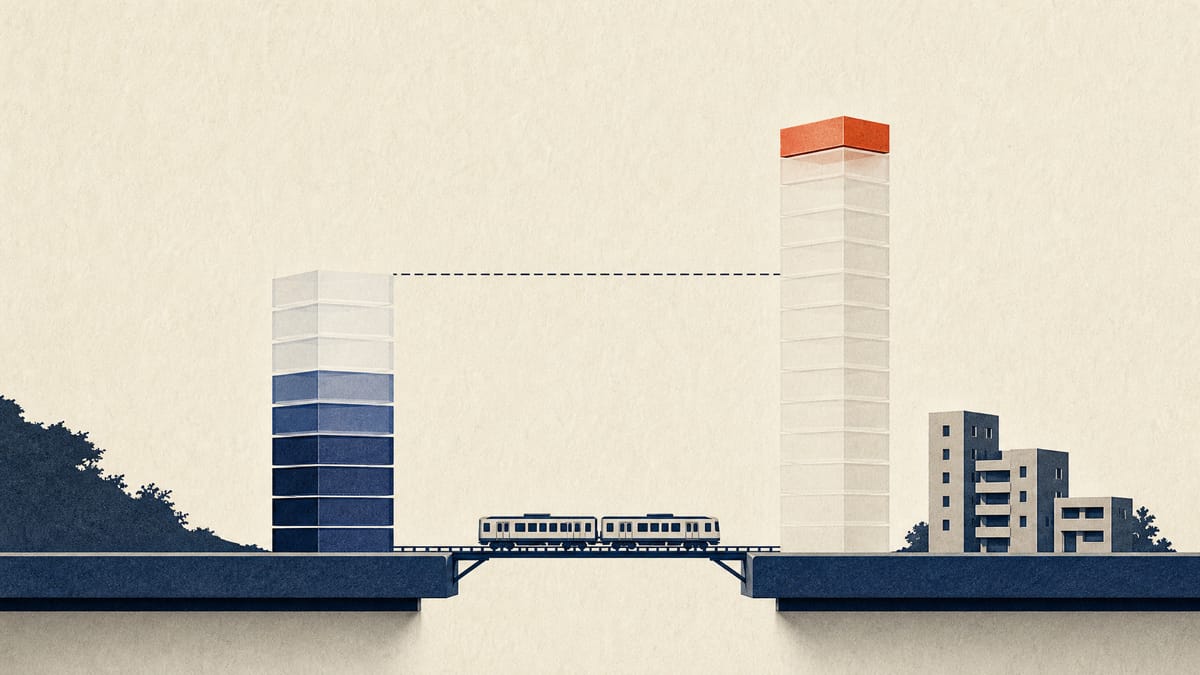
NANKAI set to become TASUKI Holdings' largest shareholder with a 21.12% stake
Nankai has signed to buy 13,037,020 shares of Tasuki Holdings, 21.12% of issued shares excluding treasury stock and 21.23% of voting rights, with transfers targeted for early December; neither the stake nor the transfer has settled.
The move: The price is ¥1,080 a share, or ¥14.08bn in total. The sellers are Tasuki's largest shareholder, who founded a Tasuki subsidiary, and seven other holders. The founder is selling 8,000,000 shares for ¥8.64bn, which cuts the founder's voting share from 16.29% to 3.26%. Nankai becomes the largest shareholder and Tasuki becomes an equity-method affiliate.
The catch: Two terms take effect only once Nankai holds 20% or more of the votes. Nankai may nominate one non-executive director candidate, and Tasuki has agreed to take appropriate steps to see that person elected. Nankai has agreed that, without Tasuki's prior written consent, it will not buy shares that lift its combined voting ratio above 30% and will not launch a tender offer. Tasuki says the standstill does not require Nankai's approval for business execution.
Details: Nankai expects a minor effect on earnings for the year to March 2027, while Tasuki says the amount for its current year is undecided.
Senshu Ikeda targets April 2027 final agreement with Shiga Bank, share exchange a year later
Senshu Ikeda Holdings has put dates on its planned combination with Shiga Bank: a final agreement in April 2027, shareholder meetings in December 2027 and a share exchange on 1 April 2028. All three are plans.
What changed: Senshu Ikeda's board resolved on 29 October 2026 to sign a basic agreement, so this is a plan, not a completed deal. Senshu Ikeda would be renamed and become the holding company, and Shiga Bank would exchange its shares with it and become a wholly owned subsidiary. Both banks keep their names and head offices, and a merger of the banks is not planned.
By the numbers: Shiga Bank's consolidated assets were ¥7.669tn and net assets ¥509bn at 31 March 2026; Senshu Ikeda's were ¥6.596tn and ¥253.9bn. Those are historical balance-sheet figures, not a deal value. For the six months to 30 September, Senshu Ikeda's consolidated ordinary profit rose to ¥15.9bn from ¥12.5bn.
What to watch: The exchange ratio will be set after due diligence and valuations and announced by the time the final agreement is signed. The timetable also depends on shareholder approvals and regulatory clearances, including approvals under the Banking Act.
secondary
Company Results and Rulings
Sapporo's ¥301.8bn profit comes from a property gain as operating profit falls 83%
Sapporo Breweries' nine-month profit jumped to ¥301.8bn from ¥10.9bn, but a ¥314.5bn gain on losing control of its real estate unit did the lifting; continuing operating profit fell 83.2% to ¥2.6bn.
What changed: The gain sits in discontinued operations, which earned ¥299.9bn after tax for the nine months to 30 September. The filing says ¥154.1bn of the gain comes from remeasuring the investment Sapporo kept in the former subsidiary at fair value. The first of three closings took place on 1 June 2026, when SPARK, a vehicle funded by a consortium of funds advised or operated by PAG Investment Management and Kohlberg Kravis Roberts, took 51.0% of the voting rights in the unit. The remaining steps are scheduled, not done.
The number: Continuing revenue slipped 0.2% to ¥367.3bn, and business profit, the company's own measure of recurring earnings, rose 0.7% to ¥15.9bn. Operating profit fell because other operating expenses rose to ¥19.0bn from ¥3.7bn, which the company attributes to restructuring costs and impairment losses. Overseas operations swung to a ¥6.5bn operating loss from a ¥2.4bn profit.
What to watch: Sapporo says it has been under an on-site inspection by the Japan Fair Trade Commission under the Antimonopoly Act since 7 October 2026 and will cooperate fully. It says the effect on its results is unknown, and the filing records no finding. Full-year guidance is unchanged at operating profit of ¥6.0bn.
Ono keeps Opdivo royalties to at least 2036 after Amgen settlement
Ono Pharmaceutical and Bristol Myers Squibb settled US patent litigation with Amgen, which can launch an Opdivo biosimilar from 1 October 2028; Ono says its royalties from BMS continue to at least 2036.
What changed: Ono announced the settlement on 25 November. The date is permission, not a launch: the release says Amgen 'can' sell from 1 October 2028.
By the numbers: Ono says it will keep receiving royalties from BMS, calculated on BMS's US Opdivo sales, through at least 2036, including after a biosimilar reaches the market. The rate varies between 2% and 4% depending on the degree of biosimilar penetration in the US market. Ono says the settlement has no effect on its consolidated results for the year to March 2027.
quick hits
Quick Hits
Finance minister backs budget council's market-confidence push, but offers no new budget numbers
Read moreAsked about the Fiscal System Council's recommendations, the finance minister said its call to cut the debt ratio and show consistent policy matches the ministry's own aim, as next year's budget enters its final stretch.
Osaki Electric plans phased production restart from November 27, with shipments and normal order handling later
Read moreOsaki Electric expects production to resume in stages from November 27, shipments of existing orders from December 1 and normal new-order processing from December 7, while the content and scope of data sent outside the company remain under investigation.
Japan's transport ministry drafts off-site statutory inspection maintenance for vehicles up to medium class
Read moreJapan's transport ministry proposes letting mobile mechanics do statutory inspection maintenance and drum-brake work off-site on vehicles up to medium class, with at least two workers on specified brake work for medium and large vehicles; comments close 25 December.
Nippon Prologis REIT plans ¥32.6bn of loans to buy three Koga warehouses for ¥34.5bn
Read moreNippon Prologis REIT plans to draw ¥32.6bn of TIBOR-linked loans on December 1 for three Koga logistics properties priced at ¥34.5bn, lifting debt to ¥394.9bn; its revised forecast, issued after board approval of the purchase, puts regular distributions at ¥1,894 a unit for the half to May 2027.
KDDI's 3- and 10-year bonds to fund 5G; its 5- and 7-year bonds to repay short-term debt
Read moreKDDI plans to send ¥80.8bn of estimated net proceeds from its 3- and 10-year sustainability bonds to 5G-related spending by March 2027, while its 5- and 7-year bonds are earmarked for borrowings and commercial paper due by the end of December.
Invincible's Kansai hotel RevPAR fell 30.9% in October while its 91 other reported hotels rose 11.1%
Read moreInvincible's ten Kansai hotels saw October RevPAR fall 30.9% after the Osaka Expo, while the other 91 hotels in its domestic reporting group rose 11.1%; the REIT guides November RevPAR to roughly +0.4%.
Keisei sells ¥59.5bn of Oriental Land shares into buyback, expects ¥50.6bn consolidated gain
Read moreKeisei sold 15,577,800 shares for ¥59.5bn into Oriental Land's completed ¥60bn buyback, and expects a ¥50.6bn consolidated gain in the third quarter, with a separate ¥11.6bn special loss also expected.
JBIC signs loan of up to $89mn for Mitsui & Co.'s move to 89% of Nutrinova
Read moreMitsui & Co. will lift its stake in Dutch sweetener and preservative maker Nutrinova to 89% and plans to consolidate it, with JBIC and Sumitomo Mitsui Banking Corporation co-financing about $149mn in total.
Basel Committee agrees to consult on updating its 2008 liquidity principles
Read moreThe Basel Committee will publish proposed targeted changes to its 2008 liquidity risk principles for comment next month, while naming information security and third-party dependence as continuing top supervisory priorities.
JINS sales rise 14% but domestic profit falls 18.6% as overseas earnings climb
Read moreJINS Holdings grew annual sales 14.4% to ¥111.22bn, yet operating profit slipped 5.3% as Japan's segment profit fell 18.6% on store-opening costs, while overseas operating profit rose 197.8% with JINS reporting a recovery trend led by China.
Anges says FDA accepted its rolling filing plan, with first BLA materials due in December
Read moreAnges says the FDA accepted its plan to file its HGF gene therapy application in stages, with the first materials planned for December 2026; acceptance of the plan is not approval.