Web View
Banks hold under a triple stress test; Tokyo plans a hacker team
The BOJ says banks can withstand oil, AI and rate shocks all at once, METI plans an AI-armed hacker team, and FANUC has authorized up to ¥50bn in buybacks. A busy Friday.
MARKETS
Market pulse
Tokyo equities softened while the 10Y JGB yield nudged lower.
Sourced from Nikkei, JPX, BOJ, MOF - values, not commentary.
lead
Stress Test: Banks Hold, Fund Links Grow

BOJ stress test finds banks' capital holds under a combined oil, AI and rate shock
The Bank of Japan judges bank capital sufficient even if oil prices, AI-profit expectations and interest rates all turn at once, but flags a ¥126tn tie to foreign non-bank financiers. In its October 2026 Financial System Report, released on 23 October, the BOJ says Japan's financial system "has been maintaining stability on the whole". Its harsher test, a "rises in foreign interest rates scenario plus", covers 105 banks and 247 shinkin banks through the January-March quarter of 2029. Capital adequacy ratios end the simulation below the baseline for every bank type but stay above regulatory requirements throughout. The BOJ stresses that the scenarios are hypothetical, not its outlook for the economy, asset prices or policy.
What changed: This edition refines how a drop in AI-profit expectations is modelled and assumes the shock is amplified mainly by portfolio adjustments among foreign non-bank financial intermediaries (NBFIs). Domestic credit costs rise by more than in the global-financial-crisis scenario, because higher oil prices weigh on corporate profits and lower interest rates are not there to ease repayment. Credit costs on foreign exposures rise notably in Asia, where AI-related manufacturing is a large share of activity.
Why it matters: Bank lending to and investment in foreign NBFIs, which the report says include private funds and hedge funds, rose from ¥8tn in March 2008 to ¥126tn in June 2026. The report says this may have left Japan's financial system more susceptible to swings in global markets. Foreign loans make up over 30 percent of major banks' loan portfolios, and lending to foreign funds is 9 percent of their overseas lending. The BOJ concedes that "it is not always easy to obtain a timely understanding of foreign funds' actual investment practices and value".
What to watch: Valuation losses on yen-denominated bonds keep growing at regional and shinkin banks with large holdings, although many have cut those holdings and shortened duration. Utilization of committed credit lines to foreign funds has stayed unchanged, but the BOJ warns that rapid drawdowns could occur in a large-scale shock.
secondary
Policy and Regulation

Japan plans AI-assisted white-hat hacker team at IPA next month
Japan's trade ministry will set up a team of elite testers at the Information-technology Promotion Agency (IPA) during November to run AI-assisted simulated attacks on systems, with subsidy-backed security services for smaller firms alongside.
What changed: The economy, trade and industry minister said on 23 October, in opening remarks after the cabinet meeting, that the team is meant to find holes before real attackers do. He said recent unauthorised-access cases may involve attackers using AI to probe widely for vulnerabilities, so defenders must use AI and move first. His case: defence is designed around anticipated attacks, an attacker needs only one hole while a defender must cover everything, and attacks tend to exploit what was not anticipated.
Why it matters: For smaller companies, the cost of the Cybersecurity Support Squad service is already eligible under the Digitalisation and AI Adoption Subsidy, and a supply-chain security-measures evaluation scheme begins operating next March. On a PHP vulnerability, the ministry and the National Cybersecurity Office sent an alert on 22 October through about 1,000 industry bodies under its remit. The minister gave no headcount, budget or hiring terms for the team.

Disclosure panel hears NBIM's case for a three-week gap between securities report and AGM
An NBIM presenter told the Financial Services Agency's disclosure working group that five of six Japanese companies studied filed their securities report within a week of the AGM; members were divided and nothing was decided.
What changed: Minutes of the group's sixth meeting, held on 4 September 2026, are now published. The presenter, who said the views were personal and not NBIM's official position, examined six Japanese prime-market companies and compared them with four overseas peers, for which 51 disclosure documents were analysed. The six issued 7 to 17 separate reports a year, and 56% of 103 risk-factor items were generic enough to fit another company in another industry. Japan's 90-day filing deadline was the shortest of the six jurisdictions compared, against roughly 120 days elsewhere. The option floated: move the record date about three weeks after fiscal year-end so the report could be filed three weeks before the AGM.
The catch: An absent member's written opinion opposed any discussion premised on later AGMs, arguing that cutting duplication should come before earlier filing. A corporate member said filing three weeks ahead would in practice force companies to consider pushing the AGM back. A legal scholar said holding meetings after three months is not legally barred. The minutes record no agreement, and the next meeting date will be announced later.
secondary
Earnings and Guidance

FANUC lifts full-year operating profit forecast 10.4% and authorizes buyback of up to ¥50bn
FANUC raised its net profit forecast to ¥228.3bn after first-half operating profit rose 35.7%, lifted its interim dividend to ¥72.54 a share and authorized buybacks of up to ¥50bn through April 2027.
What changed: Operating profit for the six months to September rose 35.7% to ¥116.7bn on sales up 16.2% to ¥473.7bn. For the year to March 2027 FANUC now expects sales of ¥1.01tn, operating profit of ¥240.7bn and net profit of ¥228.3bn, which are 6.9%, 10.4% and 15.3% above its 31 July forecast. July-September orders rose 49.0% from a year earlier, with FA orders up 130.1%.
The catch: China is not uniformly strong. FANUC's quarterly figures show China robot sales down 14.3% year on year in July-September, and the earnings release says auto-industry demand there stalled while general industry was strong. The forecast assumes ¥150 to the dollar from October to March, against a first-half average of ¥159.37.
The move: The board set an interim dividend of ¥72.54 a share, against ¥51.33 a year earlier, for a total payout of ¥67.1bn payable on 1 December. Separately it authorized market purchases of up to 10 million shares, 1.08% of shares outstanding excluding treasury stock, for up to ¥50bn between 26 October 2026 and 30 April 2027. Those are ceilings, not purchases made.

K Line lifts full-year net profit forecast to ¥190bn on container affiliate ONE
K Line raised its forecast for the year to March 2027 by ¥55bn to ¥190bn in net profit, while operating profit moves only ¥6bn; the company ties the larger lift to stronger container conditions at affiliate ONE.
What changed: Net profit attributable to owners of the parent is now guided at ¥190bn, against ¥135bn in the 4 August forecast. Operating profit rises to ¥91bn from ¥85bn, and revenue to ¥1.17tn from ¥1.07tn. The year to March 2026 produced net profit of ¥133.0bn, so the new forecast is above last year's result.
Why it matters: K Line gives two explanations. Operating profit and revenue rose mainly because dry bulk is expected to keep enjoying firm market conditions. The larger ordinary- and net-profit changes come from Ocean Network Express (ONE), an equity-method affiliate whose cargo demand and market conditions ran ahead of K Line's earlier forecast. The first-half net-profit forecast also rose, to ¥124.5bn from ¥86.0bn. These are forecasts, and the freight and demand assessments are K Line's own.
secondary
Deals and Drugs
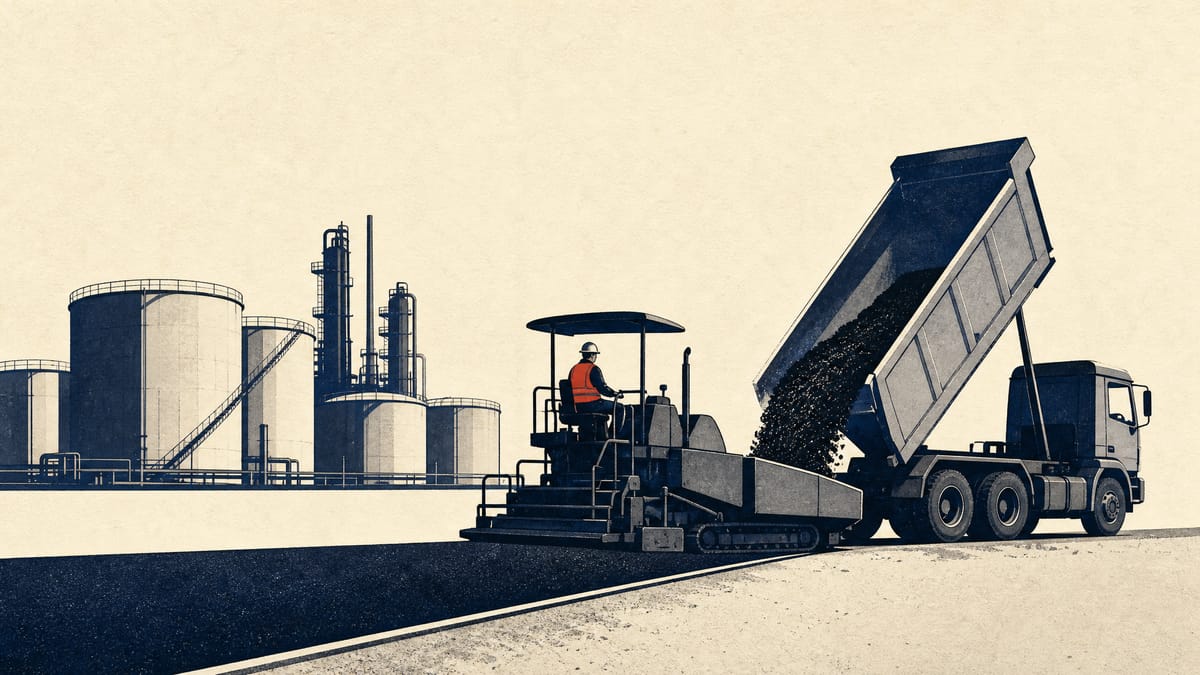
ENEOS to buy out Goldman Sachs and take full ownership of NIPPO
ENEOS will buy the 65% of NIPPO's holding company that Goldman Sachs vehicles own, citing asphalt supply ties and a changed growth strategy, with the share transfer planned for November 2026.
What changed: ENEOS's board resolved on 23 October to acquire 65% of Roadmap Holdings (RMH), which owns all of NIPPO, and signed the purchase contract the same day. The sellers are two special-purpose companies held indirectly by The Goldman Sachs Group, Inc., owning 59.5% and 5.5%. ENEOS already holds the other 35%, which carries 50.1% of voting rights, and consolidates RMH. The notice gives no purchase price.
Why now: ENEOS took NIPPO private in 2021 intending to run it jointly with Goldman Sachs and eventually relist it. It now says its business environment and growth strategy have changed, and that decarbonisation may advance more slowly than first assumed. The main argument is asphalt: ENEOS produces it as a co-product of fuel oil and basic chemicals, NIPPO uses it for paving, and competition from imported asphalt has intensified in recent years.
The number: ENEOS expects a minor effect on current-year results. A reference calculation on a full 12-month basis keeps NIPPO's operating profit contribution at ¥41.2bn, since it is already consolidated, but lifts profit attributable to owners of the parent from NIPPO by ¥17.2bn, from ¥10.7bn to ¥27.9bn. ENEOS labels these reference values, not a forecast.
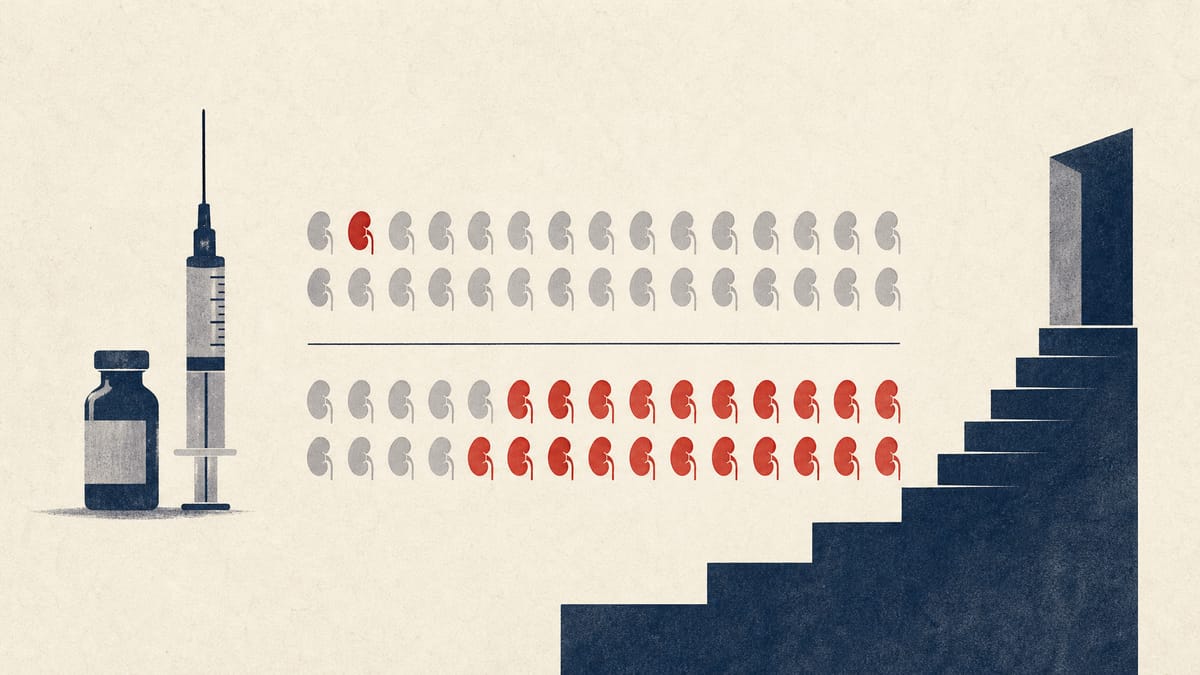
Otsuka reports one kidney event on VOYXACT against 28 on placebo in final trial data
Otsuka says its final two-year VISIONARY data show one composite kidney event among 259 VOYXACT patients against 28 among 251 on placebo, and a supplemental FDA filing seeking full approval is complete.
What changed: The event is defined as kidney function decline or kidney failure, occurring in 0.4% of the VOYXACT (sibeprenlimab) group and 11.2% of the placebo group, which Otsuka puts at a 97.1% relative risk reduction. The double-blind trial randomised 510 adults with primary IgA nephropathy at risk of progression. Otsuka presented the data on 22 October US time at the American Society of Nephrology's Kidney Week in Denver and says they were published in The New England Journal of Medicine. All efficacy and safety figures here are Otsuka's own account.
Why it matters: VOYXACT won US accelerated approval in November 2025 for reducing proteinuria. Otsuka Pharmaceutical finished a staged supplemental biologics license application to the FDA on 6 October US time, seeking full approval. On safety, any adverse event occurred in 90.7% of the VOYXACT group and 90.0% of the placebo group, and serious infections were 1.9% against 4.0%. Otsuka left its forecast for the year to December 2026 unchanged, and an open-label extension study is still running.
secondary
Controls and Consequences

Park24 to book ¥5.5bn breach loss, cutting net-profit forecast by 12.5%
Park24 expects a ¥5.5bn extraordinary loss for goodwill payments and breach response costs, lowering its net-profit forecast 12.5% to ¥38.5bn from ¥44.0bn while keeping its sales, operating profit and ¥65 dividend forecasts unchanged.
What changed: The loss falls in the quarter to 31 October 2026 and covers goodwill payments to customers hit by the Times Car breach plus other response costs. Forecast sales of ¥411.0bn, operating profit of ¥42.5bn and ordinary profit of ¥39.5bn are unchanged from 15 June, while forecast earnings per share fall to ¥225.54 from ¥257.76.
The number: A separate release says the external forensic investigation is complete and found that a vulnerability in the Times Car web system was exploited. The release also counts 6,628,007 accounts whose data, such as name, address, birth date and driving-licence information, was accessed and sent out. For identity-document images tied to those accounts, 2,356,402 were accessed: 1,464,800 encrypted with traces of both access and external transmission, and 891,602 accessed with no trace of transmission. Customers whose encrypted images showed both access and transmission will receive goodwill payments worth ¥3,000 in cash or vouchers.
What to watch: Park24 says membership trends were affected to a degree right after the incident was announced, while daily sales have stayed at pre-incident levels. It will delete all identity-document images it holds by the end of October 2026 and plans to announce security and governance measures around year-end.

Taisei barred from private civil-engineering work for 120 days from November 7
Taisei's 120-day suspension, from November 7 to March 6, applies only to nationwide private-sector civil-engineering work, and the company has decided to withdraw its Supreme Court challenges to the Japan Fair Trade Commission's cease-and-desist order.
What changed: The Kanto Regional Development Bureau of the transport ministry issued the order on 23 October 2026 under Article 28, paragraph 3 of the Construction Business Act. Taisei's disclosure defines the scope as civil-engineering business nationwide, limited to private-sector works. Nothing in the notice extends the order to building construction or to public-sector civil engineering.
Why it matters: The sanction follows a prosecution of Taisei on suspicion of violating the Antimonopoly Act over underground open-cut construction of the new Linear Chuo Shinkansen terminal stations at Shinagawa and Nagoya. The Supreme Court dismissed Taisei's appeal on 14 September 2026, and the guilty verdict became final. Separately, Taisei has decided to withdraw its Supreme Court appeal and petition for acceptance against the JFTC's cease-and-desist order, which it had announced on 27 May 2025. It cited compliance measures applied since 2018, including advance notice and reporting for meetings with competitors and monitoring of emails between sales staff and competitors.
quick hits
Quick Hits
Large Japanese banks see firm loan demand turn positive as local-government borrowing cools
Read moreFifty large banks put demand for corporate loans at +3 in the Bank of Japan's October survey, up from -1, while local-government demand fell to -4 from +3; most banks reported no change at all.
Nonresidents turn net sellers of Japanese securities, ¥848.4bn in the week to October 17
Read moreNet sales of short-term debt, ¥2.24tn, outweighed ¥1.45tn of long-term bond buying as nonresidents swung from a revised ¥5.47tn net purchase the previous week to a ¥848.4bn net sale.
Basel finalises full-year averaging for G-SIB indicators, opens EU exposure question to comment
Read moreMost G-SIB selection indicators will be measured as full-year averages under a final Basel Committee document aimed at window dressing, while the treatment of European Banking Union cross-border exposures remains open for comment until January 14, 2027.
Japan proposes cutting paper-packaging recycling quota to 16,830 tonnes and raising plastic to 732,600
Read moreFor the year starting April 2027, METI and four other ministries propose lowering the paper-packaging recycling obligation from 27,720 tonnes while lifting plastic packaging to 732,600 tonnes. Public comment closes on 21 November 2026.
KOA raises operating profit forecast to ¥8.31bn from ¥5.36bn, citing AI and industrial demand
Read moreKOA now expects ¥8.31bn of operating profit this fiscal year, up from ¥5.36bn, citing AI-related, automotive and industrial demand, and it raised its year-end dividend forecast to ¥46.50 a share.
Tokyo Steel swings to a ¥3.5bn interim operating loss as asset-sale gains keep net income positive
Read moreTokyo Steel's operating loss of ¥3.543bn in the half to September came despite 12.3% higher sales, and ¥6.184bn of special gains kept net income at ¥2.389bn, with management counting on price revisions to lift the year to an operating profit.
Sanko Gosei buys Alabama molder to get a foothold in the US South
Read moreSanko Gosei's US unit has signed to buy Cumberland Plastic Systems' Alabama injection-molding business, which had $48.418mn of sales in 2025, with closing scheduled for November 2 at an undisclosed price and a minor expected earnings effect.
Moriroku agrees to sell its Guangzhou parts unit after a return to profit
Read moreMoriroku's board approved selling all equity in its Guangzhou auto-parts subsidiary to a Hong Kong holding company, with transfer planned for mid-December 2026 and the price withheld under a confidentiality clause.