Web View
Japan Raises Drug Copays as Chipmakers Raise Profit Guides
Health regulators want a 25% surcharge on prescriptions that double as OTC drugs, chipmakers are raising profit guides on AI demand, and one chairman is buying out his own shareholders. Here's this morning's line-up.
MARKETS
Market pulse
Tokyo equities advanced while the 10Y JGB yield nudged lower.
Sourced from Nikkei, JPX, BOJ, MOF - values, not commentary.
lead
A New Copay Math for Familiar Medicines

Japan Drafts 25% Surcharge on 1,100 Prescription Drugs That Mirror OTC Medicines
Japan's health ministry wants patients to pay meaningfully more when a doctor prescribes a drug that is, chemically, the same product sold a few aisles over in the pharmacy. The Ministry of Health, Labour and Welfare opened a public comment period from August 6 to August 20, 2026, on an interim report that would add a 25% out-of-pocket surcharge to roughly 1,100 prescription drug products spanning 77 active ingredients, starting in March 2027.
What changed: The interim report defines which drugs count as 'OTC-similar' and sets the surcharge at 25% of the drug's cost, layered on top of whatever coinsurance a patient already owes, for products where an equivalent formulation is already sold without a prescription.
Why it matters: In a healthcare system where over-the-counter equivalents already crowd pharmacy shelves, the reform pushes patients toward buying the OTC version directly rather than visiting a doctor for a prescription, a shift the ministry is betting will trim insurance outlays without changing what medicine people actually take.
The catch: The plan carves out broad exemptions: children, cancer and intractable-disease patients, low-income households, hospitalized patients, and anyone with a physician-certified chronic condition needing that specific formulation escape the surcharge, which narrows the pool this actually squeezes even as it covers 1,100 products.
What to watch: The comment window closes August 20, 2026, giving pharmaceutical companies, pharmacy chains and patient groups two weeks to push back before the ministry finalizes rules ahead of the March 2027 start date.
secondary
Boardroom Moves

Digital Hearts Founder Offers ¥1,060 a Share to Take Game-Testing Group Private
Digital Hearts Holdings, the Tokyo-listed game-debugging and enterprise QA group, is heading toward an exit from public markets. Its board has endorsed a tender offer from Sandbox, an acquisition vehicle wholly owned by the company's own chairman, at ¥1,060 a share, and is recommending that shareholders tender into the offer.
The catch: The same disclosure batch revises the dividend forecast for the year to March 2027 down to zero and discontinues the shareholder loyalty program, both contingent on the tender offer going through as planned.
Why it matters: A chairman-led buyout vehicle taking a Tokyo Prime-listed company private raises the usual related-party governance questions, even as it gives public holders a defined cash exit price.
secondary
AI Capex Ripples Through Chipmaking
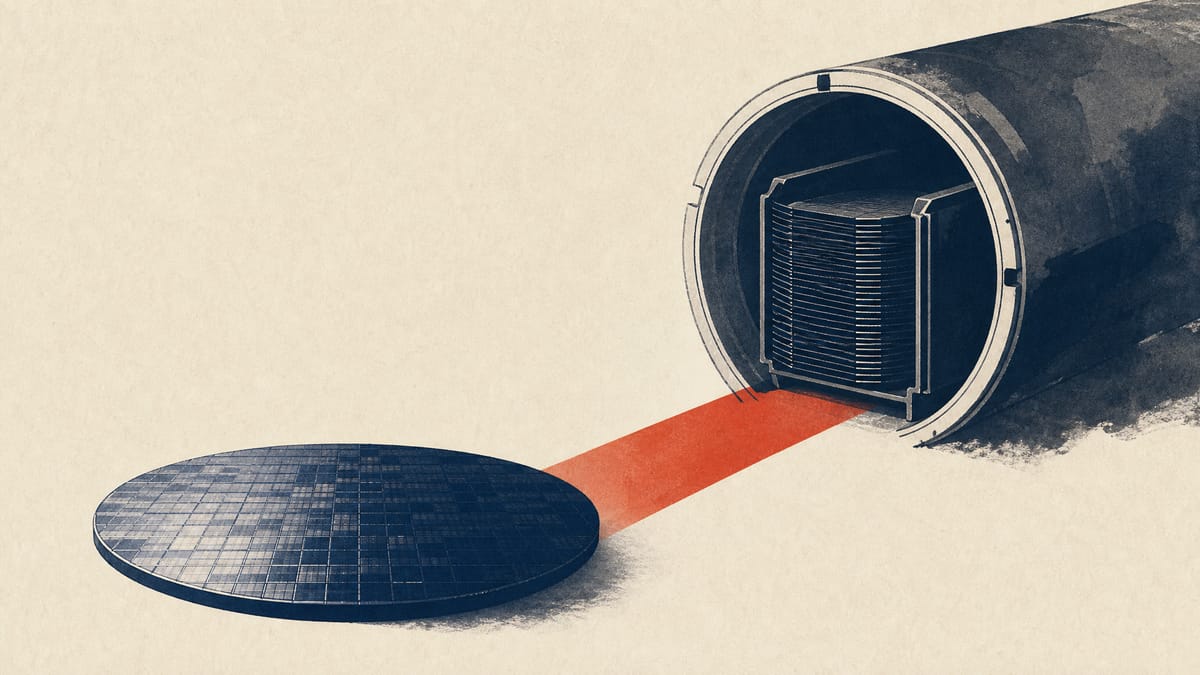
Kokusai Electric Raises Profit Forecast 46% as AI Chip Investment Accelerates
Kokusai Electric told investors on August 6 that the earnings forecast it published in May had already fallen behind reality. The wafer-processing equipment maker raised its operating profit forecast for the year to March 2027 to ¥79.4bn, a 46% jump from the ¥54.5bn it projected three months earlier, and lifted its dividend by ¥18 to ¥65 a share.
What changed: Revenue guidance rose to ¥340.0bn from ¥280.0bn, and net profit attributable to owners is now expected to reach ¥55.5bn, up from ¥38.8bn, all inside a single quarter's revision.
Why it matters: Kokusai cited accelerating chipmaker investment in high-performance DRAM and logic production for generative AI, one of the clearest quantitative signals yet that Japan's memory and logic equipment order books are running ahead of plan, not just holding steady.
secondary
Bigger Profit Guides Across Housing, Banking and Telecom

Daiwa House Raises Profit Guidance 17% and Lifts Dividend Ahead of Share Split
Japan's biggest homebuilder now expects ¥266bn in net profit for the year to March 2027, a 17% upgrade from its May forecast, and will raise its dividend to a pre-split ¥178 a share before an October 2-for-1 split, even as last year's one-off pension gain makes the bottom line look smaller on paper.
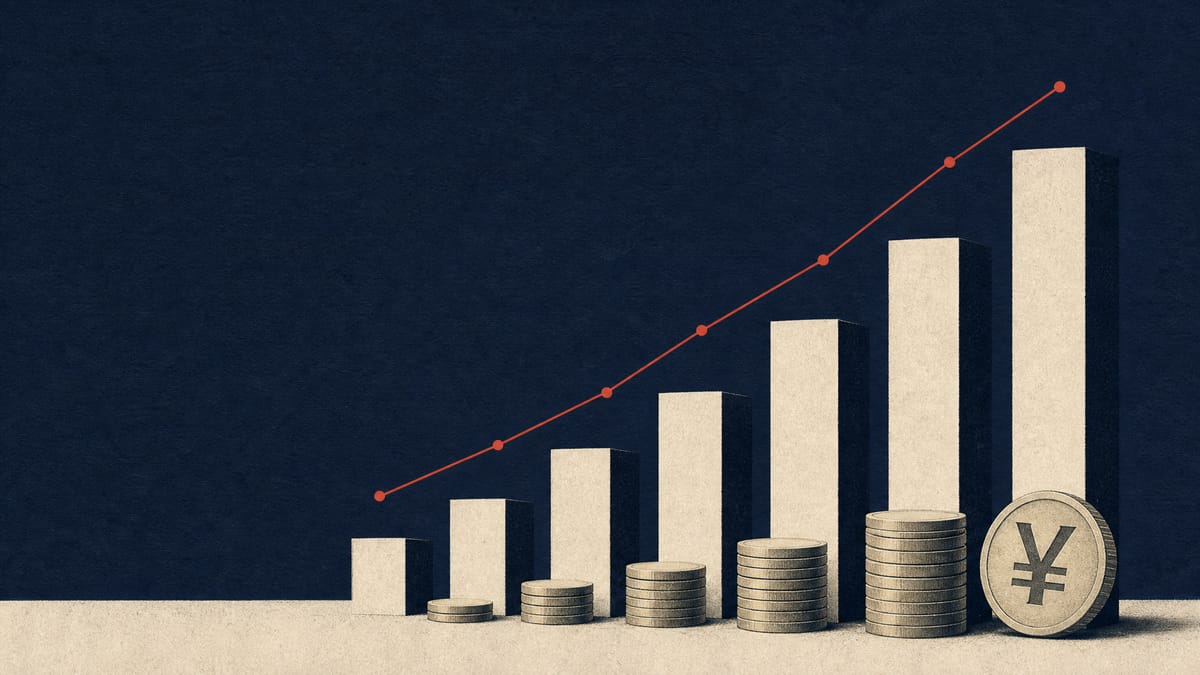
MUFG's Quarterly Profit Jumps 48% as Trading and Equity Gains Widen
Mitsubishi UFJ's June-quarter net profit rose 48% to ¥809.4bn on stronger trading income and equity gains, yet the bank kept its ¥2.7tn full-year profit target and ¥96 dividend forecast unchanged.
NTT's Quarterly Revenue Hits a Record ¥3.62tn, but Guidance Points to a Profit Slowdown
NTT reported consolidated operating revenue of ¥3.62tn for the three months to June 30, 2026, up 10.9% from a year earlier and a quarterly record, driven by its Global Solutions business. Operating profit rose a more modest 4.9% to ¥425.1bn, and profit attributable to NTT climbed 5.8% to ¥274.8bn.
Why it matters: Revenue outpacing profit by more than two to one shows margin pressure building even at Japan's telecom flagship, and the group's untouched full-year forecast implies operating profit growth slowing to just 0.2% for the year to March 2027.
secondary
A Second Policy Docket: Financing Economic Security
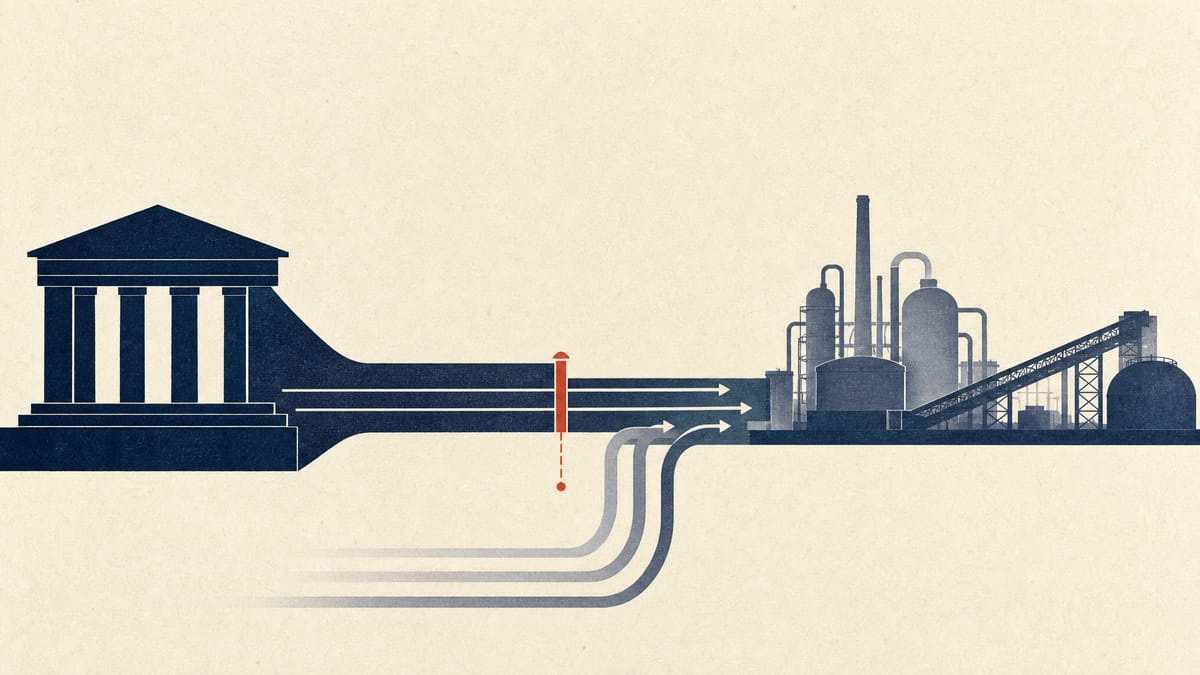
Japan Drafts Guardrails for JBIC's New Economic-Security Overseas Lending Arm
Japan's Finance Ministry opened a monthlong comment period, running to September 4, on draft guidelines governing how the Japan Bank for International Cooperation lends and invests in overseas projects tied to economic security. The rules implement Law No. 38 of 2026, which added a new line of business to JBIC's charter: financing "certified specified overseas businesses" that a competent minister certifies under the 2022 Economic Security Promotion Act.
What changed: The draft requires JBIC to keep expected losses on these loans inside a dedicated capital account, and gives the bank a forced-exit clause it can invoke if a project's certification is later pulled.
Why it matters: The guardrails determine how freely Japanese companies can tap government-backed financing for overseas ventures Tokyo deems strategically sensitive, a lending channel that did not exist before this year's legal change.
secondary
Consumer Staples and Pharma Signals

Suntory Beverage & Food's Profit Gain Is Mostly the Yen's Doing
Revenue reached ¥899.9bn for the six months to June, up 11.6% from a year earlier. Strip out currency translation, though, and growth slows to 5.4%. Operating profit rose 3.0% in reported terms to ¥74.0bn but fell 5.4% on a constant-currency basis.
Why it matters: The gap between reported and constant-currency profit shows how much of the headline growth is the yen's weakness rather than underlying demand, with Europe's margins the weak spot and Oceania the standout region.

Takeda's ORZEYFUL Wins FDA Approval as First Drug to Treat Narcolepsy Type 1's Root Cause
The US Food and Drug Administration approved Takeda's oveporexton, sold as ORZEYFUL, on August 5 for adults with narcolepsy type 1, a disorder marked by orexin deficiency. Takeda says it is the first and only US-approved drug that treats the disease's underlying cause rather than managing symptoms individually.
The catch: A US Drug Enforcement Administration scheduling review still stands between approval and the first sale, and Takeda expects no material impact on its current-year earnings guidance.
quick hits
Quick Hits
Air-Conditioner Rush Lifts Yamada Holdings' Quarterly Profit 16.8%
Read moreA looming 2027 energy-efficiency deadline pushed Japanese households to replace air conditioners early, lifting Yamada Holdings' operating profit 16.8% in the June quarter even as its homebuilding arm's profit fell 88% on higher material costs and marketing spend.
TBS Holdings Cuts Full-Year Profit Outlook as TV Spot Ads Slump
Read moreA record first quarter for revenue did not stop a 43 percent drop in TBS Holdings' operating profit, and the broadcaster has now cut its full-year sales and profit forecast as advertisers hold back on TV spot buys amid Middle East-linked uncertainty.
Resonac Cuts Revenue Outlook, Lifts Profit Forecast 40% on Chip Materials Boom
Read moreA petrochemicals spin-off is cutting Resonac's revenue guidance by ¥145bn this year, but AI-linked demand for chip packaging materials is driving its profit forecast up 40% to ¥196bn.
Furukawa Electric Lifts Full-Year Profit Guide on Data-Center Demand
Read moreOptical-cable and connector demand tied to data-center buildouts pushed Furukawa Electric to raise its full-year operating profit target by ¥28.0bn, to ¥123.0bn, and its interim profit forecast by ¥14.5bn.
SUMCO Falls to First-Half Loss Even as AI Wafer Demand Climbs
Read moreSUMCO's shipments of large 300mm silicon wafers rose on AI and data-center demand, yet the chipmaker still posted a ¥12.9bn net loss for the six months to June, with breakeven not expected before the third quarter.
JAPEX Lifts Profit Guidance, Helped More by a Stock Sale Than by Oil
Read moreA ¥6bn gain from selling one listed stock, rather than a rebound in crude sales, is doing much of the work in Japan Petroleum Exploration's higher full-year profit forecast, after quarterly profit fell 79% on costly spot LNG cargoes.
Rakuten Bank Raises Profit Forecast 8.3% on Bank of Japan Rate Hike
Read moreRakuten Bank increased its net profit target for the year to March 2027 by ¥6.8bn to ¥88.1bn, pointing to higher loan interest income and June's Bank of Japan rate rise as the main drivers.
Inbound Tourists and Pricier Watches Nearly Double Geo's Luxury Resale Sales
Read moreInbound tourists and rising secondhand watch prices drove a 95% sales jump at Geo Holdings' luxury resale unit OKURA in the June quarter, helping push group operating profit up a third even as new-product sales cooled.
Data-Center Construction Boom Triples Order Book at Tokyo Facilities Contractor
Read moreOrders at facilities contractor Hibiya Engineering jumped 235.8% to ¥56.1bn in the quarter to June as data-center fit-out contracts piled up, even though reported sales fell 6.5% because that work has not yet been billed.
Lasertec Orders Rebound Sharply as Profit Falls for the Year to June
Read moreLasertec's new orders more than doubled to ¥237.5bn on AI-chip demand, yet revenue and operating profit both fell for the year to June because last year's weak bookings finally hit shipments; the company is now guiding for a 25.8% revenue rebound next year.