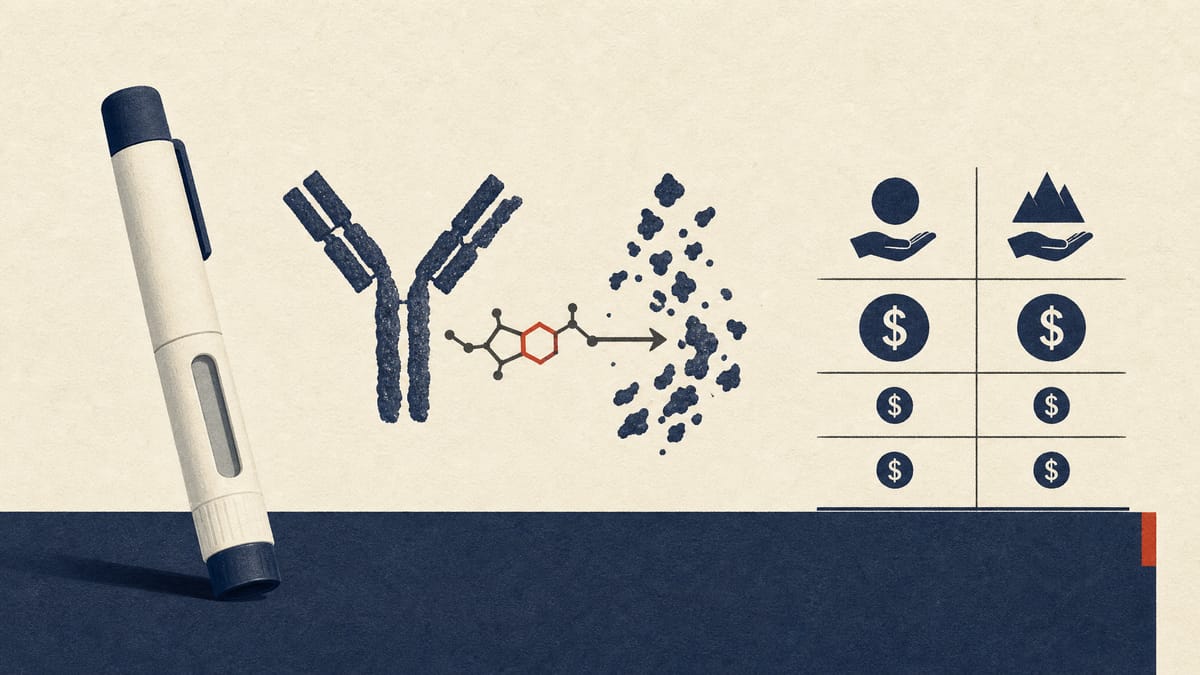
Ono Pharmaceutical has signed a licence for exclusive rights to develop and sell three experimental autoimmune drugs from Biohaven in Japan, South Korea, Taiwan and the ASEAN countries. Under it, Ono will pay $80mn up front and a royalty of about 20% of sales.
What Ono will pay
Under the licence agreement signed on 8 October 2026, Ono will pay Biohaven Ltd., a US biotech based in New Haven, Connecticut, an upfront fee of $80mn. It will also pay $20mn as a milestone tied to development progress. The source does not say which milestone triggers that payment.
On top of that, Ono will pay Biohaven a royalty on sales at a rate of about 20%. The announcement gives no royalty term or tiering.
Who does what
Ono takes responsibility for running clinical trials and obtaining marketing approval in the licensed territory. After approval, Ono will also sell the drugs there.
The licensed assets are BHV-1300, BHV-1310 and BHV-1320, all small molecules created on Biohaven's MoDE platform (Molecular Degraders of Extracellular Proteins). Ono describes them as designed to use the body's own protein-degradation machinery to remove the IgG1, IgG2 and IgG4 subclasses of autoantibodies that drive autoimmune disease.
The lead asset is still in trials
BHV-1300 is the furthest advanced and is in a global phase 3 trial in Graves' disease. Ono says it comes as an auto-injector that patients can administer themselves, and that it degrades IgG autoantibodies against the thyroid-stimulating hormone receptor, known as TRAb.
Ono says current approved treatments for Graves' disease, which include antithyroid drugs, radioactive iodine therapy and surgery, do not target TRAb. The compounds are investigational, and the announcement reports no efficacy results.
Financial impact
Ono says the deal has a minor effect on consolidated results for the year ending March 2027 and will disclose promptly anything further that needs reporting. Ono's president said the licence strengthens the company's late-stage pipeline in immunology and inflammation, one of its focus areas.
The rights turn into sales only if the trials succeed and regulators in each territory approve the drugs.