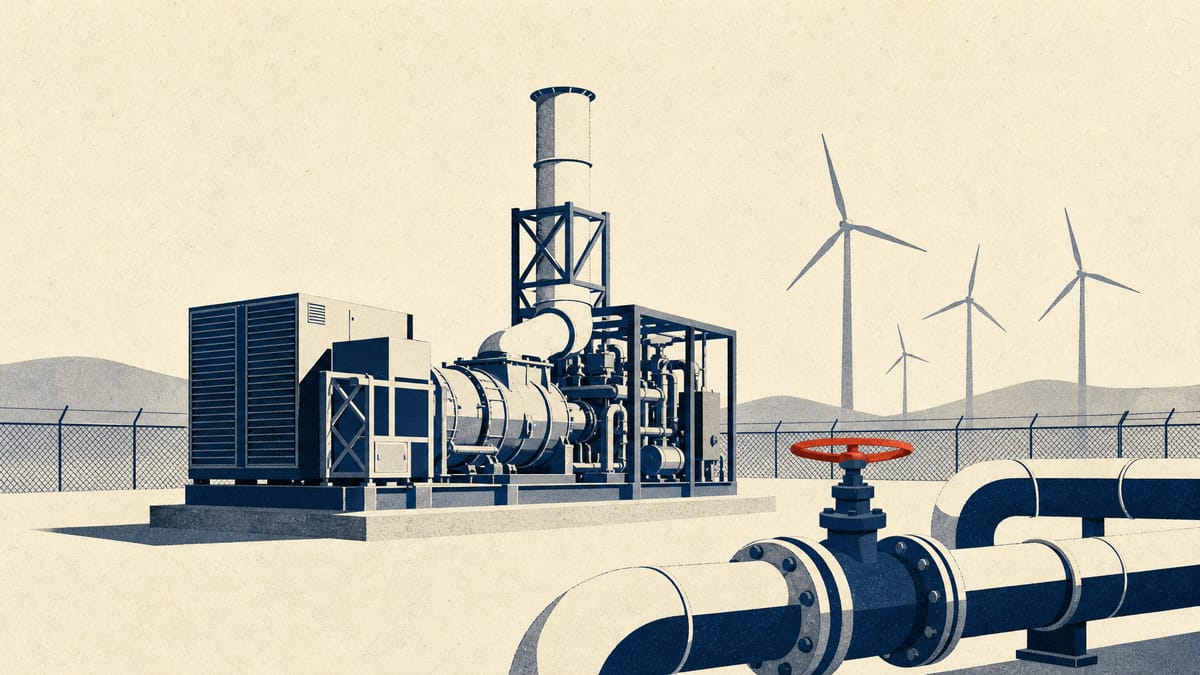
Kawasaki Heavy Industries and the German utility RWE held an opening ceremony on 6 November, local time, for a 30MW-class hydrogen-capable gas turbine at RWE's Emsland power plant in Germany's Lower Saxony state. Japan's New Energy and Industrial Technology Development Organization (NEDO), which backs the project, announced it on 9 November.
What was installed
The unit is Kawasaki Heavy's 30MW-class L30A gas turbine, built at the company's Akashi works. Its European subsidiary, Kawasaki Gas Turbine Europe GmbH, assembled it into a power-generation package and installed it on site. RWE handled the overall plan for the hydrogen plant and the surrounding equipment.
The release says this is the first case in Europe of hydrogen co-firing and dedicated firing with a 30MW-class gas turbine.
How it burns hydrogen
The combustor uses the diffusion (wet) method, which the release says is meant to balance economics and environmental performance.
The hydrogen share can be set anywhere from 0% to 100%, mixed with natural gas. The release says this lets one turbine run through the early period, when hydrogen supply is limited, and into wider adoption.
What comes next
Demonstration testing will proceed on site. The turbine will burn natural gas together with CO2-free hydrogen supplied from wind power facilities that RWE owns. The tests will check whether the unit meets the plant's emission requirements for nitrogen oxides and carbon monoxide, and will assess stable combustion, durability and operability.
RWE is building facilities at Emsland to make, deliver and use hydrogen from renewable sources, with the aim of storing surplus renewable power as hydrogen and converting it back to electricity when needed.
NEDO selected the project in the 2021 fiscal year under its international demonstration programme for Japanese decarbonisation technology. The project period runs from the 2021 fiscal year to the 2026 fiscal year. Kawasaki Heavy says it will feed what it learns into product development and bring products to market quickly.