Kanamoto Co., Ltd., whose core business is construction-machinery rental, grew nine-month sales by a modest 2.6% to ¥162.9bn, but operating profit jumped 31.6% to ¥15.4bn and net profit attributable to owners rose 39.1% to ¥10.1bn. Profit is growing more than ten times faster than revenue, which is the real story buried in the routine quarterly filing.
| Metric | Current period | Prior-year period | Change |
|---|---|---|---|
| Net sales | ¥162.9bn | ¥158.8bn | +2.6% |
| Operating profit | ¥15.4bn | ¥11.7bn | +31.6% |
| Ordinary profit | ¥15.8bn | ¥12.0bn | +31.1% |
| Net profit attributable to owners | ¥10.1bn | ¥7.2bn | +39.1% |
| Earnings per share | ¥292.22 | ¥206.85 | — |
The gap comes from the core construction-rental segment, where sales rose 3.4% to ¥146.2bn and segment profit jumped 30.8% to ¥14.0bn. Management credits more efficient use of rental assets and continued rental-rate optimization, along with productivity gains from a digital-transformation push, plus steady public spending on disaster prevention and national land resilience and private investment in logistics facilities and data centers. Kanamoto also trimmed sales of used construction equipment by 1.8% year on year as it deliberately manages the size of its rental fleet rather than chasing volume.
The balance sheet improved alongside earnings: total assets reached ¥332.1bn and the equity ratio rose to 46.4% from 45.4% at the end of the prior fiscal year. Kanamoto also cancelled two million treasury shares during the nine-month period under a board resolution dated June 5, cutting capital surplus by ¥473mn and retained earnings by ¥4.99bn, after buying back more than 800,000 shares across two board authorizations since December. The interim dividend rose to 55 yen per share, and the full-year forecast stands at 110 yen, up from 95 yen paid out the prior year. Full-year guidance itself, sales of ¥221bn and net profit of ¥12.9bn, is unchanged from the revision the company issued on June 1; there is no fresh upgrade attached to this quarter's numbers.
Separately, the consolidated group got a touch smaller on paper: two Australian subsidiaries were dropped from consolidation in the first quarter after completing liquidation, a routine cleanup rather than a business retreat.
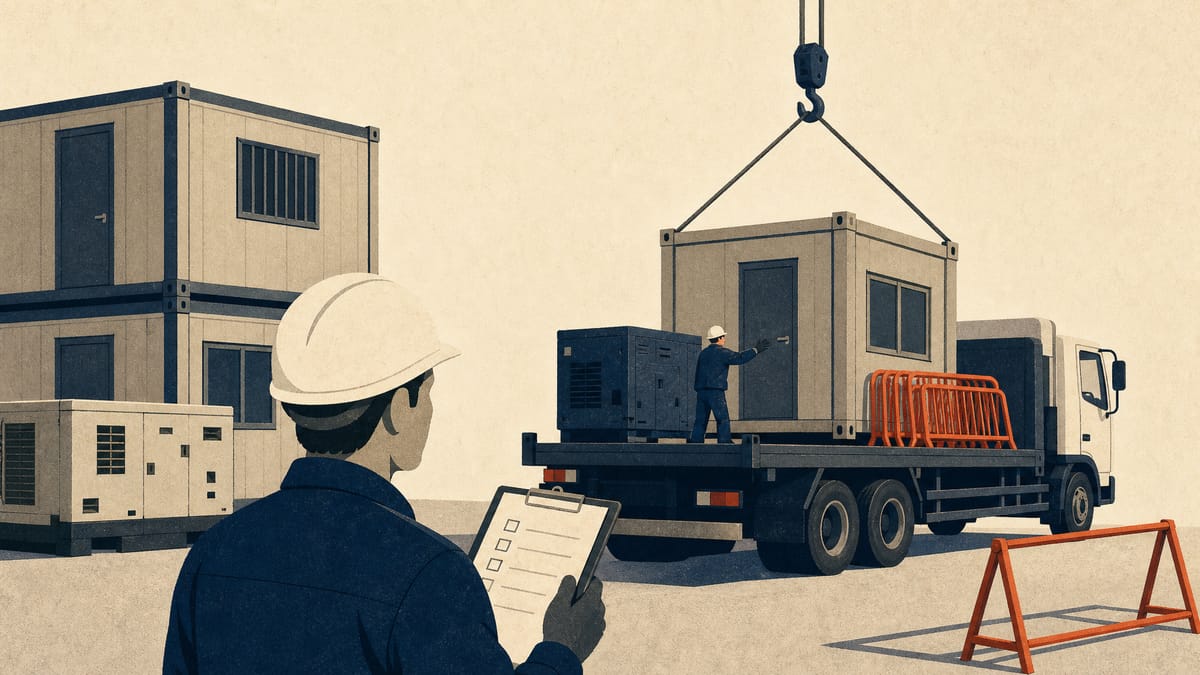
The more consequential move landed the same day as the earnings release. Kanamoto's board resolved on September 4 to buy 100% of a three-company group for cash, with closing expected later in September. The target is anchored by a business that rents and sells unit houses, office furniture, office-automation equipment, surveying instruments and temporary toilets to construction sites, together with a logistics and installation subsidiary called TJR that handles transport, on-site assembly, disassembly, storage and repair, and an event-services subsidiary that arranges large tents, audio equipment and video gear for exhibitions and other gatherings. The acquisition price was not disclosed.
Kanamoto says the deal pairs its nationwide rental network and procurement scale with the target's established customer base and site-facility expertise in the Kanto region, aiming to widen what it can offer construction clients beyond machinery itself. It is a logical adjacency for a company whose margin story this quarter was less about growth than about doing more with the assets it already owns.