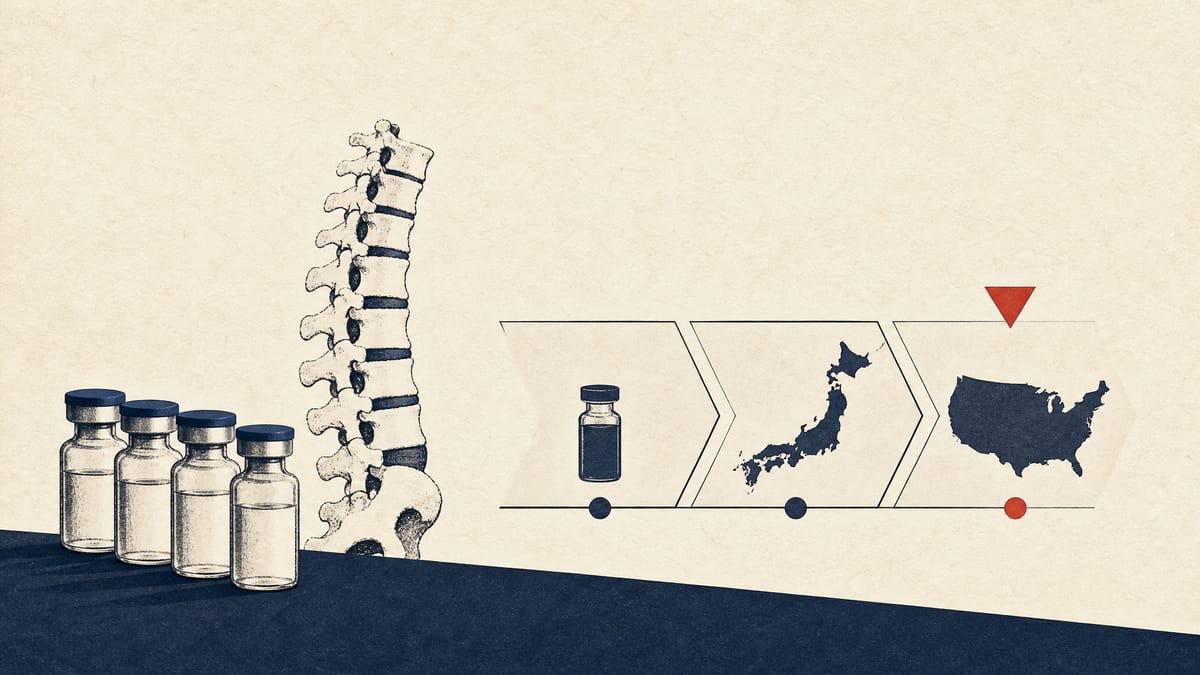
Kringle Pharma said the FDA's review period for its investigational new drug application (IND) for oremepermin alfa has ended and the IND is now in effect. The drug, a recombinant human HGF protein, targets acute spinal cord injury. The Osaka-based, Tokyo-listed biotech said its next step is preparing a US Phase III trial, not running one. Earlier Tokyo Brief coverage
What the company says it has done
Kringle said it completed a Phase I/II trial and a Phase III trial in Japan in acute spinal cord injury patients, building what it calls knowledge of the drug's safety and efficacy in humans. It is now running an additional Phase III trial in Japan, which it describes as aimed at a Japanese marketing approval application. The company said it holds orphan drug designation for acute spinal cord injury in Japan, the US and Europe.
In its description of the business, Kringle said enrolment is continuing in the additional Japanese spinal cord injury trial. It is also running a Phase III trial in vocal fold scarring, where enrolment is complete and follow-up continues.
What an effective IND does and does not settle
The company called the effective IND an important milestone for global development. Its president said it advances the drug to a new stage and that the company will work closely with clinical development partners. He said the result should widen opportunities for strategic alliances with global drugmakers, joint development and funding, including non-dilutive funding.
Those are stated aims. The release names no partner, signed agreement, funding amount or start date for the US trial. An effective IND is also not marketing approval, and the release makes no claim that the US study has begun.
The market Kringle cites
Citing the National Spinal Cord Injury Statistical Center's 2026 figures, the release puts US incidence of traumatic spinal cord injury at about 54 cases per million people a year, or about 18,482 new cases. It estimates about 311,560 people living with the condition. It adds that less than 1% of patients are reported to show complete neurological recovery by discharge.