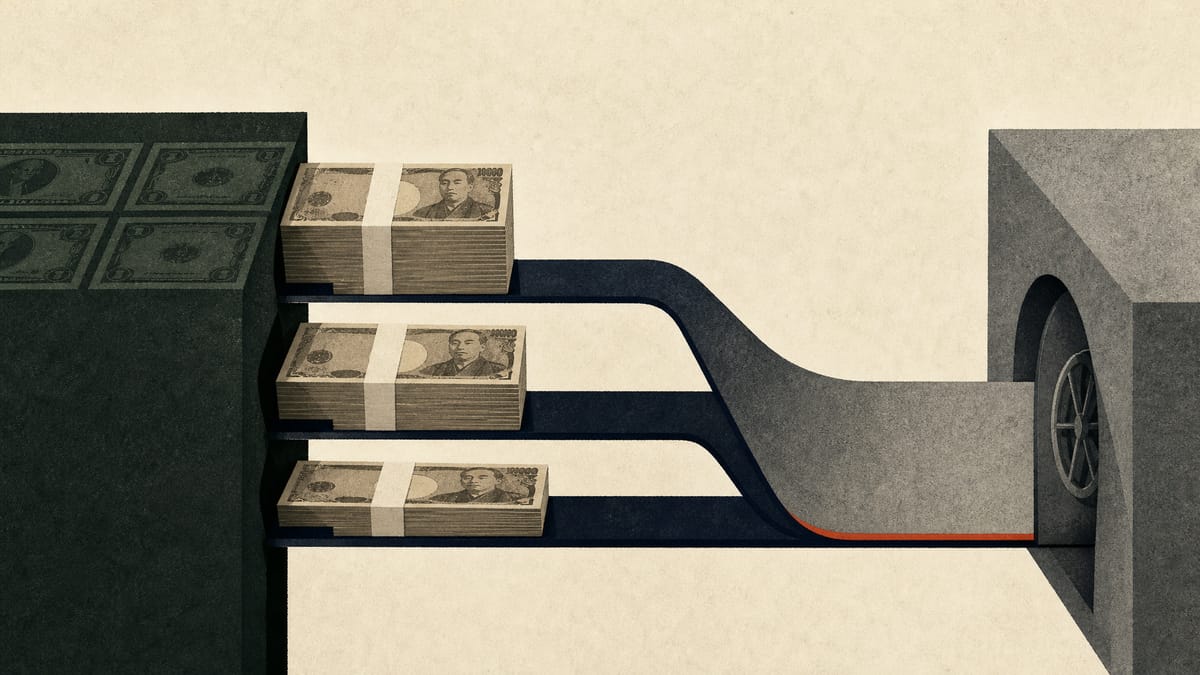
Japan sold US dollars and bought yen on three days in the July to September quarter, for a combined ¥15.40tn (¥15,399.3bn), according to the Ministry of Finance's quarterly intervention table. The ministry published the table on November 9, 2026. It is a retrospective disclosure of operations carried out between July 30 and August 3, not a new operation.
Three days, one direction
Every entry in the table runs the same way: the US dollar sold, the Japanese yen bought. The first day was by far the largest.
| Date | Amount for the day | Currency pair |
|---|---|---|
| July 30, 2026 | ¥7,975.6bn | US dollar sold, yen bought |
| July 31, 2026 | ¥5,552.3bn | US dollar sold, yen bought |
| August 3, 2026 | ¥1,871.4bn | US dollar sold, yen bought |
The July 30 operation accounts for just over half of the quarter's total, and the first two days together make up the bulk of it. By August 3 the daily amount was ¥1.87tn, about a quarter of the July 30 figure. The ministry's table gives amounts only. It lists no exchange rates and no stated reason for the operations.
How the quarter compares
The ministry's full intervention series, which starts in April 1991, shows the July to September 2026 total at 153,993 in units of ¥100mn, which matches the ¥15,399.3bn on the quarterly page. The series lists no larger quarterly total. The next largest is ¥14.83tn for January to March 2004, when Japan was buying dollars and selling yen.
The previous quarter was also active. The series records dollar-selling, yen-buying operations on April 30, May 4 and May 6, 2026, totalling ¥11.73tn for April to June. The July to September amount is therefore larger than that of a quarter that was itself heavy by the series' own history. The series shows zero totals for the October to December 2025 and January to March 2026 quarters, the two quarters before April to June.
Earlier Tokyo Brief coverage of the intervention figures is here: Earlier Tokyo Brief coverage.
Reading the numbers
The ministry's series notes that daily figures are rounded, so they may not add exactly to the stated total. Here the three daily amounts do sum to ¥15,399.3bn. The ministry also notes that when yen is not the intervention currency, amounts are converted at the Bank of Japan's central (or most-traded) dollar-yen rate for the day, with the previous business day's central rate used when Tokyo's foreign exchange market is closed. In these three operations yen was the currency bought.
The disclosure does not say what the operations did to the exchange rate, and this article draws no such conclusion. What it fixes is the size, timing and direction of official action: ¥15.40tn of dollars sold for yen over three days.