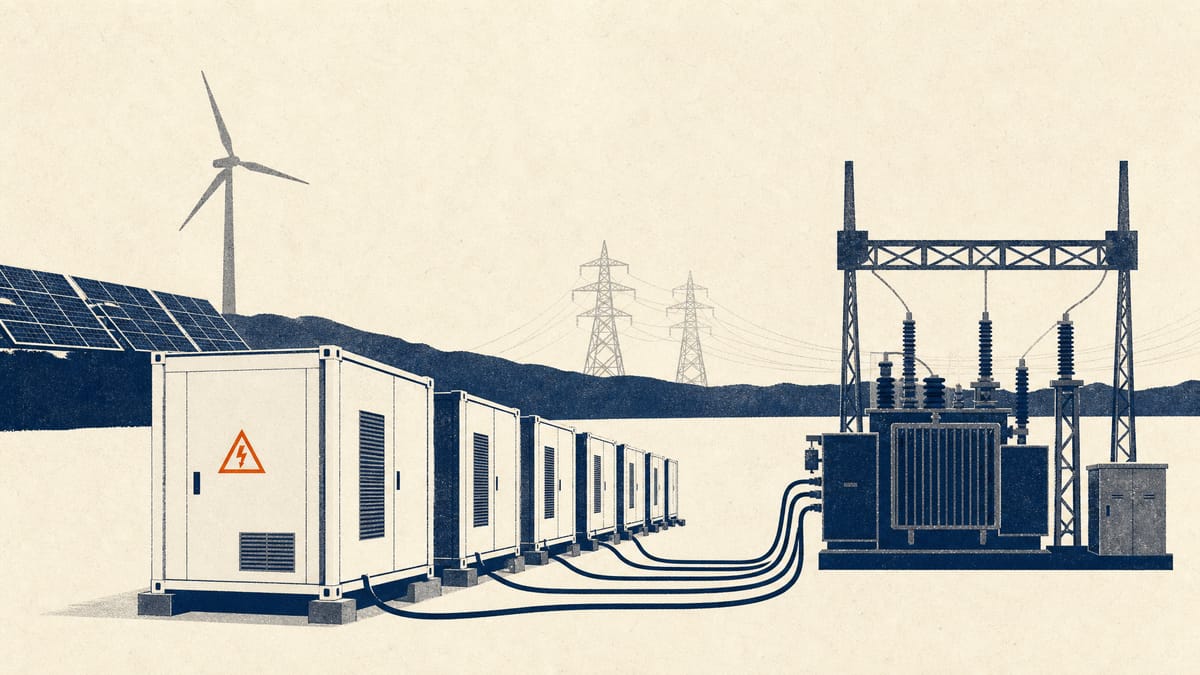
Grid operators in Hokkaido and Kyushu have reached a point where solar and wind alone can cover more than seven in ten units of electricity demand at some hours, according to the justification attached to a new jGrants subsidy listing. That is good news for decarbonization and a headache for grid balancing: those two regions lead the rest of Japan in renewable deployment, and operators have had to lean on a shrinking pool of thermal power stations to smooth out the swings when the sun dims or the wind drops.
Japan's response, found on the jGrants portal, is a subsidy program with the working title Grid-Scale Storage System Deployment Support Program, funded through the supplementary budget's Renewable Energy Expansion and Grid Battery Power Storage System Deployment Support Subsidy. The listing frames its purpose in terms familiar to anyone tracking Japan's energy transition: hitting carbon neutrality by 2050 and the government's 2040 energy-mix target requires squeezing more renewable power onto the grid, and that in turn requires somewhere to put the surplus when supply outruns demand.
The listing's own language calls "effective use of surplus renewable energy" and "securing decarbonized adjustment capacity" urgent problems. Grid-scale battery storage, which can absorb power when renewables run hot and discharge it when they do not, is the tool the subsidy is meant to fund.
What is not yet clear from the material Tokyo Brief reviewed is how large individual awards can be, what share of project costs is covered, which industries or project types qualify, or the application deadline. The purpose statement supplied to Tokyo Brief cuts off mid-sentence, before the program's operational terms are spelled out. Applicants and readers tracking the subsidy will need the complete jGrants listing to confirm those figures before assuming a specific award size or eligibility category.