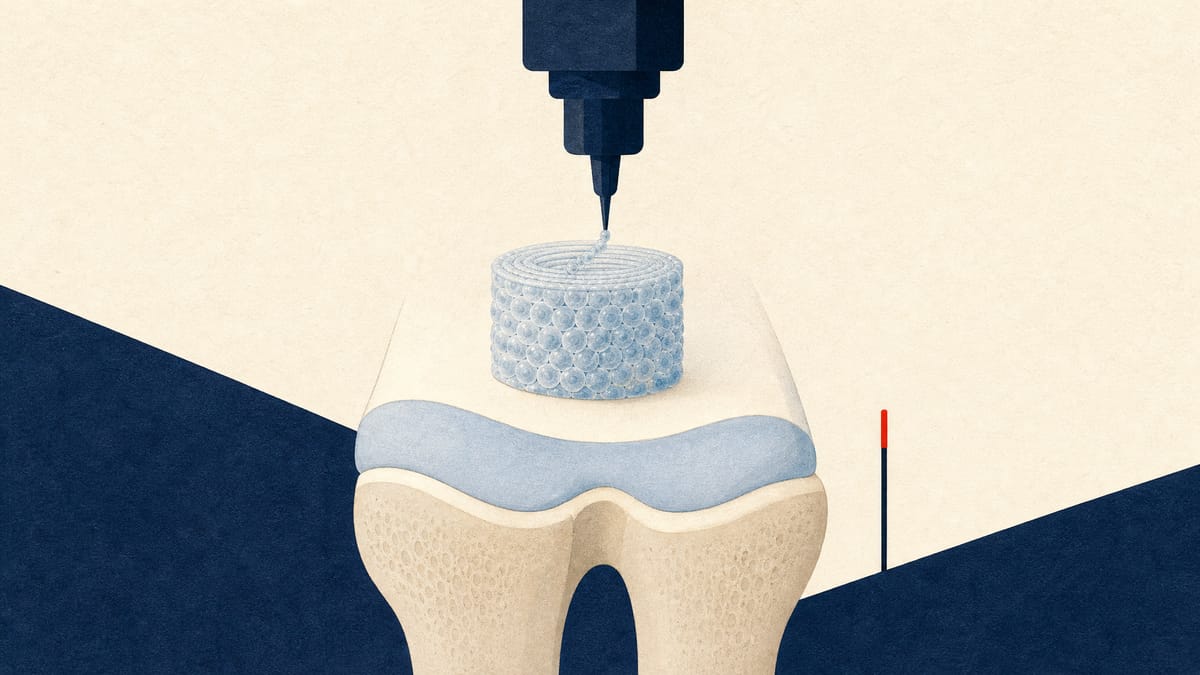
Cyfuse Biomedical (TSE Growth: 4892) said on 18 November 2026 that a physician-initiated trial of KCF-BC1, a bioprinted bone-and-cartilage plug, will start at Keio University Hospital. The trial will test the product's safety and efficacy in idiopathic osteonecrosis of the medial femoral condyle, a condition in which bone beneath the knee joint surface dies, causing severe pain and joint deformity.
What is being tested
KCF-BC1 is built from spheroids of allogeneic human adipose-derived mesenchymal stromal cells, layered by a bioprinter into a thick structure and implanted into the defect without artificial scaffold material. The cells supplied for the trial product come from Rohto Pharmaceutical. The technology was developed with Keio's orthopaedics department and Fujita Health University, and the release says it is patented.
What the evidence is so far
The release's evidence is non-clinical. In rabbit and minipig knee models, the implanted structure integrated with surrounding tissue and regenerated the full-thickness joint structure, including subchondral bone, according to the release. The release reports no patient outcomes. The trial is supported by a programme of the Japan Agency for Medical Research and Development (AMED), and its plan is published on the health ministry's jRCT registry. The notice does not give the trial's size, phase or start date, and the release says it is not a recruitment call.
The business angle
Cyfuse names approval as a regenerative medicine product in Japan, commercialisation and international expansion as its goals. It says the effect on earnings for the year ending December 2026 is under review, and that it will announce anything that needs disclosing.