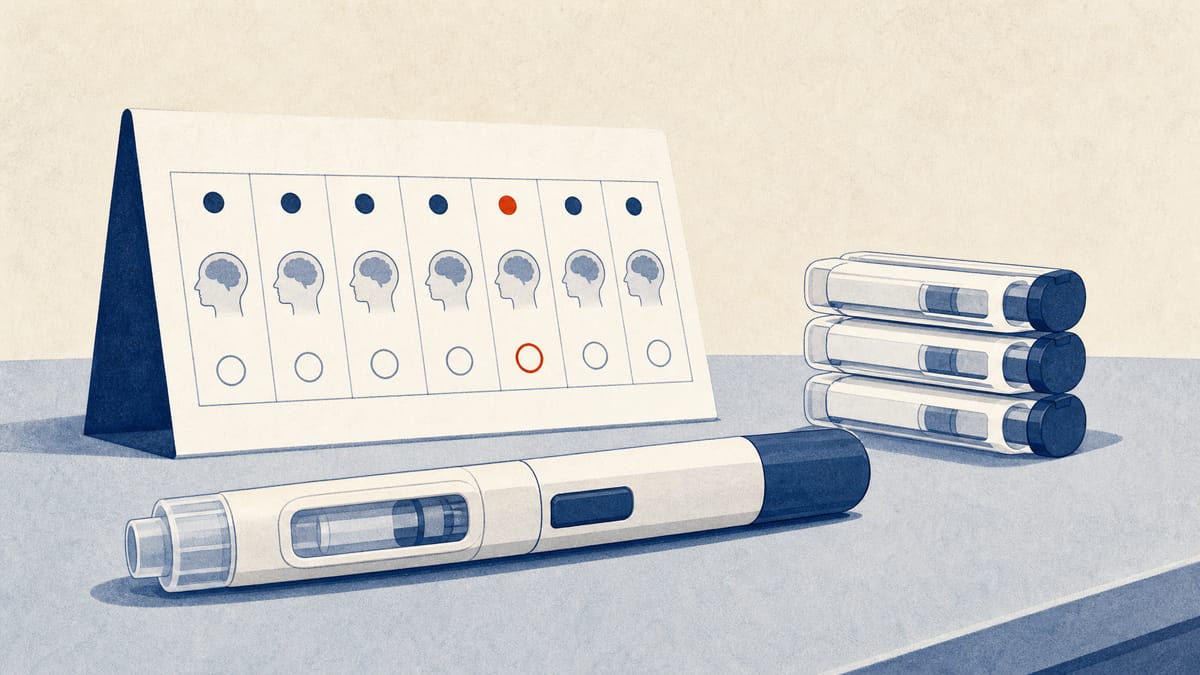
China's drug regulator has approved the self-injected version of Eisai and Biogen's Alzheimer's drug Leqembi, giving patients in the country a once-weekly, at-home alternative to the twice-monthly hospital infusions that have defined anti-amyloid treatment so far.
The National Medical Products Administration cleared the subcutaneous auto-injector formulation of lecanemab on September 2, 2026, as initial therapy for early Alzheimer's disease, covering both mild cognitive impairment and mild dementia caused by the condition. China becomes only the second market in the world, after the US in July, to approve the self-injected 500mg formulation for first-line use, and the approval makes it the first and only at-home anti-amyloid therapy available in the country.
| Market | Status | Timing |
|---|---|---|
| United States | Approved as initial therapy | July 2026 |
| China | Approved as initial therapy | September 2026 |
| Japan and two other markets | Under review | Pending |
The injector is designed for self-administration: patients give themselves two injections a week, roughly 15 seconds each, for a combined 500mg dose, and can switch between the intravenous and subcutaneous routes during treatment. Monitoring for ARIA, the brain-swelling side effect associated with anti-amyloid drugs, still requires MRI scans before and during treatment, matching the protocol used for IV dosing.
NMPA accepted Eisai's application in January 2026 and granted it priority review; the company plans to launch the injector in China within the current fiscal year. Eisai estimates that 17 million people in China had Alzheimer's-related mild cognitive impairment or mild dementia in 2024, the population the home-dosing option is aimed at. Leqembi's standard IV formulation has been sold in China since June 2024.
Eisai told investors the China approval will have only a minor effect on its earnings forecast for the year to March 2027, and that guidance issued on May 15, 2026 stands unchanged. The approval itself rests on modeling from subcutaneous sub-studies inside the Clarity AD trial's 18-month core phase and its long-term extension, including a China-specific cohort, which found that weekly 500mg subcutaneous dosing produced drug exposure similar to the every-other-week IV regimen. In the original global trial behind Leqembi's approvals, the drug slowed decline on the CDR-SB dementia scale by 27% versus placebo over 18 months, and 95% of patients who completed that core study chose to continue into long-term follow-up. The disclosure does not mention Chinese pricing or reimbursement terms for the new injector, and any commercial contribution is not yet visible in Eisai's guidance.