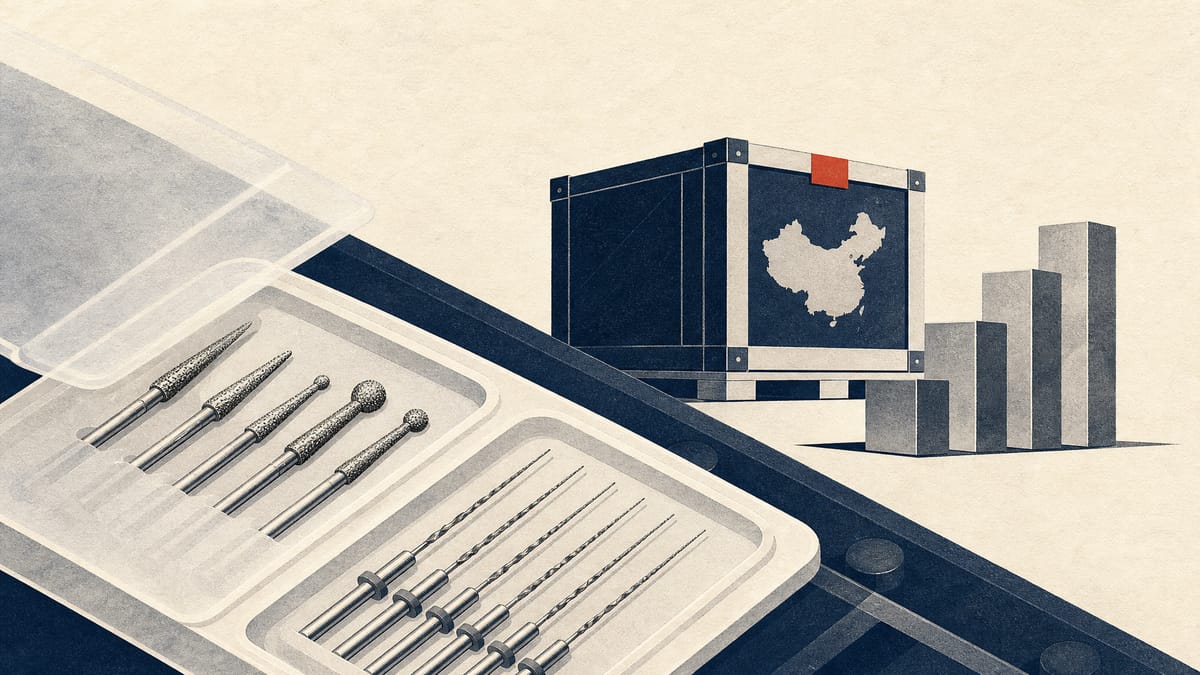
Mani's operating profit rose 21.4% to ¥9.94bn in the year to August 2026, on sales of ¥33.02bn, up 10.2%, according to its earnings summary. Net profit attributable to owners of the parent rose 55.9% to ¥7.24bn.
The recovery inside the numbers
Mani began a voluntary recall of its dental diamond bars in China in March 2025 and had largely finished collecting product by August. After approval from Chinese regulators on 29 October 2025, it formally resumed sales in November.
The company's original goal was to recover to about 90% of pre-recall sales within two years. Diamond-bar sales reached ¥2.2bn in the first year, 88% of the pre-recall level, which Mani says is ahead of that schedule. Eighty-eight per cent is still not the full pre-recall figure.
The dental segment shows the effect: sales rose 13.0% to ¥10.75bn and segment operating profit rose 54.3% to ¥1.71bn. Mani credits the diamond-bar resumption and stronger sales in India, along with a better gross margin.
Not only China
Other drivers sit alongside the recovery. Mani cites the continued weak yen lifting overseas sales and strong sales of surgical products in Europe and North America. The weak yen also produced a foreign-exchange gain of ¥712mn below the operating line, which helped ordinary profit rise 27.6% to ¥10.55bn.
A separate notice on parent-only results shows operating profit up 36.4% to ¥9.07bn. It ties that gain to higher diamond-bar sales to its Chinese subsidiary and to progress in optimizing selling and administrative expenses. Parent-only ordinary profit rose 70.7%, helped by exchange gains and dividends from subsidiaries.
Next year
Mani guides for sales of ¥36.5bn and operating profit of ¥10.8bn, up 8.6%, assuming ¥150 to the dollar and ¥175 to the euro. It puts overseas sales at about 85% of the total and calls a stronger yen a risk. It plans a dividend of ¥42 a share, up from ¥41.