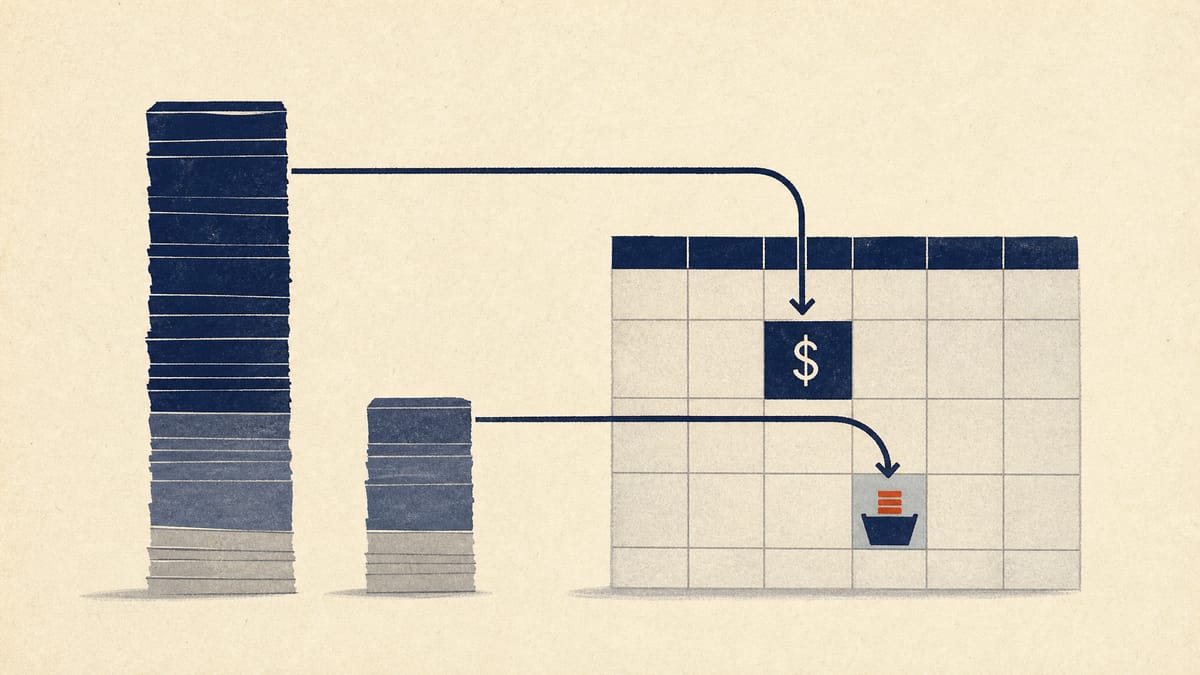
Rakuten Group filed two shelf registration supplements on 16 October 2026 for unsecured yen bonds that carry the same 4.370% annual coupon but differ in size, timing and what the money is for. Series 26 is ¥360bn and matures on 28 April 2032. Series 27 is ¥40bn and matures on 22 April 2032. Neither has been funded: payment is due on 29 October for Series 26 and 22 October for Series 27. Earlier Tokyo Brief coverage is also available.
Series 26: mostly refinancing
The supplement for Series 26 estimates ¥5.4bn of issue costs, leaving net proceeds of about ¥354.6bn. Rakuten Group plans to put ¥265.6bn of that toward redeeming its dollar-denominated unsecured bonds that mature on 15 February 2027, and ¥10bn toward the Series 9 unsecured bonds that mature on 25 June 2027.
The remainder is meant to replace cash already spent. On 30 September 2026 Rakuten Group carried out preparatory steps for restructuring its fintech business. These were transfers of businesses outside the restructuring's scope (shares in a payments subsidiary bought from its card subsidiary, a real estate business taken over from a card-unit affiliate, and shares in a warehouse company) plus the purchase of shares in a third-party share issue by its securities holding company. The supplement does not say how the remaining Series 26 proceeds are split among those uses.
The filing says the bond is unsecured and unguaranteed, with a negative pledge: if Rakuten Group grants security on other domestic bonds, Series 26 gets equal-ranking security. Mizuho Bank is the bond administrator. Japan Credit Rating Agency assigned a single-A-minus rating dated 16 October 2026.
Series 27: all of it for restructuring cash
Series 27 nets about ¥39.8bn after ¥206mn of estimated costs, and the filing earmarks all of it for the same restructuring-related cash drain. Unlike Series 26, no bond administrator is appointed, so bondholders manage the bond themselves. The bond has no clause letting Rakuten Group switch it to secured status, and it carries the same rating from Japan Credit Rating Agency.
| Term | Series 26 | Series 27 |
|---|---|---|
| Size | ¥360bn | ¥40bn |
| Coupon | 4.370% a year | 4.370% a year |
| Interest dates | 29 April and 29 October | 22 April and 22 October |
| Maturity | 28 April 2032 | 22 April 2032 |
| Application period | 19 to 28 October 2026 | 16 October 2026 |
| Payment date | 29 October 2026 | 22 October 2026 |
| Denomination | ¥1mn | ¥100mn |
| Estimated net proceeds | ¥354.6bn | ¥39.8bn |
| Bond administrator | Mizuho Bank | None appointed |
Both bonds are sold in full by underwriters on a firm-commitment basis. Daiwa Securities leads each, taking ¥155bn of Series 26 and ¥12.6bn of Series 27. A group financial company, Rakuten Securities, is among the Series 26 underwriters with ¥60bn.
Authority and headroom
Both supplements sit under a shelf registration filed on 18 September 2026, effective from 30 September and valid to 29 September 2028, with a ¥600bn ceiling. Each supplement shows the full ¥600bn as remaining because Series 26 payment is not complete. A board resolution of 31 July 2026, attached to the Series 27 filing, approved domestic unsecured bonds of up to ¥450bn over the period from 1 September 2026 to 31 August 2027, at a coupon of 5.0% or less and a maturity within six years. It allows working capital, investment and lending funds, and refinancing of existing debt as uses, and leaves final terms to the vice group chief financial officer.
The 4.370% figure is the coupon on bonds issued at par, not a yield. The use-of-proceeds statements are plans, not completed repayments.