The Ministry of Economy, Trade and Industry opened public comment on 16 October 2026 on draft rules that would extend Japan's building-materials top-runner programme to window sashes for apartments other than wooden ones. The draft notice sets a standard heat-loss performance of 2.97 for that category, and the target year is the 2030 fiscal year. Comments close at 5pm on 16 November 2026.
The target and how it is measured
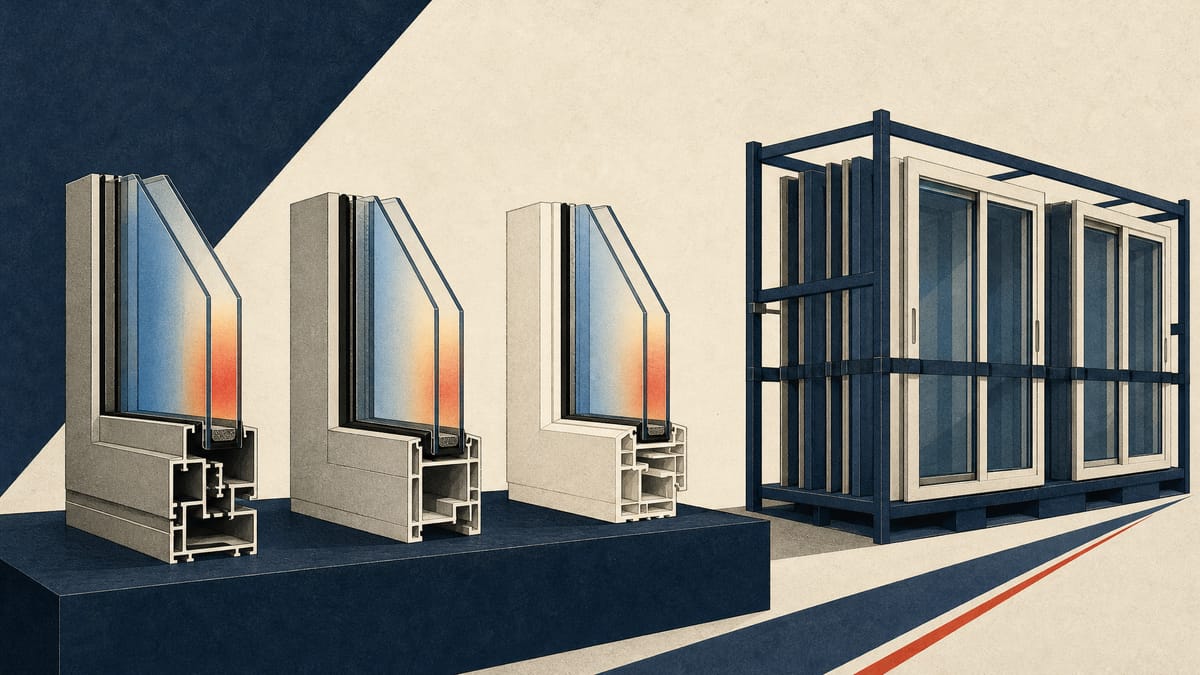
The figure is a window-level thermal transmittance (Uw), in watts per square metre per kelvin. Because a sash cannot be rated alone, the draft scores it with a deemed glass fitted. Under the notice's table, a single-glazed aluminium window is rated 6.26, an aluminium double-glazed window 3.95 or 4.19 depending on cavity thickness, and a wood or resin double-glazed window 2.16.
The working group derived 2.97 by weighting regional targets by apartment starts and by an assumed 2030 shipment mix. That mix is 83.5% aluminium-resin composite and resin sashes, 10.8% single-glazed aluminium and 5.8% double-glazed aluminium. Makers can reach the number with different material mixes, according to the group.
The benchmark scores only the outer window of a double-window setup. The working group estimated that meeting 2.97 would leave installed windows at about 2.47. It is a shipment-mix target for suppliers, not a performance floor for each installed window.
Who is covered
Recommendations on heat-loss performance would apply to makers and importers with roughly 1% or more of annual production or import volume, the same threshold as the current sash programme. Labelling rules would apply to all sash makers regardless of volume. Labels must show product name or model, the performance value and the maker's name, with the U-value given to at least two significant digits.
Four materials are covered: aluminium single-glazed, aluminium double-glazed, aluminium-resin composite and resin, together 99.5% of the category. Fire-rated sashes are included. Sashes integrated with shutters, rain shutters or grilles, front sashes, and soundproof sashes to Defense Ministry specifications are excluded. Opening type is not split, because the calculation method does not depend on it. The ministerial ordinance draft revises the exemption list for sashes in the same category.
What is not yet set
The working group set a target only for mid- and high-rise apartments. Sashes for non-residential buildings are added to the framework without a target, pending shipment data by building use, which sash makers are asked to compile by the end of fiscal 2026. Insulating glass is likewise brought in without a target: the scope is double glazing with more than 10mm of combined glass thickness, excluding the air cavity, and both panes thicker than 4mm.
The ministry plans to check progress against the apartment target around fiscal 2027 and may then set a tougher one. The draft ordinance and notice leave the entry-into-force date blank. Comments go to the Energy Conservation Division, which says it will not reply to individual submissions.