Web View
Japan's import bill jumps 21.6% as volumes slip
Japan's import values rose 21.6% in October while the volume index slipped 0.2%, and Anthropic's Japanese tranche is expected to raise up to ¥552.9bn. Slightly less cargo, much bigger invoice.
MARKETS
Market pulse
Tokyo equities softened while the 10Y JGB yield nudged lower.
Sourced from Nikkei, JPX, BOJ, MOF - values, not commentary.
lead
Japan's Import Bill Swells Without the Cargo

Japan's October trade deficit hits ¥476.5bn as import values rise 21.6% on flat volumes
Japan ran a trade deficit of ¥476.5bn in October, its sixth straight monthly shortfall. Exports rose 20.5% from a year earlier to ¥11.77tn, a 14th consecutive increase, while imports rose 21.6% to ¥12.25tn, according to the Ministry of Finance's preliminary figures. The October gap a year earlier was ¥301.9bn.
The number: The import volume index fell 0.2% in October while the import price index rose 21.9%. Export volumes rose 5.8% and export prices 13.9%. The customs-rate yen averaged ¥157.84 to the dollar, 5.6% weaker than the ¥149.51 of October 2025.
Details: Crude oil was the largest single driver of import growth. Crude imports rose 60.5% in value to ¥1.27tn while volume fell 0.7%, adding 4.8 percentage points to total import growth. Semiconductor electronic parts imports rose 60.0% to ¥580.3bn. On the export side, motor vehicles rose 19.9% to ¥1.96tn and chip manufacturing equipment rose 49.7% to ¥544.2bn.
Zoom out: Exports to the US rose 23.9% to ¥2.17tn, and the US surplus of ¥690.6bn was up 34.1%, the first increase in 11 months. China stayed the drag: the deficit was ¥905.3bn, the 67th straight monthly shortfall, with motor vehicle exports to China down 53.3% in value. All October figures are preliminary.
secondary
Capital Markets and Corporate Control

Anthropic expects another $3bn stock-pay charge after advancing an RSU service date by a day
Anthropic, PBC expects a further stock-based pay charge of about $3bn after its board advanced by one day the date on which a service condition is met for roughly 67 million restricted stock units, according to an amended registration statement filed on 18 November with the head of the Kanto Local Finance Bureau. On 9 November the board changed the condition, which would otherwise have been met on 20 November 2026, so that it is met on 19 November 2026.
The number: The $3bn is expected extra unrecognised stock-based compensation expense, based on the $74.00 midpoint of the estimated offering price range. Anthropic says it will book the full effect once the performance condition is judged probable, which it expects to be when the offering completes. Separately, the board approved about 47 million new RSUs that generally vest over four years on a service condition alone, which Anthropic expects to add $3.5bn of expense over a weighted average of about 3.8 years. It calls its estimates provisional.
Details: After the offering and the concurrent private placement, Anthropic says it will have 7,427,991,791 Class A shares and 5,658,680,800 Class N shares outstanding. The lock-up terms are subject to exceptions, including early termination provisions. Co-founders and certain holders of more than 0.5% of fully diluted shares are restricted until the earlier of a results-based time after the quarter ending 30 September 2027 or the close of trading on the 365th day after pricing; other covered holders face the earlier of a results-based time tied to the quarter ending 31 March 2027 or the close of trading on the 180th day. Up to 315 million Class A shares may be sold from the trading day after pricing.
The move: The Japanese portion is expected to raise $3.0bn to $3.5bn, or ¥473.9bn to ¥552.9bn at ¥157.97 per dollar, the Mizuho Bank rate of 1 October 2026, with the final amount set on the pricing date. The shares are approved for Nasdaq Global Select under the symbol ANT, with no plan to list in Japan. For the nine months to 30 September 2026, Anthropic reports a net loss of $104.0bn and adjusted net income of $5.59bn. The adjusted figure leaves out several items, among them $94.3bn of fair-value changes on convertible notes, derivative liabilities and SAFEs.

KeyHolder backs HYBE Japan's ¥1,200 offer but leaves tendering to shareholders
KeyHolder's board resolved on 18 November that, if HYBE Japan launches its tender offer, the company will back it but stay neutral on whether shareholders and warrant holders should tender. The offer is ¥1,200 per share and ¥1 per warrant, and its stated purpose is to make KeyHolder a consolidated subsidiary of HYBE Japan, a wholly owned unit of Korea-listed HYBE Co. The offer period runs from 19 November 2026 to 6 January 2027.
The number: The price is 11.32% above the ¥1,078 close on 17 November, 22.57% above the one-month average of ¥979 and 46.70% above the six-month average of ¥818. KeyHolder says the premium makes tendering reasonable and that the cap, which is not meant to delist the company, makes holding on reasonable too.
Details: HYBE Japan buys nothing unless at least 7,148,690 common shares are tendered. The common-share cap is 8,850,152 shares; the combined cap of 10,453,092 shares, or 51.42%, includes 1,602,940 shares underlying the warrants. KeyHolder's largest shareholder, its third-largest and its chairman have agreed to tender all 7,148,690 of their shares, and the three warrant holders have agreed to tender all of their warrants covered by the offer; together that is 41.95% on a fully diluted base. If tenders exceed 8,850,152 common shares, HYBE Japan buys pro rata, so some committed shares may go unsold.
The catch: KeyHolder's second-largest shareholder is not tendering its 1,440,000 shares, or 6.90%. HYBE Japan says it intends to keep KeyHolder on the Tokyo Stock Exchange Standard market. It puts the free-float ratio at 50.75% as of 30 June 2026, against a 25% listing-maintenance threshold, and notes that delisting could follow if tenders and later warrant exercises push the ratio below that level.
Oasis lifts Calbee stake to 8.18% and discloses proposals on delisting-related matters
Oasis Management Company Ltd. now holds 8.18% of Calbee, up from 7.12% in its previous report, according to a change report filed on 18 November 2026. The filing counts 9,972,700 shares against 121,966,500 outstanding as of 10 November, and Oasis filed alone, with no joint holders.
What changed: Oasis states that it is already making proposals to Calbee on matters relating to delisting, on significant changes in capital policy, and on an acquisition of Calbee shares by someone other than Calbee that would leave the buyer with more than half the voting rights. The filing describes proposals, not a transaction: it names no bidder, price or structure, and carries no response from Calbee.
What to watch: Oasis plans to raise its holding ratio by more than 5/100 through on- and off-market purchases, conditional on Calbee's share price being judged undervalued, with price, quantity and timing still under consideration. It plans to act within three months of 11 November, though it may run later, and says it expects further proposals over 12 months on matters including asset disposals, large borrowings, officer appointments and dividend policy. The report lists ¥29.14bn of acquisition funds, described as fund money, with no borrowing.
secondary
Rules and Visitors

FSA proposes letting banks consolidate funds by stake in capital ratios
The Financial Services Agency on 18 November put out draft amendments that would let a bank bring a fund into its consolidated capital ratio in proportion to its stake. The agency says the change follows the "financial strategy to promote growth investment" published this summer. The draft is a consultation, not a rule: comments are due by 15:00 on 18 December 2026, and the amended rules, notices and supervisory forms would apply from 31 March 2027.
Details: The fund would have to be a subsidiary whose sole purpose is asset management, and its law, including foreign law, or its contract would have to state clearly that investors bear credit risk in proportion to their stake. A bank meeting those tests could include only the portion matching its own stake. Banks would report the number, names, total assets, net assets and main business of funds consolidated this way.
What to watch: Once a bank calculates its ratio this way, it must keep using the method unless it notifies the Commissioner beforehand that it is stopping. The leverage, liquidity and loss-absorbing-capacity notices would state that their consolidation scope matches the capital ratio's. The release does not quantify any effect on capital ratios or say which funds would qualify.

Japan's October arrivals set a record at 3.91 million, but China is down 47.0% and the year is still behind
Japan welcomed an estimated 3,912,500 foreign visitors in October, up 0.4% on a year earlier and the highest monthly total on record, according to the Japan National Tourism Organization. January to October arrivals totalled 34,643,000, a preliminary estimate, down 2.5% from the definitive 2025 figure of 35,547,851.
The number: China sent 379,500 visitors, down 47.0% from 715,804, and 3,715,200 for the first ten months, down 54.7%. JNTO notes that the Chinese government has issued several advisories since last November urging people to avoid travel to Japan, and also cites reduced flights. South Korea went the other way, with 1,035,800 visitors, up 19.4% and an October record.
Details: Taiwan (634,600, up 6.5%), the United States (351,500, up 4.7%) and Hong Kong (202,500, up 3.3%) all set October records, and India rose 44.8% to 42,600. The data count arrivals, not spending.
secondary
Company Disclosures

Shionogi closes IntraBio purchase, adding a drug with a new US ataxia approval
Shionogi said on 18 November 2026 that its US group company, Shionogi Inc., has completed the acquisition of IntraBio Inc., the Texas-based maker of AQNEURSA, making IntraBio a wholly owned subsidiary. The deal was announced on 5 October.
What changed: Shionogi now owns AQNEURSA, which treats the neurological symptoms of Niemann-Pick disease type C. The US Food and Drug Administration approved it in September 2024, and the European Medicines Agency in January 2026. In September 2026 the FDA approved it for the ataxia of ataxia-telangiectasia (A-T) in patients weighing 15kg or more, which Shionogi describes as the first and only treatment for that use; the EMA is still reviewing the A-T application.
Why it matters: Shionogi says it has built rare-disease sales and medical-affairs foundations since acquiring global rights to the ALS drug RADICAVA in April 2026, and that IntraBio adds to them. IntraBio had also started a phase 3 trial in CACNA1A-related disorders, which Shionogi will continue.
The catch: The closing notice gives no purchase price or AQNEURSA revenue figure. Shionogi says the effect on results for the year ending March 2027 is already in the revised forecast it published on 29 October 2026.
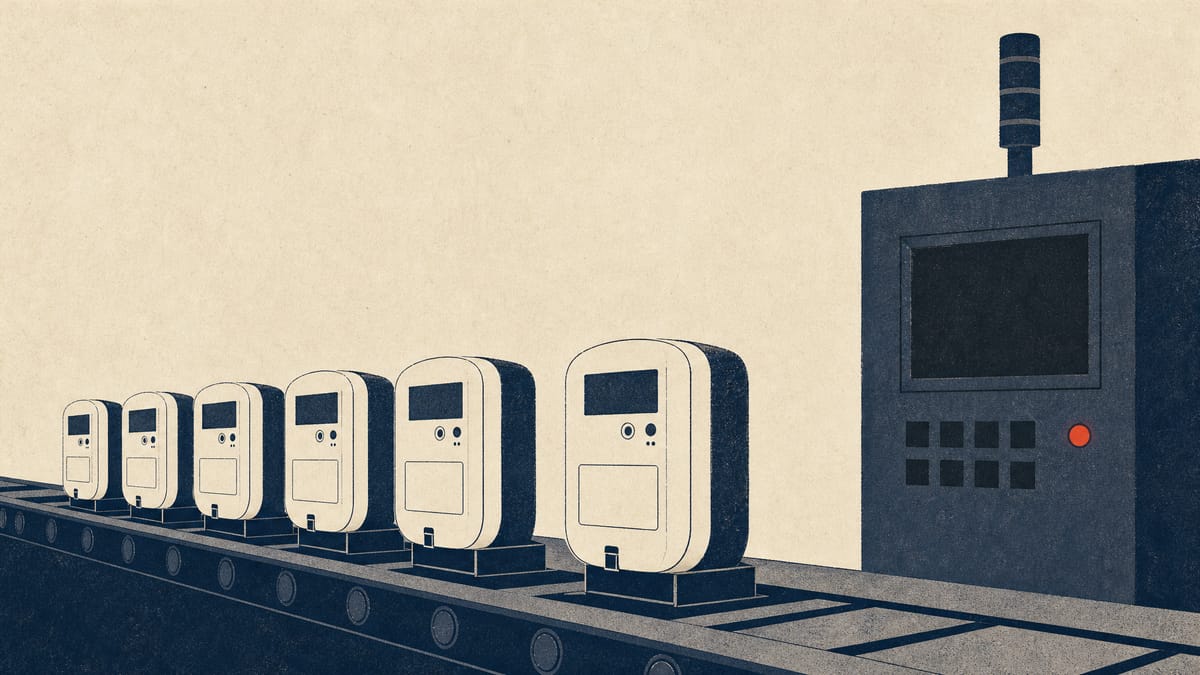
Osaki Electric halts smart meter output after ransomware attack
Osaki Electric, the Tokyo Prime-listed meter maker, has stopped production and shipments of smart meters and other products after a ransomware attack on its systems, and it has given no date for resuming either. In a first report dated 18 November 2026, the company said it found data on its servers encrypted at about 10:35 on 17 November and cut external network connections from noon that day.
Details: The company shut production-related systems at its Saitama works and at two related production sites, including Iwate Osaki Electric. An emergency response headquarters led by its president and COO is running the investigation and recovery, and the company has consulted and reported to the police and relevant authorities. Outside specialists are examining whether data left the company.
What to watch: Restart timing is undecided and the earnings impact is unknown. The notice does not say whether any data was taken. Osaki says it will announce new facts promptly on its official website, so the next update is the one to watch for a restart date.
Ryoyo Ryosan lifts profit guide to ¥14bn while Renesas exit trims second half
Ryoyo Ryosan Holdings raised its full-year operating profit forecast to ¥14.0bn from ¥12.0bn, but the revised plan has the second half earning less than the same period a year earlier. The Tokyo Prime-listed electronics distributor now guides to sales of ¥380bn, up from the original ¥370bn plan, and says memory and AI-related business will cover the gap left by its Renesas dealership wind-down.
The number: First-half sales were ¥203.9bn and operating profit ¥8.67bn. The implied second-half plan is ¥176.1bn of sales and ¥5.33bn of operating profit, against ¥187.7bn and ¥6.25bn a year earlier. Management attributes the pressure to the growing effect of moving Renesas business to other channels plus some business shrinkage; the presentation puts no yen figure on the Renesas effect alone.
Context: The distributor agreement with Renesas ends on 31 March 2027, and business is moving to other channels as customers choose. A new three-year plan is due with the full-year results, after management said it will review the assumptions behind its five-year targets of ¥500bn in sales and ¥30bn in operating profit. The full-year dividend forecast stays at ¥140 per share.
quick hits
Quick Hits
Konoike Transport to buy plant-maintenance group NS Holdings for about ¥17.5bn
Read moreKonoike Transport will pay an estimated ¥17.5bn for NS Holdings, which owns a plant-maintenance contractor with ¥17.73bn of revenue in the year to June 2026, with closing planned for 3 December.
Logisteed signs deal for 100% of US contract logistics group Neovia
Read moreLOGISTEED Holdings' subsidiary signed a definitive agreement on 18 November 2026 to buy 100% of Neovia Acquisition, a US contract logistics business, whose listed entities include units in Hungary and Thailand plus financing and holding vehicles.
YODOKO agrees to sell steel roll business to Proterial for ¥1.5bn and plans to exit rolls
Read moreYODOKO has signed a ¥1.5bn deal to transfer its steel roll business to Proterial, planned for December 18, and plans to close non-ferrous rolls by the end of March 2027; it expects the combined effect on group results to be minor.
Watchdog recommends action against Tokyo adviser over invented manager and AI claims
Read moreJapan's securities watchdog has recommended administrative action against a small Tokyo investment adviser that charged ¥549mn on 2,674 campaign contracts without setting the target returns it described, and used an invented manager and overstated AI claims.
Rental car firms told to delete photo-ID images once identity checks end
Read moreJapan's privacy commission says rental car operators must keep licence numbers for two years but have no legal duty to keep photo-ID images once the rental procedure is finished, and asks them to delete the images promptly after identity checks.
Infcurion says 232 personal data items leaked via Notion's AI subcontractor
Read moreInfcurion says 232 items of personal information in Notion AI inputs and responses were taken when Notion's subcontractor Fireworks AI was breached, while client data in its sales records is still under review and the earnings impact is called minor.
Nipro to book ¥4.09bn gain after investee sale closes, leaves guidance alone
Read moreNipro completed the sale of its shares in a company acquired by VAT Holding AG on 16 November and will book a ¥4.09bn special gain in the third quarter, above its July estimate of about ¥3.9bn, with no forecast revision.
Japanese spent a record ¥8.435tn on domestic trips in July–September despite fewer outings
Read moreJapanese residents' domestic travel spending hit a record ¥8.435tn in July–September, up 4.3%, as overnight trips rose 1.8% and day trips fell 3.6%, with spending per trip up 4.9% on average.