Web View
BoJ's September hike drew critics on both flanks
The BOJ's September hike drew objections from both sides, Toyota plans a tender offer for insurers' shares at a 10% discount, and Sony's pictures unit carried a profit upgrade.
MARKETS
Market pulse
Tokyo equities advanced while the 10Y JGB yield nudged higher.
Sourced from Nikkei, JPX, BOJ, MOF - values, not commentary.
10Y JGB auction
| 10Y auction avg yield | 2.768% |
|---|---|
| Bid-to-cover | 3.213x |
| Offering | ¥2.6tn |
The 2026-11-05 10Y JGB auction average yield was 2.768% (bid-to-cover 3.213x), down from the prior auction.
Ministry of Finance, JGB auction results
lead
Rate Hike Fine Print
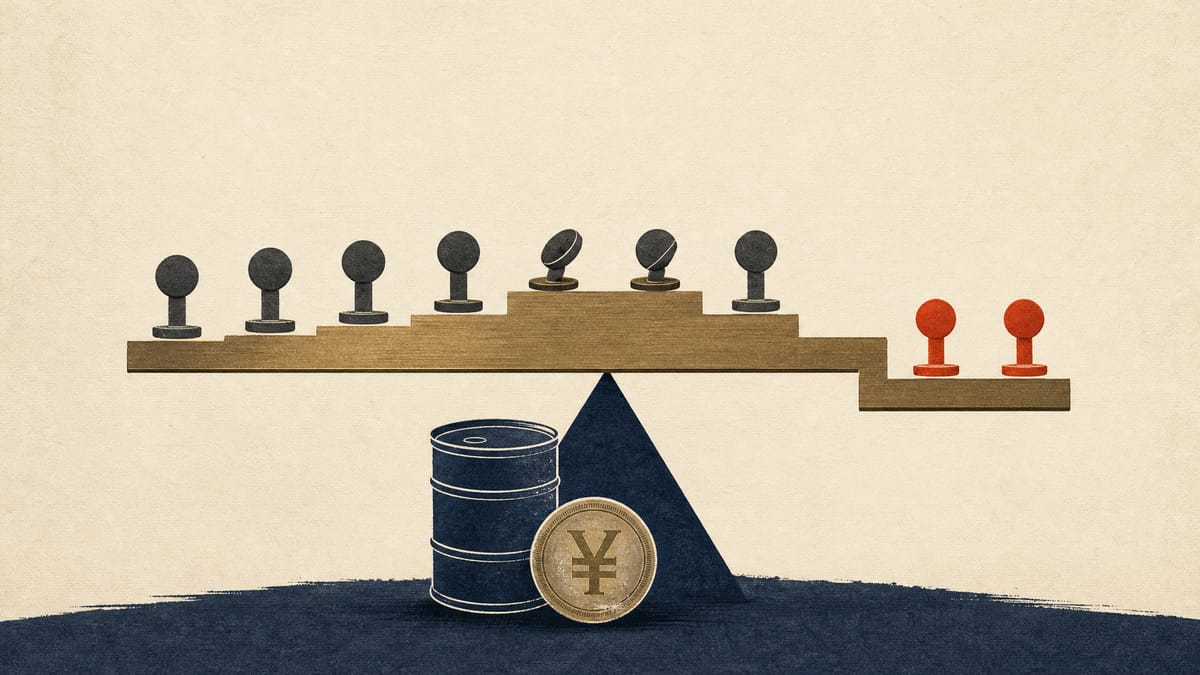
BoJ's September 2026 hike drew critics on both flanks, minutes show
Two members opposed the rise to around 1.25% as premature, while two who backed it said inflation had generally reached target.
What changed: The Policy Board raised its overnight call-rate target by 0.25 percentage points to around 1.25% on September 18 by a 7-2 vote. Minutes released November 5 show Toichiro Asada and Ayano Sato voted against all three rate proposals. Asada said CPI excluding fresh food was recently below 2% and the economy could not necessarily be called strong. Sato said it would take time to judge private consumption and whether inflation expectations were anchored around 2%. Hajime Takata and Naoki Tamura voted for the hike but opposed the price-outlook wording in the board's statement. Takata held that CPI inflation, including underlying inflation, had generally reached the price stability target; Tamura said underlying inflation was already at a level consistent with it. The statement was adopted unanimously, with a note recording their objections.
Why it matters: Members agreed the bank should keep raising the rate while underlying inflation approaches 2% and financial conditions stay accommodative. They differed on speed: one said the bank would need to accelerate if signs of upward price deviation emerged, another said inflation was not rising fast enough to put the bank behind the curve. Many members said it was difficult to identify the neutral rate in advance, and one added that accommodation should be examined after each hike.
The number: Staff projected CPI excluding fresh food at around 2% in the near term, then accelerating toward the second half of the current fiscal year to a level exceeding 3%. The board's statement says only "clearly above 2%". One member said crude oil had risen about 50% since July and the yen had strengthened about 5%.
Context: The Cabinet Office asked the bank to examine the cumulative effects of past hikes and said it might need to consider its neutral-rate estimates. The Ministry of Finance asked for careful explanation of the policy intention to the market.
secondary
Toyota's Double Header
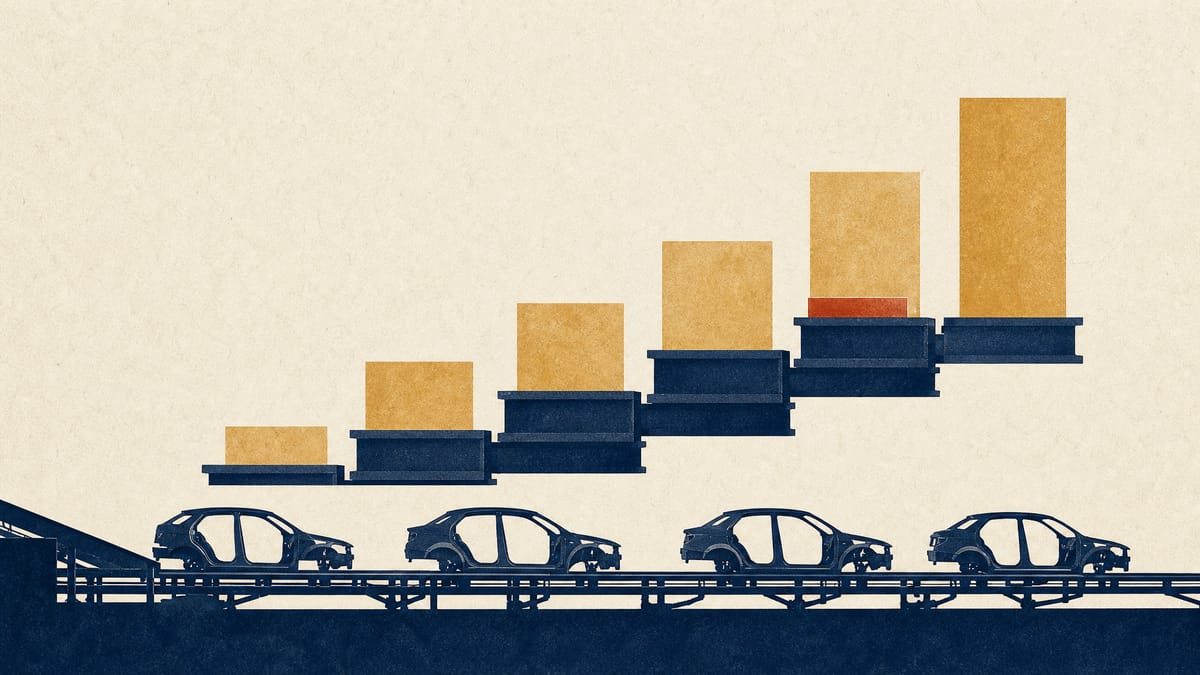
Toyota lifts profit forecast to ¥3.9tn even with a stronger yen assumption
Toyota's first-half operating profit rose 9.2% to ¥2.19tn, and it lifted its full-year forecast by ¥500bn while booking a ¥95.4bn loss on Hino.
What changed: Toyota now expects operating profit of ¥3.9tn for the year to March 2027, ¥500bn above its previous forecast and 3.6% above the prior year. It cut its revenue forecast to ¥53.5tn from ¥54.0tn and moved its dollar assumption to ¥157 from ¥160. In the six months to September, revenue rose 9.5% to ¥26.96tn even though consolidated vehicle sales slipped 0.5% to 4.758mn units.
The number: Currency added ¥685bn to first-half operating profit, against a total increase of ¥185.4bn. Toyota's presentation puts the change at minus ¥195bn once currency and swap valuation effects are excluded. Cost improvement efforts subtracted ¥340bn, with material prices costing ¥465bn, including a Middle East effect of ¥125bn.
The catch: Pre-tax profit for July to September fell to ¥990.5bn from ¥1.23tn, and Toyota booked a ¥95.4bn loss on losing control of Hino Motors. Net profit is still forecast 7.2% below last year.
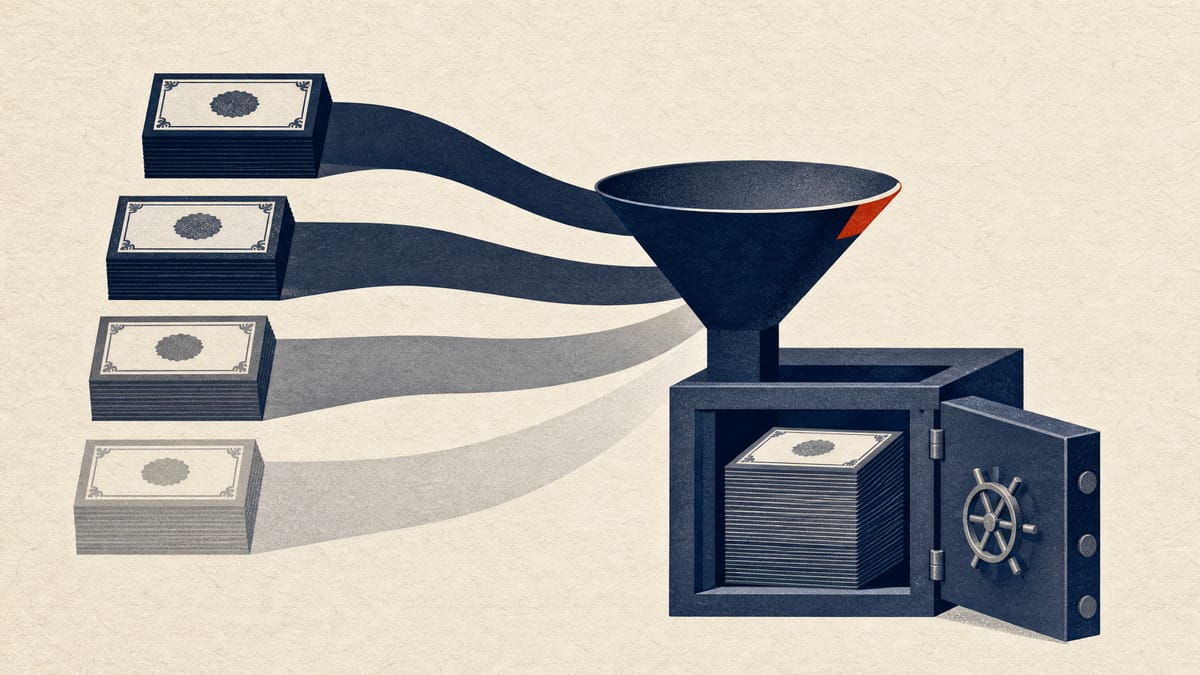
Toyota lifts buyback ceiling to ¥1.3tn and plans ¥2,725 tender for insurers' shares
Toyota raised its buyback ceiling to ¥1.3tn from ¥1tn and plans to tender for up to about 108.75 million shares held by insurers, at a 10% discount and with cash on hand.
What changed: On November 5 the board raised the upper limit of its current buyback to 610 million shares and ¥1.3tn, from 500 million shares and ¥1tn, and added a self-tender offer as a purchase method alongside market buying. The company had bought 63,766,500 shares for ¥195.0bn through September 30.
The move: The tender is priced at ¥2,725 a share, 10% below the ¥3,028 close on November 4. It runs from November 6 to December 7, with settlement starting December 29. The planned purchase is 108,750,741 shares, 0.92% of shares outstanding excluding treasury stock, at a cost of about ¥296.4bn. If tenders exceed the limit, Toyota will buy pro rata. The cost sits inside the enlarged ¥1.3tn ceiling.
Why it matters: Toyota says the tender responds to insurers' stated plans to cut cross-shareholdings, and that selling in the market could weigh on its share price. Mitsui Sumitomo Insurance, Aioi Nissay Dowa Insurance, Tokio Marine & Nichido Fire Insurance and Sompo Japan have said they will tender. Toyota says they are willing to tender more than those amounts, so scaling back would be needed if applications exceed the cap.
secondary
Earnings Reads

Sony raises operating profit forecast to ¥1.87tn, led by pictures and games
Sony lifted its full-year operating profit forecast to ¥1.87tn from ¥1.72tn, while image-sensor sales fell and that segment's profit gain leaned on currency.
What changed: The ¥150bn (9%) increase is attributed mainly to higher profit in pictures and games. Sales are now guided to ¥13.0tn from ¥12.5tn, and net income attributable to shareholders to ¥1.33tn from ¥1.21tn. July-to-September operating income was ¥622.3bn, up 45%, on sales of ¥3.43tn, up 10%.
By the numbers: Pictures sales rose 48% to ¥513.7bn and operating income reached ¥92.6bn, against ¥13.9bn a year earlier, which Sony credits to theatrical revenue mainly from "Spider-Man: Brand New Day". Game & Network Services earned ¥220.1bn, up from ¥120.4bn; the year-earlier quarter carried a ¥31.5bn Bungie impairment, so part of the gain is a base effect.
The catch: Imaging & Sensing Solutions sales fell 6% to ¥577.6bn on weaker mobile image-sensor sales. Operating income rose 12% to ¥154.6bn, but Sony lists a currency benefit of ¥25.9bn, larger than the ¥16.4bn increase.
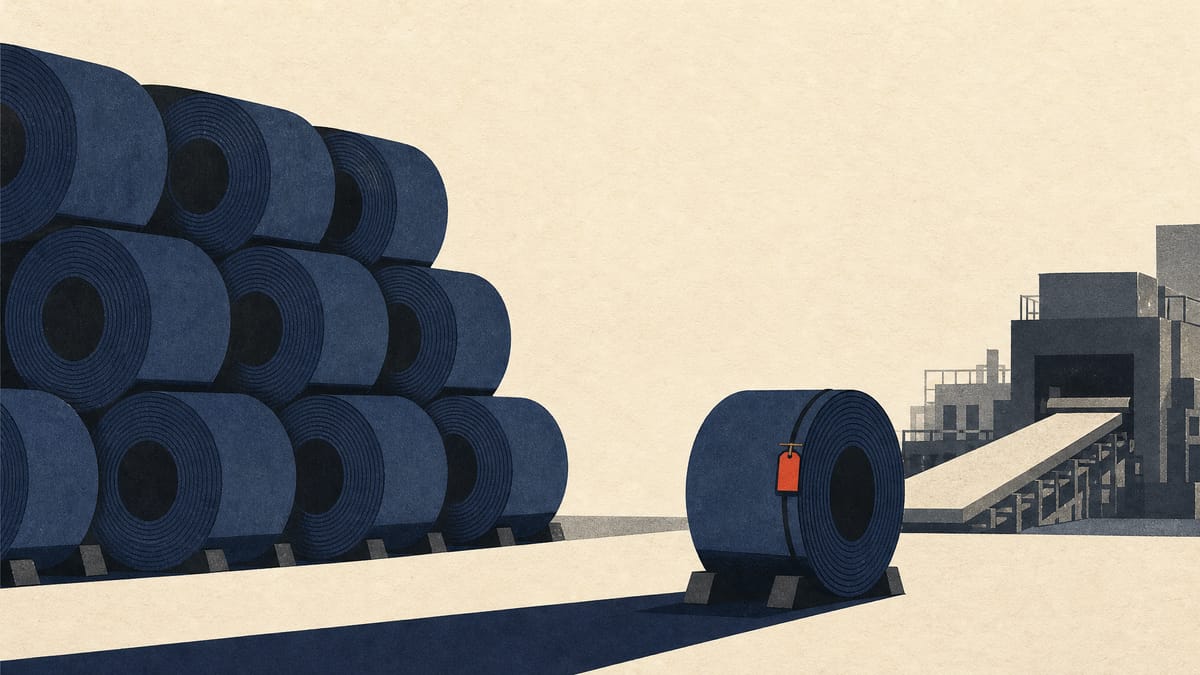
Nippon Steel lifts profit outlook, with a ¥96.1bn U.S. tax credit inside the net figure
Nippon Steel lifted its net profit forecast to ¥440bn from ¥290bn, with a one-off Arkansas tax credit at U.S. Steel inside the total.
What changed: The forecast covers the year to March 2027. The ¥96.1bn credit is tied to the Big River 2 capital investment at United States Steel Corporation and was booked as a lump sum, reducing tax expense. It is not part of business profit, which the company forecasts at ¥720bn, up ¥90bn, against ¥514.1bn a year earlier.
The number: Net profit attributable to owners for the six months to September was ¥263.0bn, against the company's earlier forecast of ¥120bn, with income tax coming in as a ¥32.1bn credit. The outlook table puts the second half at ¥177.1bn.
Zoom out: Underlying business profit, which strips out inventory valuation differences, is now forecast at ¥770bn, up ¥70bn. Domestic is held at ¥380bn; overseas is ¥390bn, up ¥70bn, including ¥230bn from U.S. Steel and Nippon Steel Slovakia, up ¥50bn. The dividend plan is unchanged at ¥24 a share.
Kurita's US project took ¥18.4bn off first-half profit, and the loss provision is only part of it
Kurita says reversed revenue, an ¥8.8bn loss provision and a ¥1.6bn plant impairment from one US order cut first-half operating profit by ¥18.4bn.
What happened: First-half business profit fell 74.0% to ¥6.29bn even as sales rose 9.3% to ¥206.9bn. The cause is one large electronics water-treatment order in the US, which Kurita books on a percentage-of-completion basis. When it sharply raised the estimated total cost, the completion share fell and revenue and profit already recognised were reduced. The expected loss was also booked as a construction-loss provision.
The number: Kurita's profit bridge shows ¥20.0bn of additional costs on the project in the first half. At the first-quarter stage it put the cost impact at about ¥3.0bn; the figure is now ¥23.6bn. The release blames US-specific standards, design certification and customer requirements, which caused design delays and quality problems. It does not name the customer or give a completion date.
Why it matters: Kurita now guides to full-year business profit of ¥40.0bn, down from ¥61.5bn in August. Excluding the ¥23.6bn of extra costs, the revision would be a ¥2.1bn increase. Kurita says its PSV-27 plan targets and growth strategy are unchanged.
secondary
Rules and Governance

Police agency to pool bank-fraud account data nationwide from November 9
From November 9 the National Police Agency will gather abused-account data from all 47 prefectural forces and supply it to 30 banks, so lenders can flag customers who sent money to those accounts and police can contact them.
What changed: The scheme began with Saitama prefectural police in October 2024 and has run between individual forces and regional banks. The NPA is now signing agreements directly with city banks and similar institutions, and will collect the account information itself and supply it centrally to every bank that has signed. Thirty institutions signed on November 5, including internet-only banks and trust banks.
Details: Police identify an account that received fraud proceeds from a victim's report and give it to the bank. The bank checks transfers within its own network for customers who sent money there and passes their details to police as potential victims, and police contact them.
The number: Special-fraud losses in 2025 reached ¥325.74bn, a record. Through the end of August this year they were about ¥236.1bn, roughly 33% above the same period a year earlier. The NPA says the scheme lets police find potential victims faster than ordinary bank monitoring; its release gives no detection results to test that.
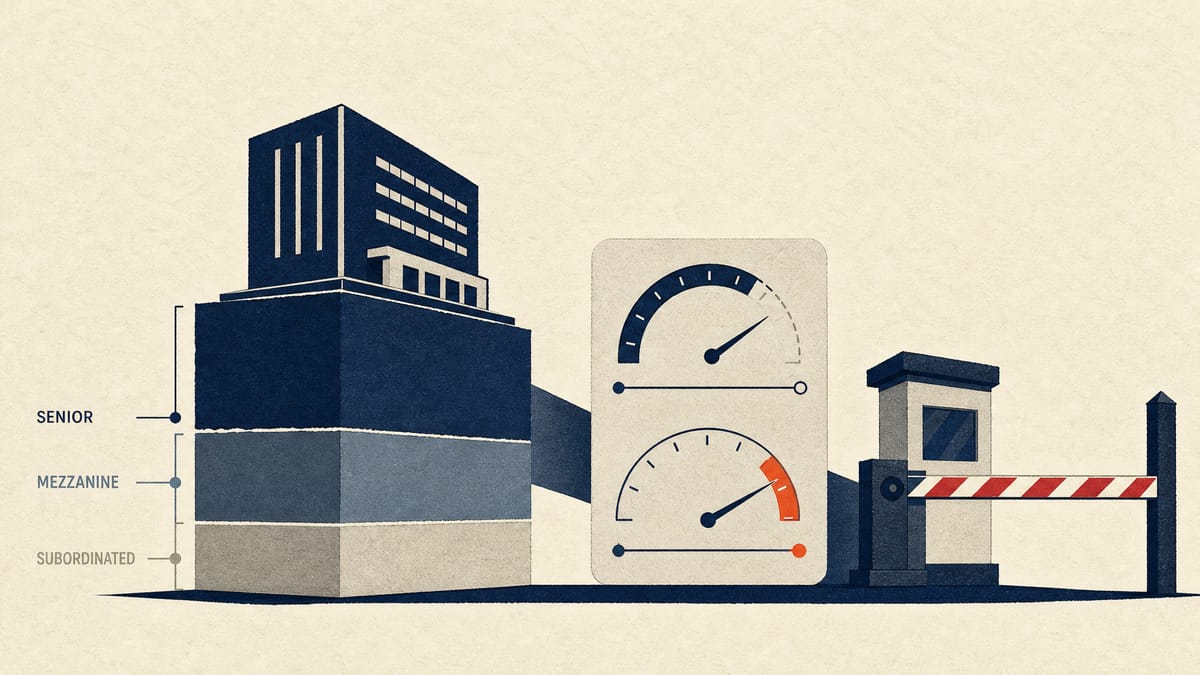
FSA panel debates lighter rules for professional lenders, but members want state oversight kept
A Financial Services Agency working group discussed on October 9 exempting commitment fees from deemed-interest limits and easing the ¥1bn capital rule for nonbank bond issuers, while members pressed to keep national supervision.
What happened: The minutes record a discussion of questions, not a decision. The FSA secretariat proposed starting from the Commitment Line Act's 13 categories of borrowers to define professional borrowers, and asked the panel about easing entry rules, conduct rules and rules on assigning claims for lenders that make only professional loans. It also asked whether commitment fees charged to large borrowers should be carved out of deemed interest.
Details: The Japan Private Equity Association said moneylender registration must be renewed every three years even though funds run about a decade. The Fintech Association proposed cutting the Nonbank Bond Act's ¥1bn capital requirement to ¥100mn and scrapping registration, citing about ¥220bn of venture debt in 2025.
Read-through: Most members backed the direction, but several said the Commitment Line Act list may be too narrow for funds, special-purpose companies and startups. Members who spoke on supervision favoured keeping national oversight. The minutes give no timetable for a report or legislation.
Medipal puts shareholder say on dividends to a December 15 vote, keeping the board's own power
Medipal Holdings will put a change to Article 39 of its articles to a December 15 meeting, letting shareholders decide dividends alongside the board, while recommending against the special dividend and ¥85bn buyback tied to the same vote.
What changed: Article 39 now says dividends and other surplus matters are decided by the board and not by shareholder resolution. The amendment changes "are made by" board resolution to "may be made by" and deletes the clause barring shareholder decisions. Item 1 is both a company proposal and a shareholder proposal with identical content; the shareholder is a Northern Trust custodian account tied to a Silchester International Investors fund.
Why it matters: Three other items are shareholder proposals the board opposes: removing the director who stepped down as president in October, a special dividend of ¥122 a share (about ¥24.9bn), and a buyback of up to 33.8mn shares costing up to ¥85bn. The special dividend and buyback are conditional on item 1 passing. If both were approved, about ¥109.9bn would leave the company in a short period, Medipal says.
Bottom line: The board argues that paying out nearly all profit would crowd out growth spending, and that ¥85bn is about 15.4% of shareholders' equity at the end of September 2026. It has begun studying a target above its current total payout ratio of at least 40%.
quick hits
Quick Hits
Rohm lifts full-year operating profit forecast to ¥50bn on server, factory and xEV demand
Read moreRohm now forecasts ¥50bn of operating profit for the year to March 2027, up from ¥30bn, crediting server and storage demand, a factory-automation recovery and resilient xEV demand, with price and cost measures offsetting rising input costs.
Nintendo's half-year profit rises 49% on software mix and a tariff refund as sales fall
Read moreNintendo's operating profit rose 49.1% to ¥216.5bn in April to September despite a 12.1% fall in sales, helped by software mix and a US tariff refund the company did not size, while full-year guidance and the ¥162 annual dividend forecast stayed unchanged.
AGC cuts its profit guide as car-glass costs and a Colorado sale loss bite, leaving sales unchanged
Read moreAGC lowered its operating profit forecast to ¥120bn from ¥150bn and cut attributable net profit by 48% to ¥40bn, citing automotive costs, chemicals input prices, volume shortfalls and a loss on selling its Colorado site, while leaving revenue guidance at ¥2.2tn.
Sankei REIT gets nonbinding rival take-private proposal at least 5% above ¥125,000 offer
Read moreAn unnamed private equity fund has told Sankei Real Estate Investment Corporation it is weighing a tender offer at least 5% above the ¥125,000-per-unit bid, with a binding proposal possible from late November once due diligence and financing talks are complete and its investment committee approves.
Mitsubishi Chemical Group keeps Kagawa carbon materials as other suppliers' feedstock makes carbon fiber targets hard to reach
Read moreMitsubishi Chemical Group has cancelled its exit from needle coke and pitch coke at Kagawa after finding it difficult to reach its carbon fiber targets with other companies' feedstock; production pauses in the business year beginning April 2027, with a restart expected a year later.
Furusato Choice reopens web donations on Nov 6 after 4.45mn-record breach
Read moreTrustbank will take Furusato Choice web donations again from noon on November 6, but the app and Choice Pay remain suspended, five donors had additional data exposed, and the earnings effect on CHANGE Holdings is still under review.
Anthropic's amended Japan filing adds cash-flow data, showing operating cash turning positive in the first half
Read moreAnthropic's amended Japan registration statement shows $3.9bn of operating cash inflow in the six months to June 2026, after outflows in each earlier period shown, while the proposed offering of up to $3.5bn still awaits Nasdaq approval.