Web View
Nidec's ¥632.1bn writedown, regional bank tie-ups and a yen remark
Nidec books ¥632.1bn of impairments and warns its reporting controls may not yet be reliable, while regional banks pair up and Katayama declines to talk yen levels.
MARKETS
Market pulse
Tokyo equities advanced while the 10Y JGB yield held steady.
Sourced from Nikkei, JPX, BOJ, MOF - values, not commentary.
lead
Nidec's Reckoning
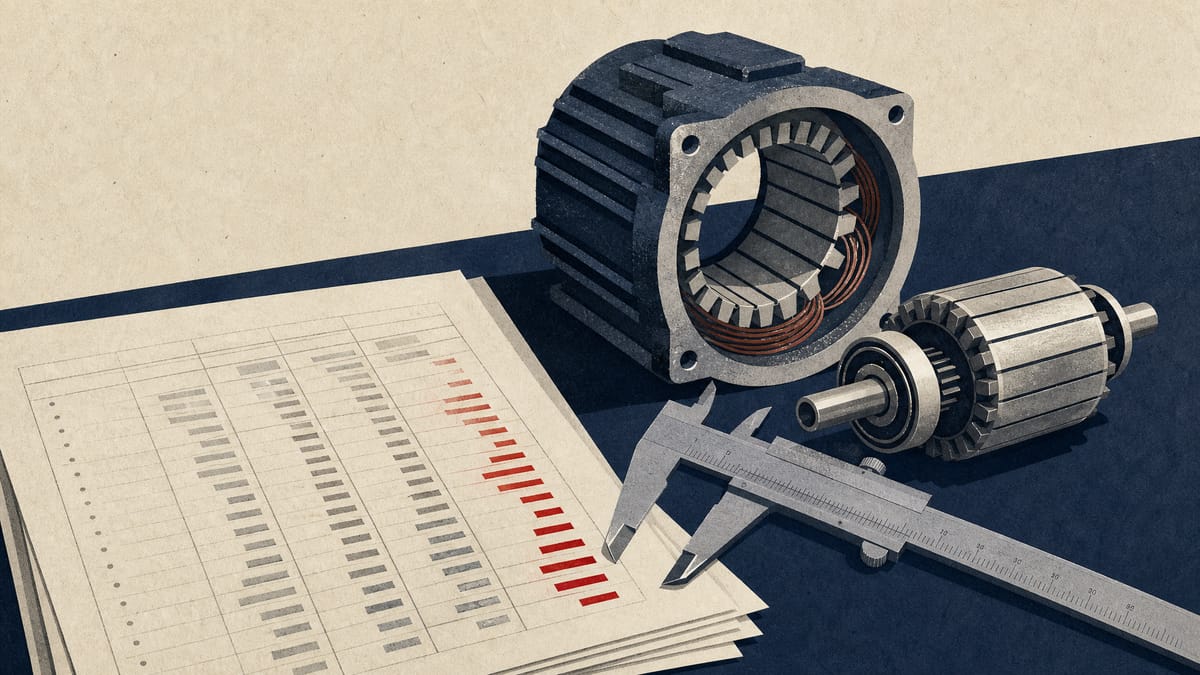
Nidec Posts ¥564.6bn Net Loss on ¥632.1bn of Impairments and Says Reporting-Control Risks Remain
Nidec's restated accounts show an operating loss of ¥519.0bn for the year to March 2026, against a restated operating profit of ¥128.2bn a year earlier. The company booked ¥632.1bn of impairments on non-financial assets, and the loss attributable to shareholders came to ¥564.6bn on sales that rose 3.9% to ¥2.71tn. The earnings summary carries a note that it is not subject to audit.
What changed: The impairments fell mainly on appliance, commercial and industrial (¥335.1bn) and automotive (¥231.1bn). Nidec put ¥298.8bn on its ACIM appliance-motor business, citing excess competition in China, ¥116.3bn on Nidec-PSA emotors, citing slower EV growth, and ¥73.1bn on Nidec Mobility, citing weaker profitability in North America. Almost all of it hit in January to March, a ¥634.7bn operating loss after a ¥28.4bn profit in the previous quarter. Equity attributable to parent shareholders fell to ¥794.2bn from ¥1.24tn, and the equity ratio dropped to 25.6% from 42.5%.
The catch: Nidec says its review of individuals is unfinished. Some staff who were involved in, directed or knew of the misconduct, or who misled auditors, still hold responsible positions in financial reporting, and the company cannot yet confirm that their successors are doing the job properly. It says undetected misstatements could have a material and pervasive effect on the accounts, and nothing has been booked for them. Separately, it says dividends and buybacks in each of the five years to March 2026 exceeded the distributable amount under company law.
What to watch: The Tokyo Stock Exchange put Nidec on its special-alert list on 28 October 2025, typically for one year. Nidec plans to submit its internal-management confirmation at the end of October 2026, and delisting follows in principle if the exchange finds a problem. Its guide for the year to March 2027 is sales of ¥2.8tn and net profit of ¥100bn, set beside its own warning that its reporting controls may not yet be reliable.
secondary
Policy and Regulation

Government draws on reserve funds to start consumption-tax-cut preparations
Katayama Repeats Yen Undervaluation Concern After Bessent Call but Won't Discuss Levels Finance Minister Katayama said an undervalued yen is a problem in general terms after a 25 September call with US Treasury Secretary Bessent, and declined to discuss levels. She spoke at her post-cabinet press conference on 29 September.
What changed: Little: Katayama restated Japan's line. She described the call as an exchange of views on market developments, said she told Bessent that Prime Minister Takaichi is not a reflationist, and pledged close contact with the US Treasury toward orderly currency markets. She said Takaichi's separate call with President Trump did not touch on currency matters.
Context: Asked about long-term yields in the 3% range, she declined to comment on the numbers. She relayed that the JPMorgan chairman and the investor Druckenmiller, who visited Tokyo last week, did not regard the rise in US yields as abnormal, and said she shares that view. The same day's cabinet decision put ¥111.87bn of reserve funds to use across the Cabinet Office, Digital Agency, finance ministry and economy ministry to prepare for the food consumption tax cut and worker relief payments. Asked whether spending before Diet deliberation showed resolve to pass the legislation, she said the ministry was not discussing Diet tactics.
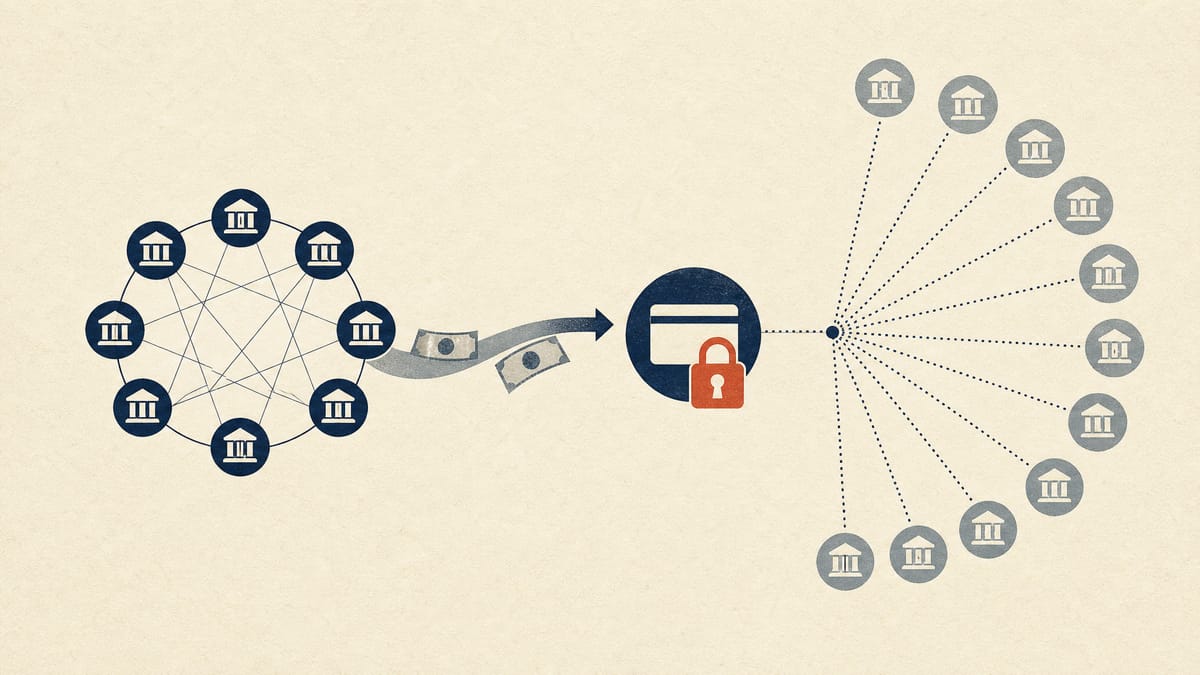
Police extend bank fraud-tracing network to 20 lenders from October 1
Japan's National Police Agency has signed 11 more banks to its public-private framework for tracking, freezing and recovering money lost to special fraud, taking the total to 20, and aims to widen operation to them from October 1.
Details: Prefectural police put queries to signatory banks online through the agency rather than bank by bank, and also make an early freeze request to the bank holding the account that received the stolen money. The framework began operating on June 1 with nine banks. The agency puts special-fraud losses at ¥325.74bn in 2025 and ¥181.62bn in the first half of this year, and says transfer-type payments made up 56.9% of losses by delivery method. Its release reports no recovery or freezing results from the June start, so the expansion is a wider access list, not evidence that losses have fallen.
secondary
Deals and Consolidation
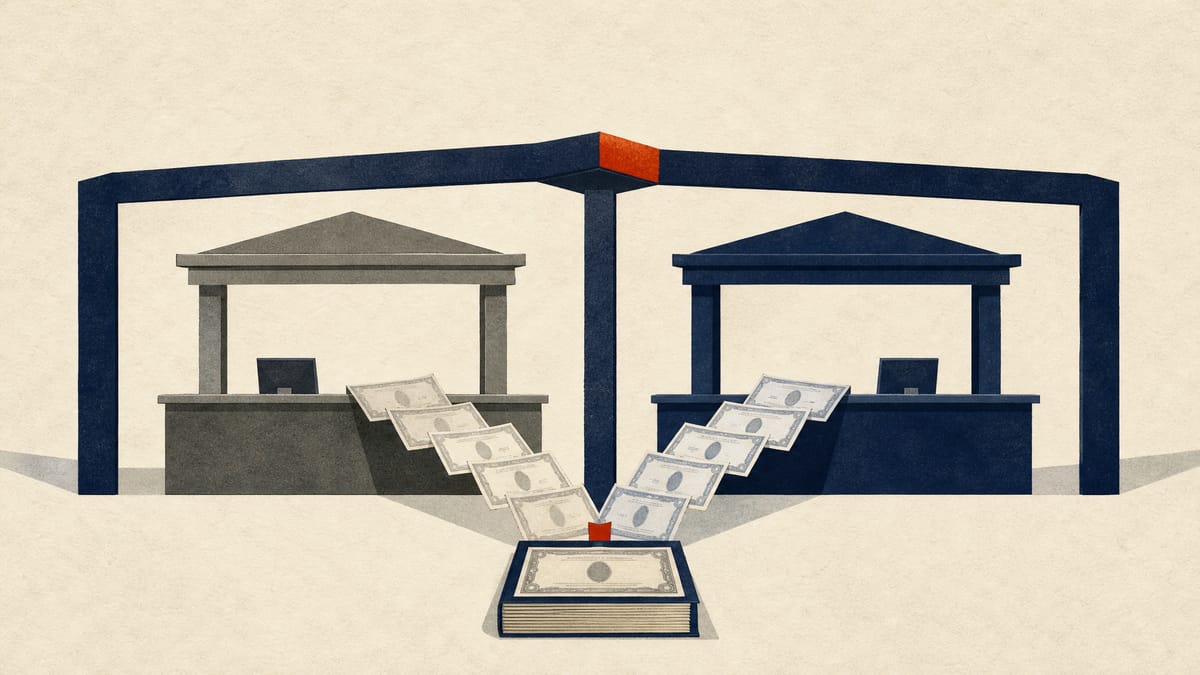
Chiba Bank and Chiba Kogyo Bank draw up plan for a one-for-one common-share swap into a holding company
Chiba Bank and Chiba Kogyo Bank have turned their March integration agreement into a finalised share-transfer plan to create Chiba Financial Group as parent of both banks. Their boards resolved on the plan on 30 September, and the holding company is planned for 1 April 2027.
The move: Holders of common shares in either bank receive one holding-company common share for each share they own. Chiba Kogyo's Series 2 Class 6 and Class 7 preferred holders get common shares on a formula tied to Chiba Bank's average closing price over the ten trading days from 5 to 18 March 2027. The holding company will have capital of ¥150bn. Chiba Bank already owns 19.12% of Chiba Kogyo's shares, and reported consolidated total assets of ¥21.21tn at the end of March 2026.
What to watch: The plan lapses if shareholders of either bank, or Chiba Kogyo's common shareholders voting as a class, do not approve it, or if regulatory authorisations, including approval under the Banking Act, are not obtained. A shareholder vote is scheduled for 23 December.
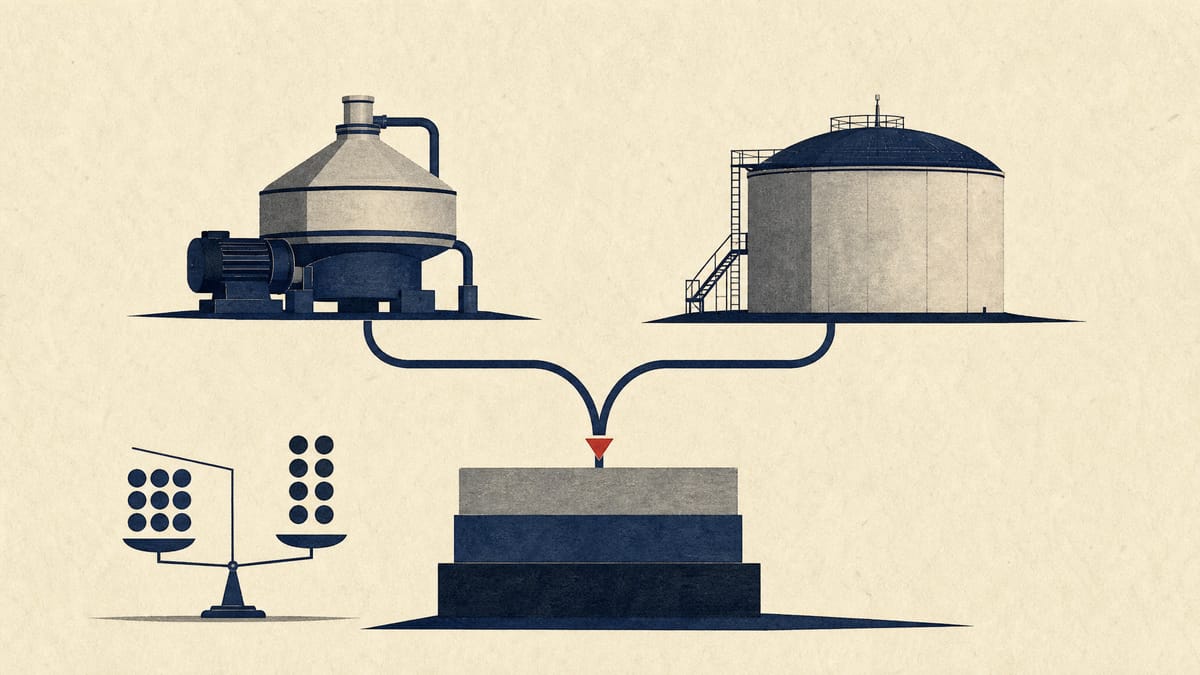
Mitsubishi Kakoki and Tsukishima agree 0.88 share swap to form a holding company by April 2027
Mitsubishi Kakoki Kaisha and Tsukishima Holdings signed an integration agreement and a share exchange agreement on September 30, under which each Tsukishima share would convert into 0.88 Kakoki shares. Tsukishima would leave the Tokyo Stock Exchange on March 30, 2027 (planned), and the group would run under a new holding company, Mitsubishi Tsukishima Kakoki Holdings.
The number: Both advisers produced a market-price range of 0.79 to 0.83, so the agreed 0.88 sits above it. It also sits above Nomura's comparable-company range of 0.66 to 0.80. Kakoki is the smaller company by sales, ¥84.24bn against ¥148.95bn at Tsukishima in the year to March 2026, yet under Japanese accounting rules the exchange is a reverse acquisition with Tsukishima as the acquirer.
What to watch: Both shareholder meetings are planned for December 4. The agreement lapses if either vote fails or if antimonopoly clearance is not in place the day before the effective date. For the year ending March 2036 the companies target group sales of ¥350bn and operating profit of at least ¥30bn, including synergies of ¥50bn in sales and ¥8bn in operating profit. These are company targets.
SBI Global Asset Management to absorb SBI Insurance Group, with delisting pencilled for March 2027
SBI Global Asset Management and SBI Insurance Group signed a basic agreement on 30 September 2026 to merge, with the asset manager as surviving company. SBI Insurance's final trading day is planned for 29 March 2027, its delisting for 30 March, and the merger for 1 April. The terms: The draft ratio gives SBI Insurance holders 3.53 shares of SBI Global Asset Management per share, and the asset manager would issue a planned 87,615,969 new ordinary shares. The ratio is not final and will be fixed only in the definitive agreement. It sits at the bottom of the market-price range both valuers produced, and neither company obtained a fairness opinion from its adviser.
The catch: SBI Holdings controls both companies, so the deal is a significant transaction with a controlling shareholder under Tokyo Stock Exchange rules. Conflicted directors stayed out of board deliberations, and independent officers at both companies concluded the decision is not disadvantageous to minority holders. If the exchange decides the asset manager is not the substantive survivor, it would enter a grace period from 1 April 2027 to 31 March 2031 to meet standards equivalent to new-listing criteria. Board approval of a definitive agreement is planned by the end of December 2026.
Japan Display agrees Mobara plant sale, flags ¥51.4bn gain but withholds the price
Japan Display signed a final contract on 30 September 2026 to sell its Mobara plant in Chiba Prefecture to a Nagano-based manufacturer. It expects a consolidated gain of about ¥51.4bn, an estimate, with handover scheduled for 31 March 2027.
By the numbers: Japan Display puts the plant's book value at about ¥26.6bn, an approximation as of the handover date. It expects extraordinary gains of about ¥51.4bn on a consolidated basis and about ¥54.9bn on a standalone basis. Both are estimates, calculated as the sale price less book value and estimated transfer costs, and not yet final. It expects to book the consolidated gain in the fourth quarter of the year ending March 2027. The buyer asked that the sale price stay undisclosed, and Japan Display says the price reflects market value.
Context: Japan Display decided in February 2025 to end production at Mobara and stopped production in November 2025. After a basic agreement with Ichigo Trust in May 2025, it widened its review to other buyers and concluded that selling directly to the Nagano manufacturer was the best option on economic grounds.
secondary
Earnings and Controls

Suruga Bank Lifts Profit Guide and Dividend, Citing a Reserve Release and an Assumed Rate Rise
Suruga Bank raised its forecast for net profit in the year to March 2027 to ¥44.0bn from ¥32.0bn and its annual dividend forecast to ¥80 from ¥60, but the upgrade leans on a one-off gain and a rate assumption.
What changed: Consolidated ordinary profit is now forecast at ¥56.0bn, up from ¥47.5bn. For the six months to 30 September 2026, net profit is forecast at ¥29.0bn, up from ¥17.0bn. The bank says new loan originations and higher interest rates are running ahead of plan.
The catch: A first-quarter change in how it values collateral on loans secured by whole investment-property buildings released ¥5.6bn of loan-loss allowances, which the bank calls a one-off. For the second half it assumes a further 0.25% policy-rate increase in January 2027, a planning assumption and not a policy decision. It also expects about ¥3.0bn of losses on domestic bond sales for the full year and assumes an effective tax rate of about 20%, lower than in its initial forecast.
Iriso Electronics Rates Its Financial Controls Ineffective, Citing Board Oversight and Overseas Reporting Gaps
Iriso Electronics' president has judged its internal controls over financial reporting not effective as of 31 March 2026, in a report filed on 30 September 2026 that lists six material weaknesses. The first concerns the top of the company, not a single overseas ledger.
What happened: An investigation committee of outside lawyers and accountants was set up on 18 February 2026 after suspicions of improper payments tied to labour-dispute handling at an overseas subsidiary. A wider third-party committee followed on 27 April, and its report, received on 28 September, found improper spending at an overseas subsidiary, quality-control problems at Iriso itself and premature sales recognition at an overseas subsidiary. Iriso restated annual reports for the years ended March 2022 to March 2025, among other filings.
The catch: The weaknesses include inadequate board and audit-committee oversight, internal audit short of staff and expertise for overseas subsidiaries, and a global whistleblowing system whose publicising and operation fell short. Planned fixes include a compliance-first policy in the charter and a group-wide risk assessment, with no timetable given. The assessment covered 11 of the group's 13 companies.
quick hits
Quick Hits
Nissha Now Guides to a Full-Year Loss After USM Goodwill Impairment
Read moreNissha's first-half sales beat its forecast by 2.2%, but a goodwill impairment at USM turned a guided ¥1.8bn operating profit into a ¥4.5bn loss, and the company now guides to a full-year operating loss of ¥3.3bn.
Members puts ¥550mn of half-year sales shortfall on AI and Middle East caution, ¥250mn on utilization
Read moreMembers now forecasts a ¥430mn operating loss for the half year to September 2026, attributing about ¥550mn of lost revenue to customer caution and generative AI substitution and about ¥250mn to lower utilization.
Astroscale wins £15mn UK defence contract, but keeps it out of its profit guide
Read moreAstroscale's UK subsidiary signed a £15mn multiyear contract with the Ministry of Defence, but the deal sits outside the forecast for the year to April 2027, and its effect on guidance is still under review.
Korean Air swings to a ₩566.4bn first-half loss with debt heavier as Asiana merger nears
Read moreKorean Air swung to a ₩566.4bn net loss for January to June as fuel and currency costs cut operating profit 61.3%, and its debt ratio reached 390.7% ahead of a planned 16 December merger with Asiana Airlines.
Japan's August hotel stays fall 6.7% as foreign guest-nights drop 10.3%
Read moreForeign guest-nights fell 10.3% in August against 5.8% for Japanese guests, in first-release Japan Tourism Agency data that carry a survey-method caveat and are due for revision on 30 October.
SBI Gives BASE Holders Until October 15 to Tender at an Unchanged ¥340
Read moreSBI Holdings' offer vehicle lengthened its ¥340-a-share bid for BASE from 20 to 30 business days after reviewing how holders had tendered, with the 20.67% ceiling and BASE's neutral stance untouched.
FIDEA's two regional banks sign merger contract, aiming for a 1 January 2027 start
Read moreFIDEA Holdings' Yamagata and Akita banks signed their merger contract on 30 September, with the merged The FIDEA Bank, Ltd. planned for 1 January 2027 subject to regulatory approvals; the company said its earnings forecast is unaffected.
Kyorin signs to hand two generics plants to a Daito-led venture, keeping its authorized generics
Read moreKyorin Pharmaceutical has signed to sell its generics subsidiary, including the Takaoka and Inami plants, to a venture owned by Daito, Meiji Seika Pharma and DBJ, with closing planned for April 1, 2027 and authorized generics carved out.
JBIC prices €1.5bn seven-year euro bond at 4.000% with Japan's guarantee
Read moreJBIC priced a seven-year, €1.5bn euro bond guaranteed by the Japanese government at 99.946, for a 4.000% coupon and a 4.009% investor yield, with payment due on 8 October 2026.
Allganize IPO plan puts ¥3.69bn of holders' shares on sale against ¥699mn of new stock
Read moreAllganize Holdings' proposed Tokyo Growth listing would put 2,954,900 existing shares on sale beside 658,100 new ones, with trading scheduled for 4 November and all values based on an assumed ¥1,250 price.