Web View
Satudora's buyout gets cheaper once the dividend disappears
A buyout gets cheaper once the dividend and perks disappear, while insurers enjoy the opposite trick: rates and calmer weather making life easier. Tokyo, as ever, contains multitudes.
lead
The Delisting Bill

Satudora zeros out its final dividend and lines up the end of shareholder perks as its buyout heads for delisting
Satudora cut the year-end dividend for the year to May 2026 to zero from a planned ¥12 a share and said its shareholder benefit programme will be abolished from the fiscal year ending May 2028 if Terra's tender offer succeeds. The company also said the shares are expected to be delisted after the offer and follow-on steps. The dividend cut is not conditional on the tender succeeding: Satudora said timing around the annual meeting could prevent a dividend proposal even if the offer fails. Terra's offer runs from June 22 to Aug. 3 at ¥1,220 a share, and the filings say shareholders who stay to a later share consolidation would be cashed out at an amount set to match that tender price. Minority holders have essentially been offered a simple menu: tender now, or get simplified later.
secondary
Capital, Controls and Capacity
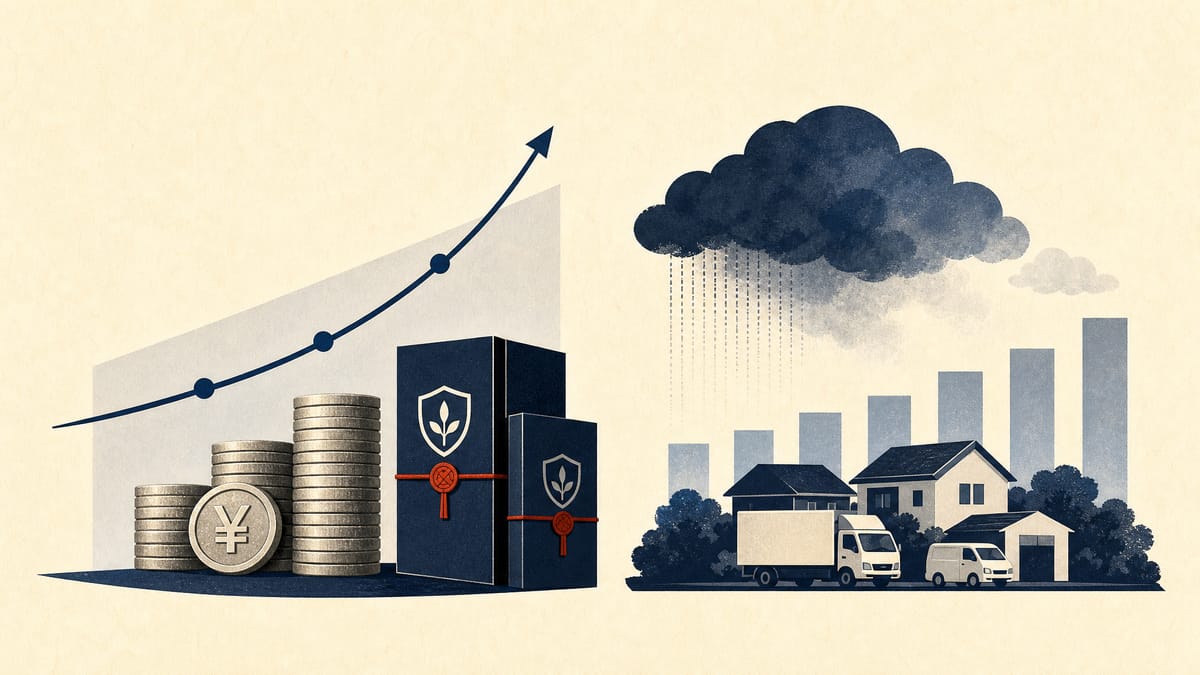
Higher rates lifted Japan life insurers, fewer disasters helped non-life groups
Japan's 21 major life insurers lifted premium income to ¥38.94tn and net income to ¥2.54tn in the year ended March 2026, with the FSA saying higher domestic rates boosted sales of single-premium yen-denominated policies. Base profit rose to ¥4.67tn even as capital gains and losses deteriorated to a ¥2.07tn loss. The three big non-life groups also benefited from a lighter catastrophe bill. Revenue rose to ¥6.53tn at Tokio Marine, ¥5.76tn at MS&AD and ¥5.37tn at SOMPO, though Tokio Marine's net income still slipped to ¥980.4bn. Think sector check-up, not neat league table.
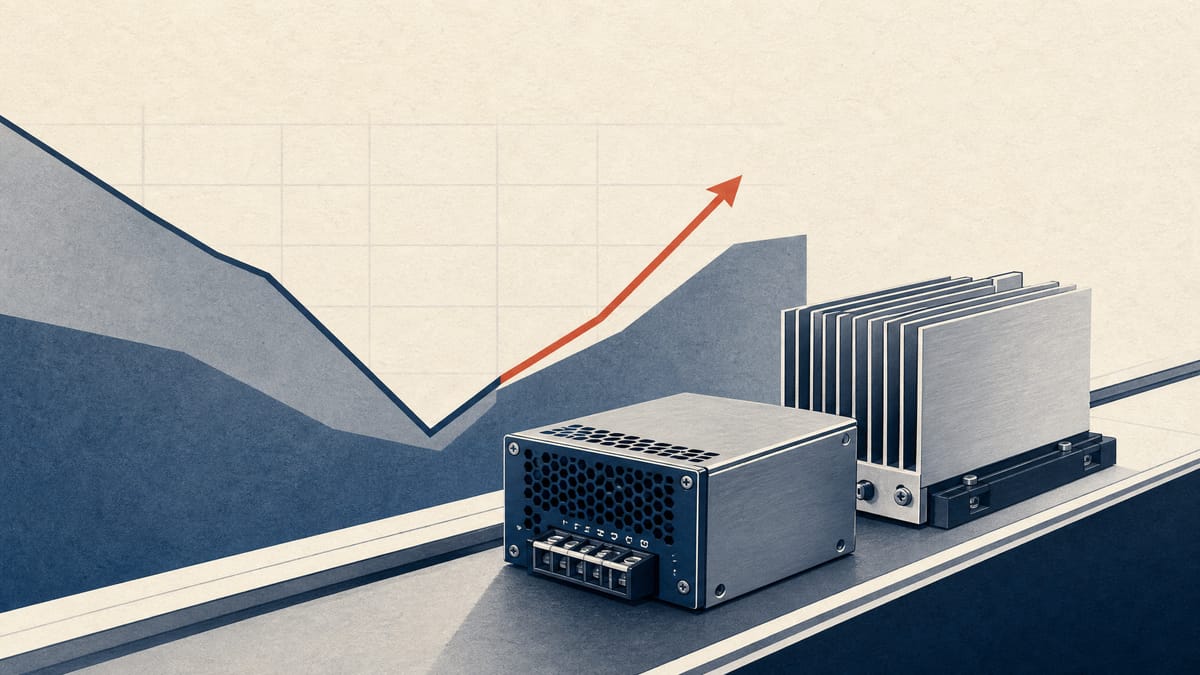
Cosel keeps ¥55 annual dividend after ¥3.41bn loss, lifts payout floor
Cosel's sales fell 7.4% to ¥25.05bn in the year to May 2026 and operating profit swung to a ¥695mn loss from a ¥628mn profit. Net loss widened to ¥3.41bn after a ¥3.633bn loss tied to the disposal of Powerbox International AB, yet the company held the annual dividend at ¥55 a share. Management is guiding for a rebound to ¥28.875bn of sales, ¥1.335bn of operating profit and ¥1.604bn of net profit in the current year, and says it intends to lift the dividend to ¥60. That is a recovery plan, not a receipt.
Aisan Technology posts stronger year after delay, suspends subsidiary used-equipment operation
Aisan Technology reported revenue up 22.1% to ¥7.59bn and operating profit up 69.2% to ¥760mn for the year to March 2026, with net profit rising 82.4% to ¥522mn and the year-end dividend set at ¥37 a share. But the results arrived after the company missed the 50-day disclosure window because of a special investigation into suspected improper transactions at a wholly owned subsidiary. Aisan said the committee found fictitious sales, concealed below-cost sales and diverted auction proceeds, with a cumulative ¥49mn hit to consolidated operating profit. The company has suspended the used-equipment operation at the unit's marketing centre until new controls are in place and says it aims to get back inside the normal reporting timetable.
Tomakomai AI data-center project commits ¥3.94bn to a 66kV substation
Environment Friendly Holdings said its subsidiary AI Tech Tomakomai has signed a ¥3.94bn tax-included contract with Yurtec to build a 66kV substation for the Tomakomai AI data-centre site in Hokkaido. Construction starts on July 1, 2026 and completion is scheduled for Dec. 13, 2027, with the company describing the asset as the route from an initial 10MW plan toward a 50MW receiving-capacity target. Funding is supposed to come from internal cash, retargeted equity proceeds, warrant exercises and possibly bank borrowing. The catch is familiar: part of the money depends on future warrant exercises, so the power plan is solidifying faster than the financing certainty.
G-JTEC picks Heidelberg to localize research-tissue supply for Europe
G-JTEC will set up Japan Tissue Engineering Europe GmbH in Heidelberg with EUR25,000 of capital and 100% ownership to develop, make and sell research-use products locally. The company says exports of its LabSite cultured-tissue products from Japan have hit the predictable problem of living cells: short shelf life and transport risk, especially after recent international disruptions. Management says a shared-lab partnership in Heidelberg should keep initial investment low and speed production setup, with operations due to start within 2026 and consolidation from the year ending March 2027. Near-term earnings impact is expected to be minor; the operational payoff is reliability, not instant scale.
Tiemco shifts from opposing to partnering with largest shareholder
Tiemco said it has agreed a cooperative framework with Kenka Synergy, which emerged from the May tender offer with 45.00% of voting rights. The pact covers profit growth, overseas expansion, digital transformation, ecommerce and the introduction or proposal of management and operational personnel, while Kenka Synergy also agreed to respect existing employment, business relationships and brand assets. That is a notable shift from the company's earlier opposition to the bid. Tiemco still has work to do on listing-maintenance measures and board reshaping, and it has set July 6 as the record date for an extraordinary shareholder meeting planned for late August.
Sansan ends buyback just below ¥2bn cap, as Ichigo stake rises to 11.57%
Sansan completed the buyback approved in May after purchasing 1,331,600 shares for ¥2.00bn, against an authorisation of up to 2,000,000 shares and ¥2.00bn. The final June stretch alone accounted for 811,600 shares and ¥1.26bn, so the programme effectively ran into the cash ceiling before it reached the share ceiling. A separate large-shareholding report showed Ichigo Asset Management's joint holding at 14,666,900 shares, or 11.57%, as of June 12, up from 10.44% previously. The two filings do not say the moves are connected, but together they sharpen the ownership picture.
Nakatayamafuku corrects past reports after cash-flow and shareholder-return errors
Nakatayamafuku corrected four annual securities reports, one half-year report and earnings summaries for the years to March 2025 and 2026 after finding a miscalculated shareholder total return and a cash-flow classification error. The company says neither past earnings nor financial position changed. The more useful fix for readers is cash flow. In the corrected summary for the year to March 2025, operating cash flow becomes a ¥6.2mn outflow instead of a ¥43.8mn inflow, while financing cash flow rises to ¥797.7mn from ¥747.7mn. Same cash balance, different story about where it came from.
quick hits
Quick Hits
Regional-bank risk model adds construction as FSA sharpens early warnings
Read moreThe regulator's latest analytical note extends its machine-learning credit-risk trial beyond manufacturing and uses correlation clustering to make the model more interpretable. It is research, not rulemaking, but it shows where supervisors think early stress may surface.
Japan opens second nuclear-supplier subsidy round tied to reactor restarts
Read moreThe second call offers up to ¥200mn at a one-half subsidy rate for work that improves safety and reliability in nuclear-related equipment and services. The notice ties the scheme directly to reactor restarts and next-generation light-water designs, which is industrial policy with a hard hat.
Japan's offshore-wind training subsidy covers finance, engineering and maintenance
Read moreThe new subsidy covers business and legal, engineering, and construction and maintenance roles, with support capped at ¥500mn and two-thirds of eligible costs. Applicants also have to offer the resulting courses or facilities broadly, not keep them in-house.
Succession and M&A subsidy round tells applicants to file early or risk rejection
Read moreJapan's 15th business succession and M&A call runs to July 24, but the secretariat says applications should arrive at least five business days early because last-minute defects may not get time for correction. Published caps range from ¥3mn to ¥10mn depending on the track.
Natty Swanky plans two-tranche warrant financing with up to ¥663.8mn net proceeds
Read moreIts two-series warrants to Mizuho could raise about ¥663.8mn net and issue up to 244,000 shares, or 9.98% of voting rights. The floor prices limit how low the exercise price can reset; the dilution risk does not disappear, it merely gets better documented.
TriIs lifts net income outlook on court-linked gains, operating forecast unchanged
Read moreThe company raised net income guidance for the year ending December 2026 to ¥155mn from ¥104mn after saying it expects ¥76mn of extraordinary gains tied to a Tokyo High Court ruling. Revenue and operating-loss guidance were unchanged.
Marui Group reissues results pack, leaves scope of correction unstated
Read moreThe corrected materials still show ¥276.9bn of revenue, ¥50.2bn of operating profit and a ¥131 annual dividend for the year to March 2026. What changed line by line is not visible in this packet, so the real news is the correction itself.
YUASA says TSE threshold triggered investment-unit disclosure, no concrete plan yet
Read moreThe company said its investment unit was at least ¥500,000 as of March 31, triggering a Tokyo Stock Exchange Rule 409 disclosure. Management says a lower unit could help liquidity, but there is no concrete plan or timetable.
BuySell fixes stock-option split, with employees taking the larger allotment
Read moreThe final paid stock-option allocation gives 6,420 rights to 26 employees and 2,160 to four directors, for 8,580 rights tied to 858,000 shares in total. It is a compensation update, but one that says retention is not being reserved for the boardroom.