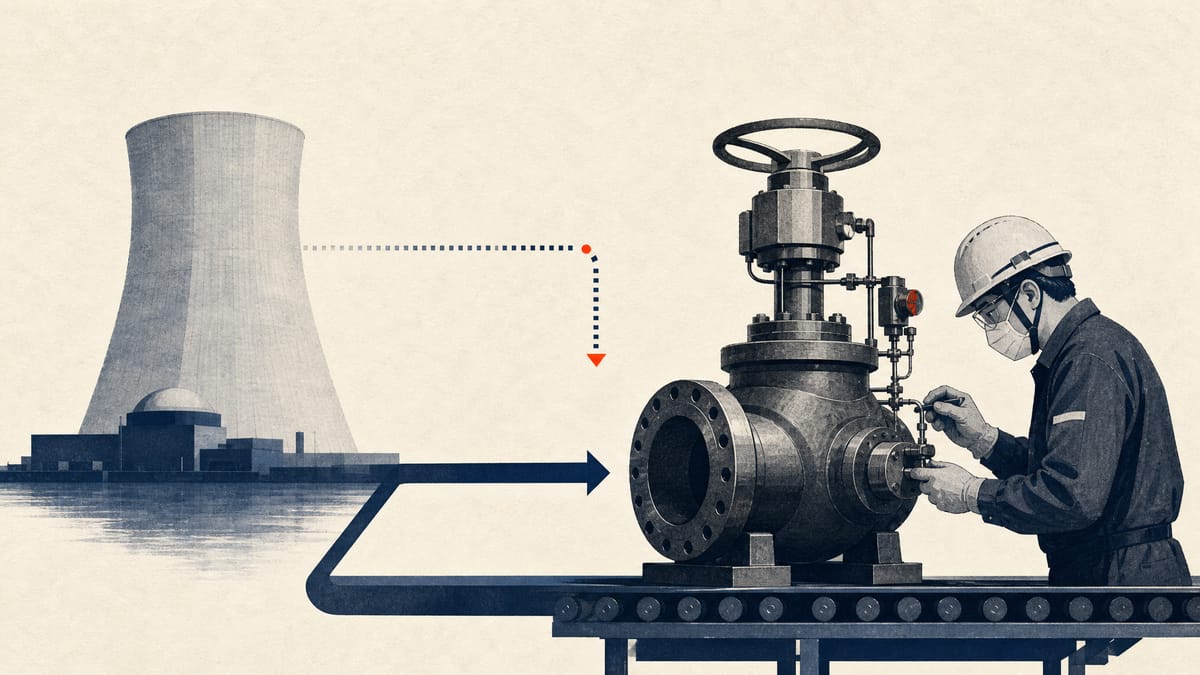
Japan has opened a second round of its Nuclear Industry Infrastructure Strengthening Project Subsidy, and the notice makes clear that this is about the supplier layer behind nuclear policy. The programme will subsidise part of the cost of initiatives that improve the safety and reliability of nuclear-related equipment and services, with the stated aim of maintaining and strengthening the industrial base that supports nuclear safety and reliability.
| Item | Detail |
|---|---|
| Programme | Nuclear Industry Infrastructure Strengthening Project Subsidy, second call |
| Objective | Maintain and strengthen the nuclear industry base by supporting safety and reliability improvements for nuclear-related equipment and services |
| Policy link | Strategic Energy Plan approved by cabinet in February 2025 |
| Strategic focus | Existing reactor restarts and next-generation reactors, including innovative and small light-water designs |
| Application terms | Applications June 19 to July 9, 2026; maximum subsidy ¥200mn; subsidy rate 1/2 |
The policy link is explicit. The notice ties the scheme to the Strategic Energy Plan approved by cabinet in February 2025, and the cited plan says Japan's nuclear industry and human-resource base has high domestic content and technical capability, contributes significantly to the economy and employment, and is indispensable for restarting existing reactors and for developing and installing next-generation reactors, including innovative and small light-water designs.
The portal listing also gives the practical terms: applications run from June 19 to July 9, the maximum subsidy is ¥200mn, and the subsidy rate is one-half. That makes this round a concrete industrial-policy tool, not just another high-level energy statement.
What the notice does not say is who will receive funding, how the money will be spread across the sector, or which projects will make the cut. For now, the clearest message is strategic. Japan wants the domestic supply base behind reactor restarts and next-generation designs to stay intact, and it is willing to fund safety and reliability work to help do it.