Zensho Holdings reported operating profit of ¥56.48bn for the six months to 30 September 2026, up 39.7%, on sales of ¥689bn, up 17.1%. Net profit attributable to owners of the parent rose 48.2% to ¥34.46bn, according to its semiannual securities report.
Two chains do the heavy lifting
Hama Sushi recorded sales of ¥199.18bn, up 33.1%, and operating profit of ¥18.73bn, up 57.2%. Same-store sales ran at 108.7% of the year-earlier level, and the chain ended the period with 978 outlets after opening 117 and closing one.
Sukiya's sales were ¥174.15bn, up 16.8%, while operating profit of ¥8.60bn was up 128.1%. Same-store sales stood at 110.2% of a year earlier. The network grew to 2,661 outlets, with 51 opened and 40 closed. The report does not split these gains between customer numbers and pricing.
A Polish factory and provisional goodwill
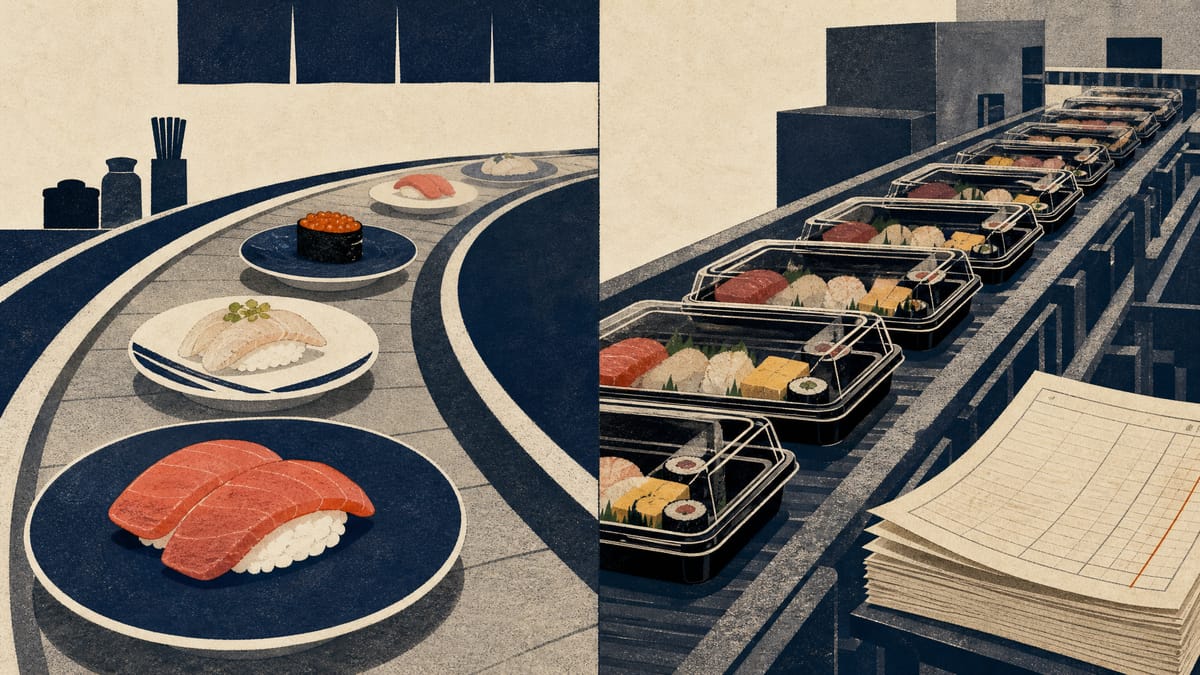
Zensho's wholly owned subsidiary Wonderfield Group Limited bought all shares in Sushi & Food Factor Sp. z o.o. on 29 May 2026 for ¥8.094bn in cash. The company makes packaged sushi and, per the report, runs one of the largest such plants in its region. Its results are included from 1 July.
The deal created ¥6.974bn of goodwill, which the company calls provisional because the purchase price allocation is not complete.
Read the growth with the restatement in mind
Zensho changed how its global takeout segment books rent paid to food retailers under franchise contracts, deducting it from sales rather than counting it as cost of sales. Applied retrospectively, the change cut the year-earlier sales and cost of sales by ¥24.76bn, with no effect on operating profit. Growth rates in the report are measured against that restated base.