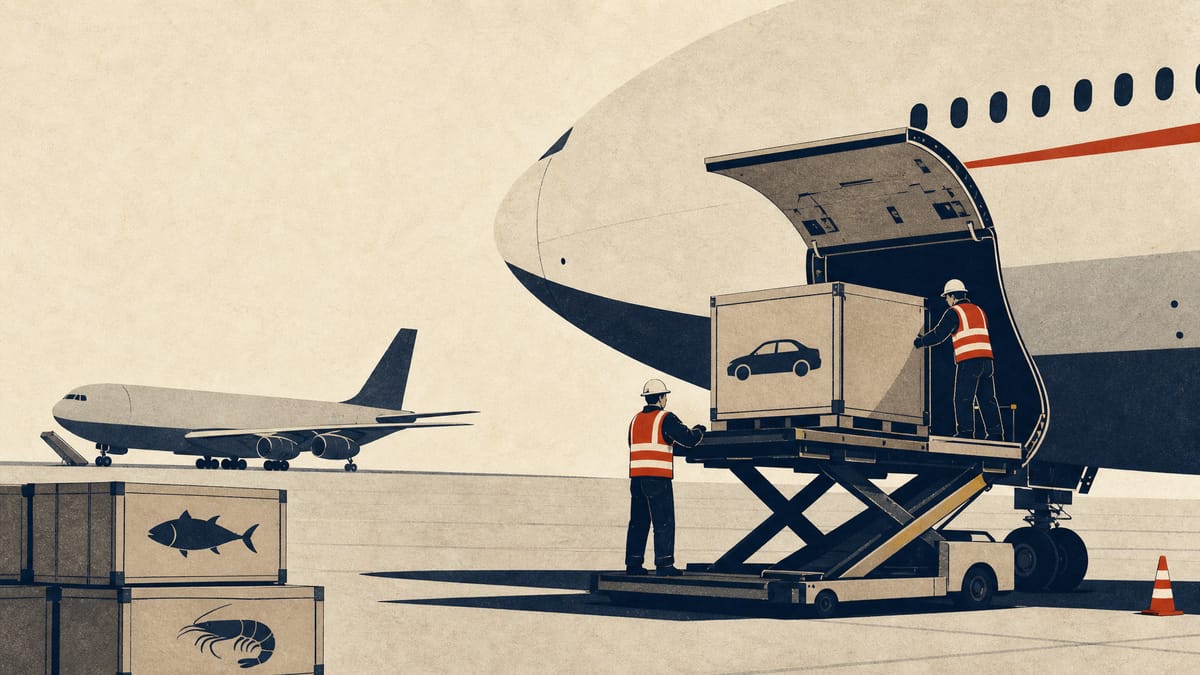
Yamato Holdings is grounding the domestic all-cargo aircraft service it built with Japan Airlines just two years ago, conceding that the price gap between air and truck transport widened far beyond what it expected when it launched the venture.
The logistics group's board resolved on September 3, 2026 to end the dedicated domestic freighter operation, and Yamato signed a memorandum with JAL to close out the operating contract between the two companies. The freighter service began flying in April 2024, launched in response to declining truck-transport capacity linked to the logistics industry's so-called "2024 problem," as Yamato and JAL sought a new transport mode to secure stable capacity and maintain service quality.
The economics moved the wrong way. Yamato said continued yen weakness and high fuel prices pushed up air-transport costs faster than trucking costs, widening the price gap between the two modes well beyond what the company had assumed when it launched the service. Cost efficiency drives, route rationalization and efforts to sell higher-value freighter capacity were not enough to close that gap.
| Item | Detail |
|---|---|
| Freighter service launched | April 2024 |
| Board resolution to end operations | September 3, 2026 |
| Operations continue until | Around June 2027 |
| Replacement capacity | Passenger belly cargo across Yamato and JAL networks |
| Priority regions | Kyushu and Hokkaido, via Kitakyushu and New Chitose airports |
| Guidance impact | Minor effect expected on the consolidated forecast for the year to March 2027; special loss amount still under review |
Current flights will keep running until around June 2027, giving shippers time to shift onto belly cargo space, the cargo hold capacity inside scheduled passenger aircraft, run jointly across the Yamato and JAL networks, rather than a sudden cutoff. Yamato is directing that transition toward Kitakyushu and New Chitose airports, both flagged by the government for expanded international air-logistics roles, to keep serving Kyushu and Hokkaido shippers of semiconductors, automotive parts, and agricultural and marine products.
Yamato frames the retreat as consistent with the government's "new modal shift" push under Japan's logistics policy outline, rather than as a costly false start. The company expects only a minor hit to its consolidated earnings forecast for the year to March 2027 from ending the contract. What it has not said is how large the special loss tied to winding down the operation will be: Yamato says the amount is still under review, and has committed only to disclosing promptly if matters requiring disclosure arise.
That open number is the thing worth tracking. A "minor" guidance impact and an unquantified special loss can sit comfortably together in a disclosure, but anyone following Yamato's cost base into next year will want that figure once it surfaces.