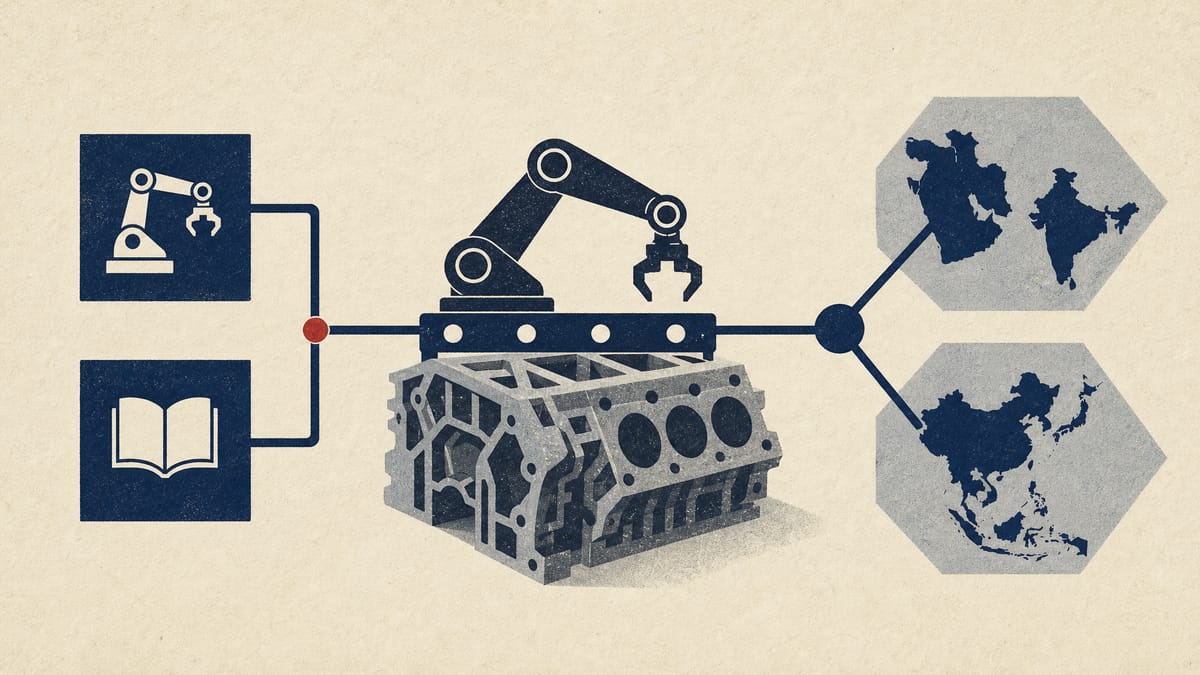
Toyota Motor will create a robotics unit and an education division on January 1, 2027, close two technology centers and replace the regional heads for North America, China and Asia. The reorganization and executive appointments were announced on November 5, 2026.
Robotics and education become units of their own
Toyota Robotics will be a new organization reporting directly to the company as a whole. Toyota calls robots a future pillar of its business. The unit will be led by the executive officer who is also Chief Production Officer, a post that keeps its existing role as head of the manufacturing technology division. The executive will pull together robotics know-how, staff and functions now spread across the company. The unit will work with development divisions on deploying robots in factories, making them practical and turning them into a business.
The new education division is the more personal project. Toyota's chairman will serve as its head and take part in teaching directly, passing company practice to the next generation through on-the-job work.
Toyota is also merging its general affairs and human resources division with its accounting division into one new division. Its name swaps the usual Japanese word for management for a character meaning to watch over. The executive who is currently Chief Risk Officer and Chief Compliance Officer will head it, and Toyota says the aim is to put specialist staff closer to the shop floor.
Two technology centers fold into other units
Toyota is abolishing the CN Development Center and moving its functions into the Powertrain Company, where they will be combined with planning, advance development and mass-production development, centered on hybrids.
The Future Creation Center is also being closed. Its research will go to the Advanced Technology Development Company and the Digital Software Development Center, so exploratory work sits alongside the units that develop and apply technology.
In external affairs, Toyota will merge part of its public relations and investor relations functions to centralize communications to media and investors. It will also combine some press functions of Toyota, Lexus International Company and GAZOO Racing Company, and merge its external affairs and research functions into a corporate intelligence function.
Regional leadership changes
The regional changes matter most to overseas partners. Toyota will replace the regional CEOs responsible for North America, China and Asia, along with the business and sales president. Mark Templin appears in the roster as head of the North America division, after working at Toyota Motor North America.
The combined India, Middle East, East Asia and Oceania division will be split in two. The India and Middle East division will focus on the start-up of a new plant in India and on coordinating businesses and functions across its region. The East Asia and Oceania division will concentrate on each market's customers, sales and production sites. Toyota says it wants a structure that fits differing market conditions, growth stages and business problems.
The heads of the North America, China and Asia divisions who are being replaced move to Senior Fellow, according to the appointment table.
Top management stays in place
The announcement is not a change of chief executive. The January 1, 2027 roster lists the same president and Chief Executive Officer, chief technology officer and chief financial officer, and carries no change marker against them. Toyota flags changed posts with an asterisk, and the president and CEO is not among them.