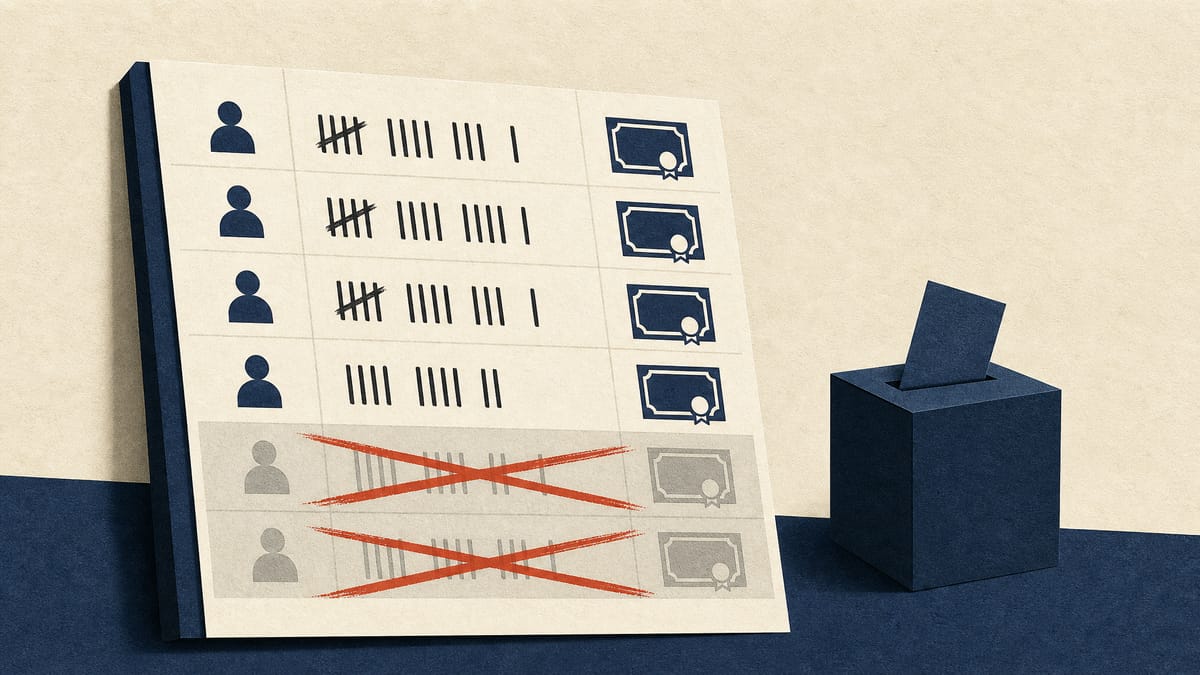
SAAF Holdings (TSE Growth: 1447) is trying to make sure its poison-pill vote reflects outside shareholders, not the boardroom's own relatives. Ahead of an extraordinary shareholders' meeting on August 25, 2026 to approve a free allotment of stock acquisition rights under its takeover-defense plan, the company's independent committee has formally named a further bloc of "interested parties" whose votes will not count toward the result.
The defense plan, introduced in February 2026 and renewed by board resolution on July 23, 2026, requires approval by a majority of voting rights among attending shareholders, excluding the previously identified 19-shareholder bidder group, the company's own directors, and anyone the independent committee recognizes as related to either group, a category the filing labels "interested parties." On August 19, 2026, the committee named that third category.
Two groups made the list, based on SAAF's shareholder registry as of July 22, 2026: relatives within the second degree of kinship of sitting directors, including spouses, holding 1,892 voting rights (189,256 shares), and the directors' own portion of the company's officer stock ownership association, worth 13 voting rights (1,300 shares).
| Excluded bloc | Voting rights | Shares | Stated reason |
|---|---|---|---|
| Relatives within 2nd degree of current directors (including spouses) | 1,892 | 189,256 | High probability of voting the same way as the related director |
| Officer stock ownership association (directors' portion only) | 13 | 1,300 | Directors can direct voting of their allocated shares in the association |
The committee's reasoning is procedural rather than accusatory: relatives are presumed likely to vote the same way as the directors they're related to, and directors can direct how their stock-association shares are voted, so neither bloc offers an independent read on shareholder sentiment. SAAF also disclosed that, as of July 22, 2026, no shareholder company is majority-owned by a sitting director or that director's close relatives.
The filing settles who gets to vote, not how the vote will go. The poison-pill proposal itself still needs majority support from whatever voting rights remain once the bidder group, the directors themselves, and these related-party blocs are set aside.