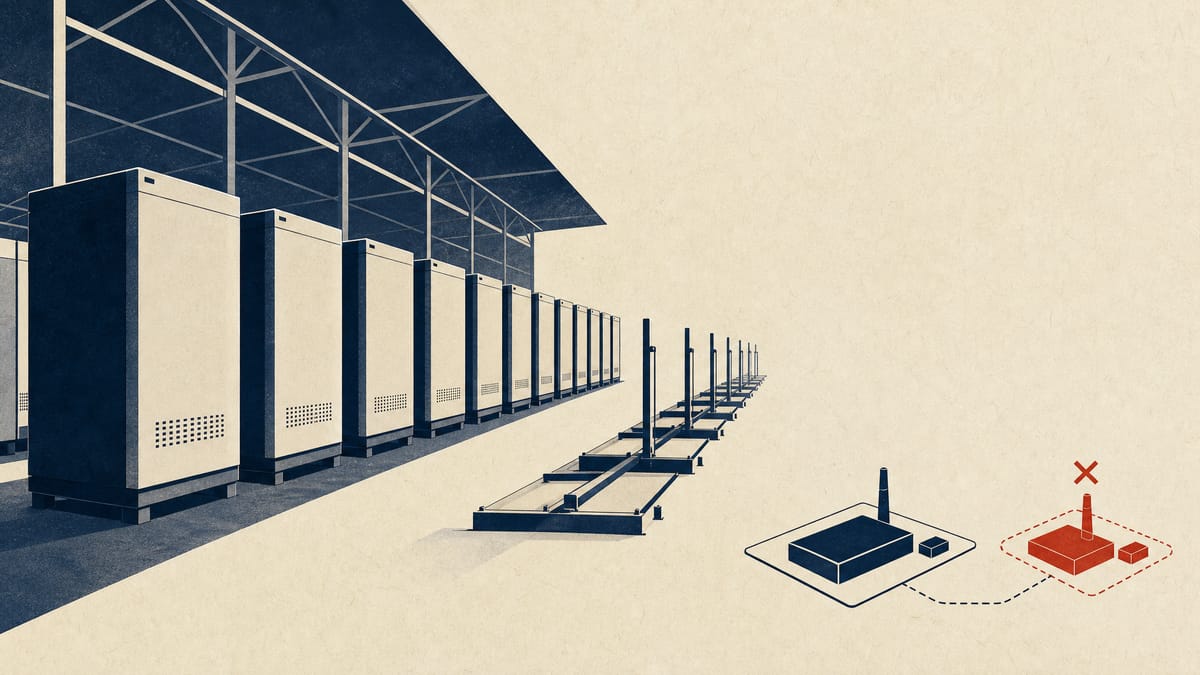
PowerX, the TSE Growth-listed storage battery maker, has responded to a Nikkei report with a narrow claim: production is on plan, and the postponed Hokkaido plant is not a sign of trouble. The company's disclosure on 22 October 2026 is a company statement, not an independently verified finding.
What the 99.2% measures
PowerX said production of its storage systems is progressing to plan and that no production delay affects its shipment plan for the year ending December 2026. The current-period production progress rate was 99.2% as of 21 October 2026.
The footnote matters more than the headline number. PowerX calculates the rate on a sales-equivalent basis from inventory already produced, as a share of equipment sales revenue. It says the figure does not show progress in shipments, customer acceptance or revenue recognition. The 99.2% therefore says how much planned equipment sales value has been built, not how much has been delivered or booked.
Why the Hokkaido plant slipped
The Nikkei article dated 22 October said that a delay in building a new factory in Tomakomai leaves challenges for mass production. PowerX cited that wording as the trigger for its statement.
The company said it announced on 13 August 2026 that the start of its Power Base Hokkaido plant in Tomakomai would move from June 2027 to July 2028 (planned). See the Earlier Tokyo Brief coverage for the company's earlier results.
PowerX's reasoning is capacity. It says that running two shifts at its second Okayama plant, inside the Mitsui E&S Tamano works, together with a new line at its Power Base headquarters plant scheduled to start in January 2027, should let it handle three times its 2025 output from 2027. On that basis, the two existing Okayama sites can cover 2027 production, and it judged that Hokkaido's added capacity is not needed until 2028. It says it deliberately revisited the start date on capital-efficiency grounds, and that the change did not stem from production problems or mass-production delays.
What stays unchanged
PowerX said its published consolidated forecast for the year ending December 2026 is unchanged. The January 2027 line and the Hokkaido plant are both planned, not operating. The statement gives no absolute output figures, so the tripling is a ratio against 2025 results that readers cannot check from this disclosure.