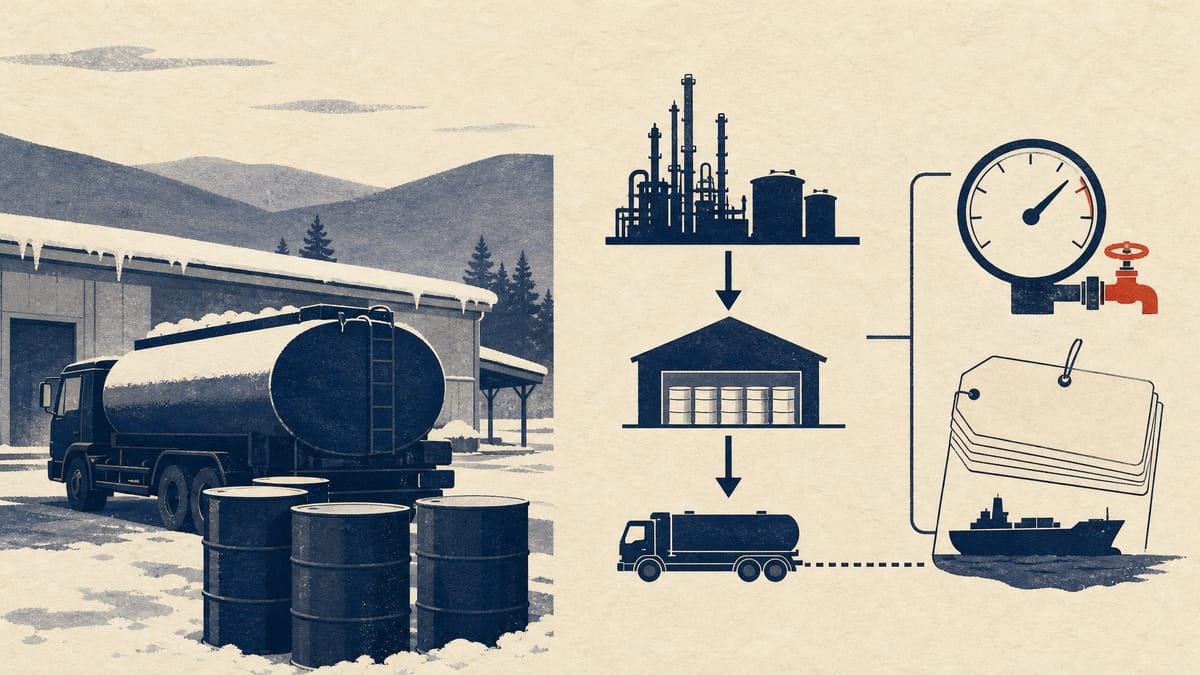
Japan's trade ministry is leaning on the kerosene supply chain to stop over-ordering, while also promising to cover part of the cost of expensive imports. At a post-cabinet press conference on 16 October, the minister of economy, trade and industry, Akazawa, said the ministry had decided to strengthen countermeasures against rising kerosene prices.
Enough fuel, he says, but nervous buyers
Akazawa said petroleum products including kerosene are secured in the quantity Japan needs as a whole, and he repeated that the country is not in a situation of supply shortage. That is the minister's assertion; the transcript gives no volume figures.
He acknowledged the strain elsewhere in the chain. Some wholesalers, he said, have been placing orders far above normal annual demand. Some refiners, in response, have asked their customers to order in line with expected demand so they can keep supplying steadily. Akazawa said he was aware that anxiety about winter kerosene supply had spread among some of the public. He described kerosene as essential for winter heating and, in cold regions, a matter of life and death.
Three measures
The ministry named three steps.
- Matching volumes. Refiners, import trading houses and wholesalers are being asked to sell and order the same volumes as in the same month a year earlier.
- Direct sales. A new "kerosene direct sales scheme" will let refiners sell directly when supply is lopsided or distribution is clogged.
- Import subsidy. A new scheme will subsidize the difference between the import price and the domestic wholesale price, under the name "import kerosene adjustment unit price".
Akazawa said import kerosene prices remain high relative to crude oil because of reduced refining capacity internationally. Domestic kerosene prices could be strongly affected by import prices, he said, which is why the ministry is acting.
Hokkaido under the spotlight
A reporter noted that kerosene prices in Hokkaido have climbed to more than ¥10 above the national average and asked whether the minister considered that appropriate. Akazawa did not give a verdict on the level. He said he knew Hokkaido's retail prices are higher than in other prefectures and rising.
He said the ministry would work closely with refiners to resolve individual cases of lopsided supply or clogged distribution, including the Hokkaido Federation of Consumers' Cooperatives matter. If the public understands that direct sales will bring product to market, he said, he expects prices to settle gradually, although Hokkaido can remain pricier than other prefectures for various reasons. That is an expectation, not a forecast with a number attached.
Akazawa added that the situation involves essentially the same counterparties as after tensions in the Middle East escalated on 28 February, and that policies the ministry has tried since then should work.
What is not yet specified
The transcript does not give the size of the subsidy, the per-litre rate, a start date or the budget source. It also does not say how a refiner would decide a market is lopsided enough to trigger direct sales, or how the matching-volume request would be monitored. Those terms decide whether the scheme lowers prices in Hokkaido or merely reassures buyers.