Japan's Environment Ministry opened public comment on 13 October on a draft government order that would designate every species of the Boiga snake genus as an invasive alien species under the Invasive Alien Species Act. Of the 37 species in the genus, five are already designated; the other 32 are currently classed as unassessed alien organisms and would be added. The order currently designates 166 kinds of alien organism.
The ministry's case
The ministry says the genus consists of relatively large tree-dwelling predators high in the food chain, native from central-eastern Australia to Southeast Asia. In its assessment, they could settle in southern Japan, and some species as far north as the Kanto region and southward. If they did, predation on birds, reptiles and amphibians, and competition with native species for habitat and prey, could seriously threaten native species and the ecosystem. The ministry reached its view after an expert meeting in September 2026.
What designation would require
Once designated, keeping, storing, transporting, releasing and importing the animals would be regulated. Anyone holding one would need a permit even to continue, so existing owners are not grandfathered. The ministry notes that new keeping for pleasure becomes impossible after designation. It expects applications only for animals descended from earlier imports, for exhibition at zoos and similar venues, or for research.
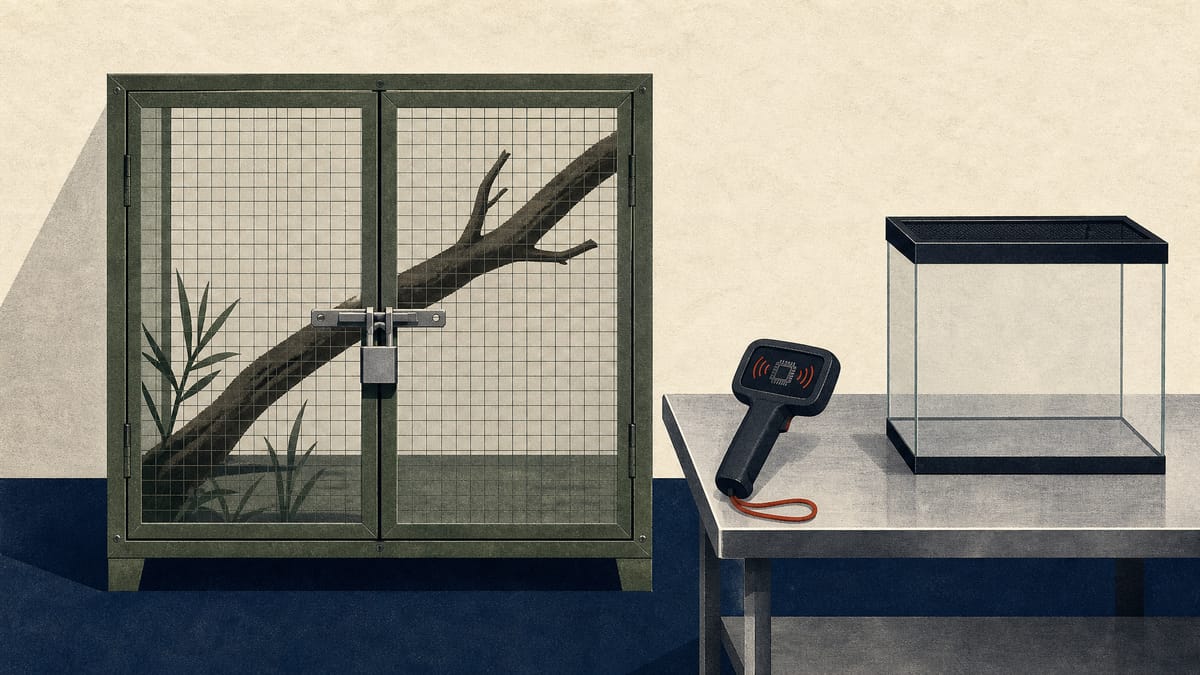
A draft Environment Ministry notice sets the terms. Permits would last five years. Enclosures would have to be a cage-type facility, a retaining-wall type, a transport container or a tank-type facility. Animals would generally need a microchip implanted under the skin, with a veterinarian's certificate filed within 30 days of the start of keeping. The draft carves out exceptions: animals under 50 centimetres or too frail for implantation can instead be identified by signage at the facility plus photographs, researchers can file their own record of implantation, and animals already chipped have their own paperwork routes. Changes in headcount from imports, births, transfers or deaths would be reported within 30 days. Display animals can instead be kept under a ledger kept for five years plus an annual report.
The draft gives no enforcement date: the effective date is left blank, tied to the date the amending order takes effect.
Cost and market footprint
The ministry's regulatory evaluation puts the total burden below ¥1bn a year. Paperwork and drawings would cost roughly ¥50,000 to ¥300,000 per application, excluding the enclosure, and the microchip and certificate ¥5,000 to ¥15,000. The ministry puts its own processing cost at about ¥8,000 per application.
The market it describes is small. Only three permit applications were filed for the five already-designated species, between 2008 and 2012. Three of the newly covered species were sold as pets in the 2010s, but no sales of the genus were recorded on internet auction services from August 2016 to August 2026. The ministry concludes that domestic keeping is essentially nil or very small, and it did not consult stakeholders for that reason. It plans a post-implementation review five years after enforcement.
Housekeeping changes
The package also updates names to follow recent taxonomic revisions. The snapping turtle entry becomes all species of the Chelydra genus. The toad family coverage moves to species in 19 genera split from the former Bufo genus, and six red-frog species change genus from Rana to Lithobates.
Comments, in Japanese on A4 paper, can be submitted through e-Gov or by post until 11 November. Telephone comments are not accepted.