Joshin Corporation, the Tokyo-listed electronics retailer, has raised its operating profit forecast for the year to March 2027 to ¥11bn from ¥6bn. The revision came in a notice dated 30 October 2026, which updates the forecasts the company gave with its first-quarter results on 4 August.
The revised numbers
For the full year, Joshin now expects sales of ¥455bn, up from ¥438bn. Ordinary profit is forecast at ¥10.5bn, against ¥5.5bn before. Profit attributable to owners of the parent is forecast at ¥5bn, up from ¥3.5bn, or ¥192.70 per share. The prior-year results were sales of ¥436.65bn, operating profit of ¥5.42bn and net profit of ¥3.28bn.
For the six months to 30 September 2026, the company now forecasts sales of ¥225bn, operating profit of ¥6.3bn and net profit of ¥4bn. The previous interim forecasts were ¥218bn, ¥4.5bn and ¥2.8bn. The company's own comparison figures for the same period a year earlier are sales of ¥210.45bn, operating profit of ¥2.14bn and net profit of ¥1.89bn.
| Period and measure | Previous forecast | Revised forecast |
|---|---|---|
| Six months to Sept 2026: sales | 218.0 | 225.0 |
| Six months to Sept 2026: operating profit | 4.5 | 6.3 |
| Full year to Mar 2027: sales | 438.0 | 455.0 |
| Full year to Mar 2027: operating profit | 6.0 | 11.0 |
| Full year to Mar 2027: net profit | 3.5 | 5.0 |
These interim figures are still forecasts. The notice does not report completed results for the period.
What management credits
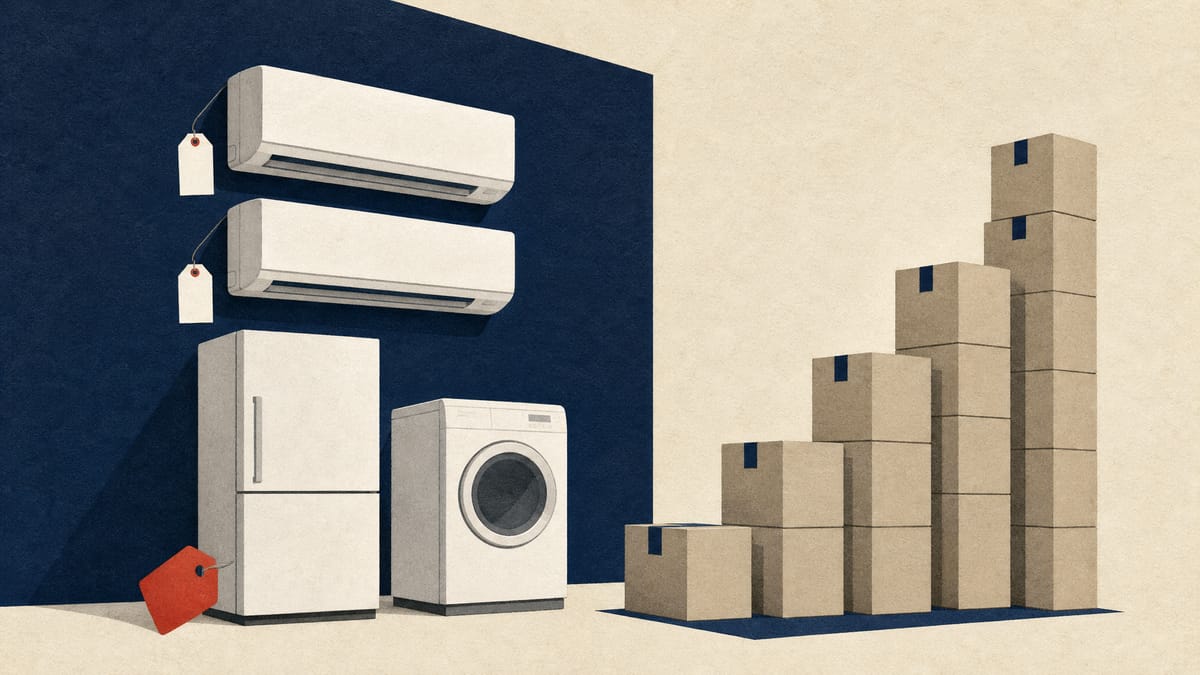
Joshin attributes the upgrade to early demand for air conditioners tied to a tightening of environmental standards under the Act on Rational Use and Appropriate Management of Fluorocarbons, which the company calls the "2027 problem". It also cites generally solid sales of refrigerators, washing machines, vacuum cleaners and other white goods, and of beauty and grooming appliances such as high-performance hair dryers.
Personal computers were the exception. Joshin says replacement demand appears to have run its course.
The full-year raise rests on results through the second quarter and what the company calls current trends. The notice does not break out how much of the increase comes from air conditioners. It also carries the usual caveat that the forecasts are based on information available now and are not a promise of results.