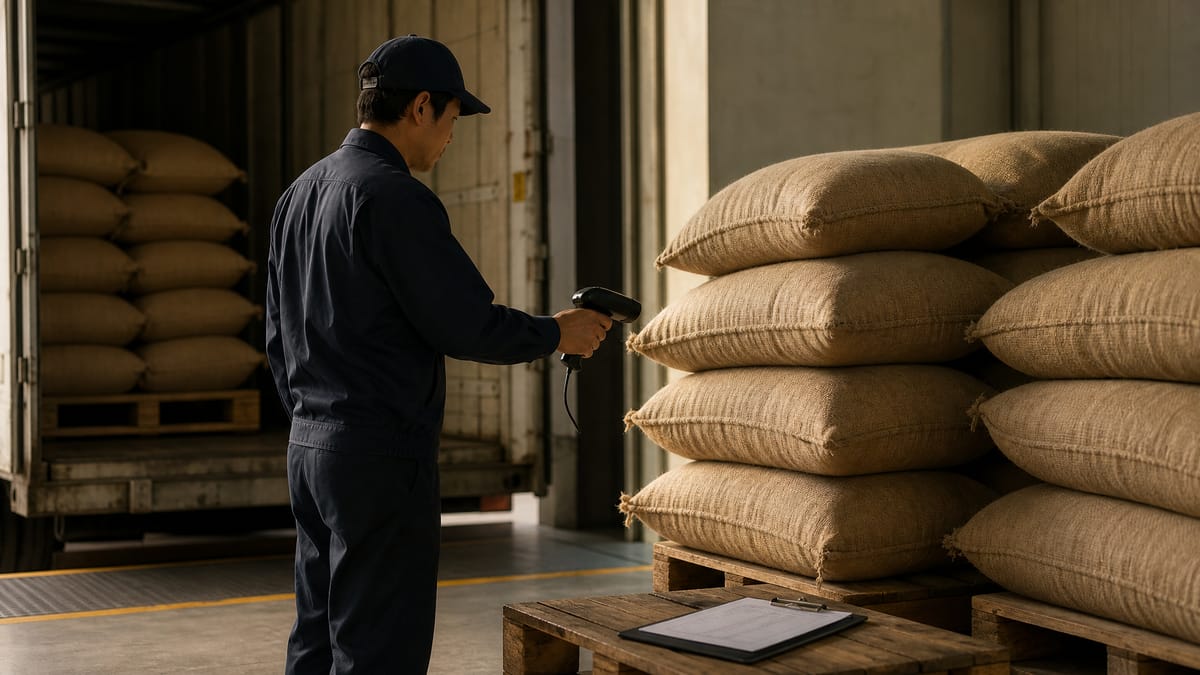
Japan's farm ministry and the National Tax Agency have opened a 30-day public comment window, running through August 29, 2026, on draft ordinances that would force any business handling at least 300 tonnes of rice a year to register with the government and file regular inventory reports. The rules implement a revision to the Staple Food Law passed in this year's Diet session, which also scraps the old rice production-adjustment guidance and shuts down the Rice Price Formation Center.
The 300-tonne trigger applies uniformly across the supply chain: growers, collection agents, wholesalers, retailers with milling equipment, food processors, and prepared-food or restaurant operators all fall under it once their annual handling volume crosses that line. A separate, lower threshold of 20 tonnes of milled rice applies to anyone selling directly to consumers under a related filing requirement. For scale, the ministry notes that 300 tonnes of brown rice works out to roughly 50 hectares of harvested area at last year's average yield, meaning the rule reaches well past the largest agribusinesses and into mid-size regional operators.
Reporting frequency varies by tier. Collection agents, wholesalers and rice-milling retailers must file monthly; producers report twice a year, in January and July; and second-tier retailers such as supermarkets, processors, and food-service operators file once a year, each July. Filings must break out volumes by domestic versus imported rice, brown versus milled rice, end use, and in some cases harvest year and growing region, and businesses designated to report pricing must also disclose their shipment, sale and purchase prices. Underlying ledgers, covering monthly shipment, sale, consignment and inventory volumes, must be kept for three years.
The draft also simplifies compliance in two ways: franchise operators can file on behalf of their entire network rather than requiring each outlet to report separately, and paper filing forms are being dropped in favor of an online submission process. Administrative authority for handling these filings, offering guidance, demanding reports, and issuing recommendations or binding orders under Article 7 would all move to regional bureau chiefs. The farm minister retains the right to exercise every one of those powers directly as well; the National Tax Agency's commissioner keeps that same direct-exercise option for filings, periodic reports, and report demands, but not for the Article 7 recommendation-and-order power, which stays a farm-ministry-only backstop even after delegation.
On timing, the ministry expects the new registration system to start accepting filings from October 1, 2026, with the periodic reporting regime itself taking effect the following spring, on April 1, 2027. One piece of the underlying law sits outside this comment round: the same revision creates a private rice-stockpiling obligation for large-volume sellers, requiring them to hold minimum reserves at all times, but the ministry says rules implementing that requirement will come through separate rulemaking. Comments on the current draft must be submitted in Japanese by August 29, 2026.