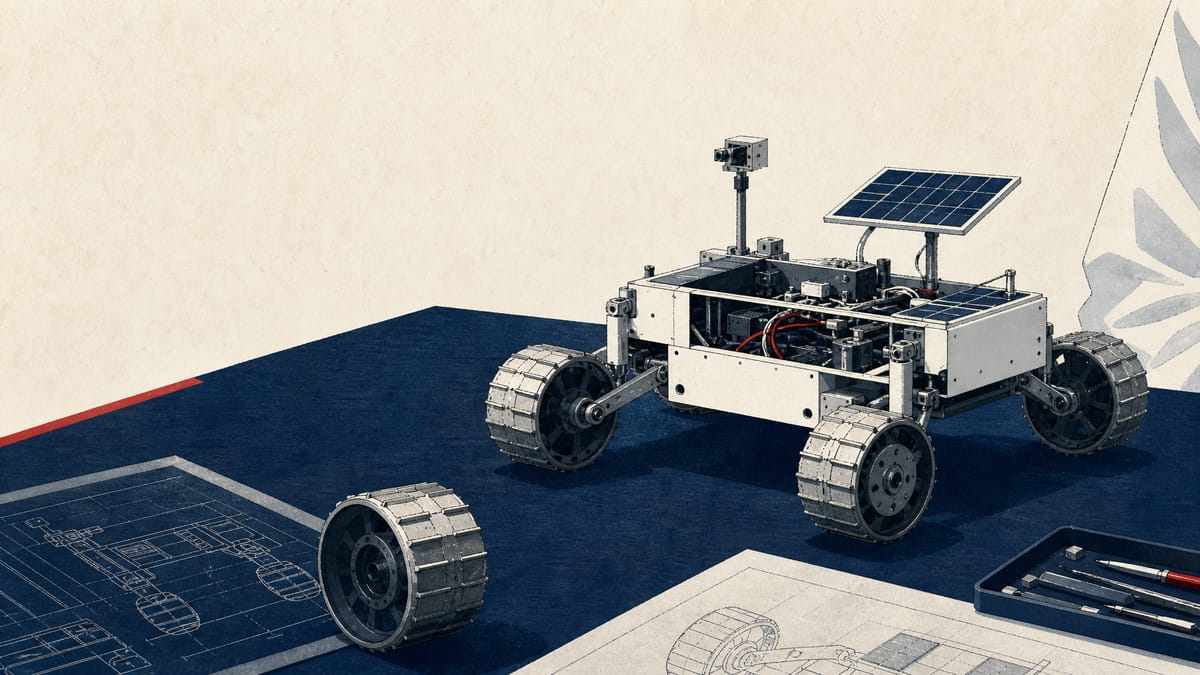
Tokyo-listed ispace,inc. told the Tokyo Stock Exchange on July 24 that its Luxembourg subsidiary, ispace EUROPE S.A., has signed a €65mn contract extension with the European Space Agency, worth roughly ¥12bn at the exchange rate ESA and ispace used at the end of June 2026. The board approved the deal on July 23. Under the agreement, ispace EUROPE will develop, build, operate and transport a lunar rover destined for ESA's Mission 4, currently scheduled to launch in 2029.
The rover is the payload for MAGPIE, the Mission for Advanced Geophysics and Polar Ice Exploration, ESA's push to survey volatile deposits at the moon's poles and hunt for water ice. ispace EUROPE has been on the project since December 2024, when it signed a pre-phase A contract to study feasibility, design and mission architecture. A June 2025 amendment extended that work into Phase 1, covering payload maturation, interface development and prototype manufacturing. The newly signed Phase 2 contract moves the work into full rover development, manufacturing, operations and transport.
| Stage | Date | Scope | Value |
|---|---|---|---|
| Pre-Phase A | December 12, 2024 | Feasibility, design and mission architecture study | Not disclosed |
| Phase 1 extension | June 2025 | Payload maturation, interface development, prototype manufacturing | Not disclosed |
| Phase 2 | July 23, 2026 | Rover development, manufacturing, operation and transport for Mission 4 | €65mn (about ¥12bn) |
The filing does not disclose the value of the pre-phase A or Phase 1 work, so there is no way to compare the size of this latest award against the earlier stages of the same contract. What is clear is that ispace EUROPE is not simply a subcontractor: it leads the consortium delivering the mission, which includes the Technical University of Munich in Germany, the University of Oslo's Centre for Space Sensors and Systems, RAL Space and ESR Technology in Britain, the Institute of Experimental and Applied Physics at the Czech Technical University, and the Open University in Britain.
ispace said ESA is a government-to-government body with no capital, personnel or related-party ties to the company beyond the commercial contract itself, and that ESA does not disclose financial statements as an intergovernmental organisation. On the numbers that matter to shareholders, the company said the revenue from this contract is already built into its full-year consolidated earnings forecast for the fiscal year ending in March 2027, and that it will disclose promptly if the deal turns out to have a material impact beyond that guidance. For now, the concrete news is narrower than headline-grabbing: a defined scope, a fixed contract value, and a 2029 launch date, with the earlier contract stages' price tags staying undisclosed.