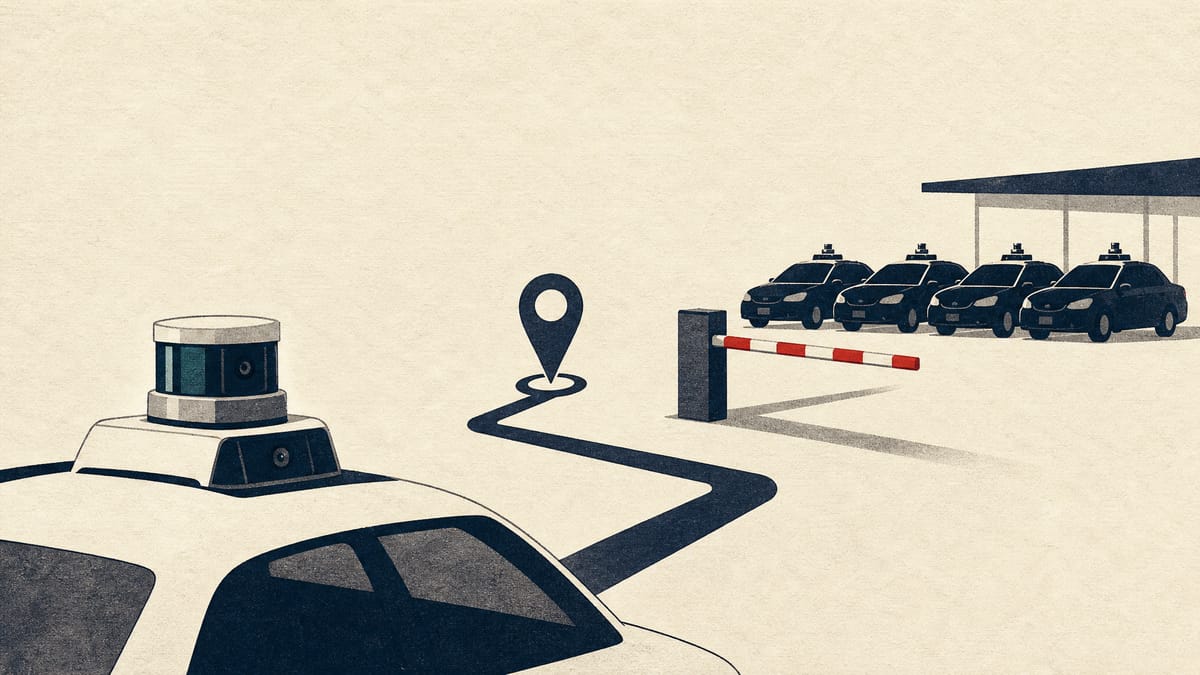
GO Inc. told investors on 15 October that it, Waymo and Nihon Kotsu aim to start commercial, fully driverless taxi service in Tokyo during 2027. The same slide adds the condition: the target of around 100 vehicles, phased in, applies "after obtaining the necessary permits". An agreed plan is not an authorised service, and the company does not say any permit has been granted.
What the plan covers
GO's board approved a cooperation agreement with Waymo LLC on 15 September 2026, and it was signed that day. The company says the partners have tested on public roads in seven Tokyo wards since 2025, with Nihon Kotsu crew riding along, and that the tests are progressing smoothly. The target is Level 4 operation, which GO's filing defines as full automation under specific conditions.
Roles are split three ways. GO designs the overall rollout, coordinates local taxi operators and offers the service through its GO app. Waymo supplies the driving technology, an operating base and vehicle-management systems. Nihon Kotsu handles field operations and depot management. GO says the agreement's effect on results for the current fiscal year is minor. Neither disclosure gives an investment figure for the rollout.
The quarter's results
In the quarter to 31 August, which includes GO's 16 June listing on the Tokyo Stock Exchange's Growth market, sales were ¥12.24bn and operating profit ¥3.04bn. The presentation puts sales growth at 27.8% and operating profit growth at 92.8% year on year; the short-form earnings report gives no year-on-year rates because GO did not prepare quarterly consolidated statements a year earlier.
Adjusted EBITDA was ¥3.365bn, up 71.2%, and profit attributable to owners of the parent was ¥2.476bn, up 29.6%. Adjusted EBITDA adds back autonomous-driving costs, which GO bore at ¥127mn in the quarter against ¥221mn a year earlier. The company's "other" businesses, which include autonomous driving, reported a segment loss of ¥278mn, while the main GO business earned a segment profit of ¥4.954bn.
Rides booked through the app rose 9.8% to 32.16 million. Average revenue per ride rose 29.1% to ¥191, and app-hailing sales grew 41.8%. GO says fewer very hot days in some regions, after last year's heatwave lifted demand, weighed on rides and monthly active users. It says rides and revenue per ride progressed to plan, and that monthly active users held up firmly.
Guidance unchanged
GO left its forecast for the year to May 2027 as it was: sales of ¥48.5bn, adjusted EBITDA of ¥14.4bn, operating profit of ¥13.0bn and net profit of ¥11.2bn. The quarter's operating profit equals 23.4% of the full-year target. The company says driverless vehicles would mostly be hailed through the app, which it expects to raise the app-hailing share and revenue per ride once commercial service starts.