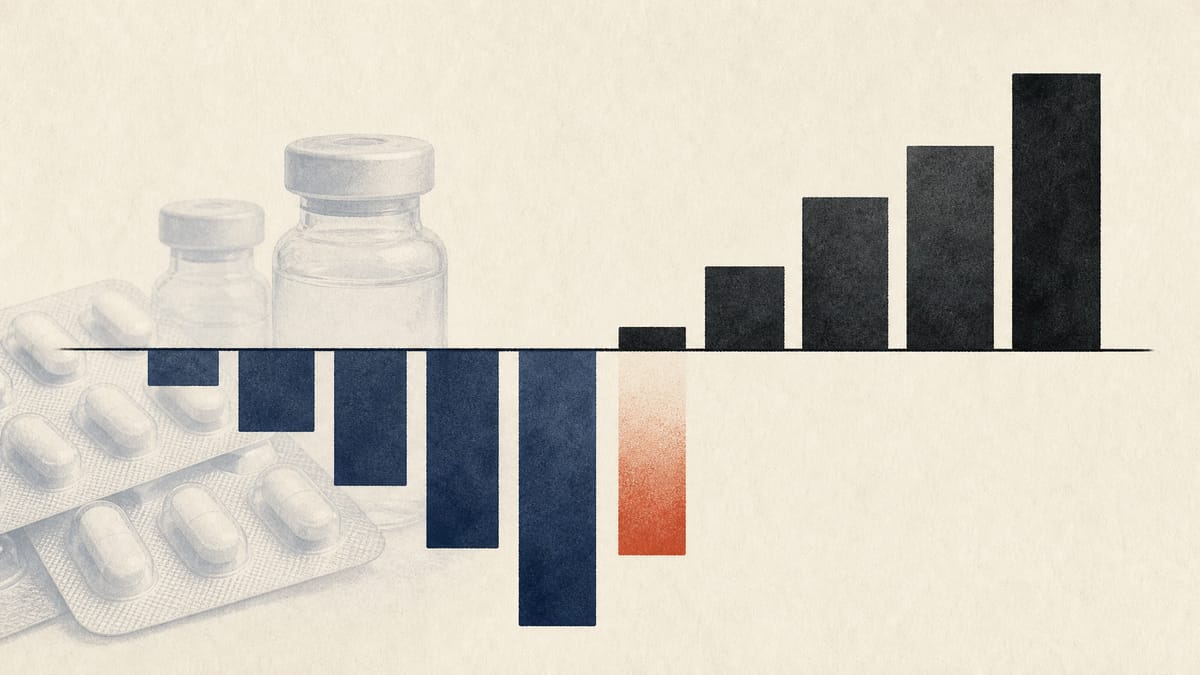
GNI Group turned last year's operating loss of ¥1.18bn into a ¥534mn operating profit for the six months to June, according to the company's own results presentation. The swing did not come from selling more medicine. It came from cancelling a debt.
Gyre Therapeutics, GNI's US-listed drug unit, took full control of Cullgen, its discovery-stage affiliate, wiping out ¥16.8bn of preferred-share liabilities that Cullgen had carried on its books, principal plus years of accrued interest. Reversing that liability let GNI book a ¥6.6bn gain in other income. Most of it landed in the group's drug-discovery segment, whose reported operating result flipped from a ¥2.27bn loss to a ¥7.18bn profit. Strip out the one-off, and the segment still lost ¥1.92bn, an improvement of only ¥351mn on the year before.
Everything else in the half moved the other way. Advisory fees for buying Ayumi Pharmaceutical Holdings cost ¥738mn, fees tied to the Cullgen deal added ¥472mn, stock compensation at Gyre and Gyre Pharmaceuticals came to ¥966mn, Cullgen's own stock awards added another ¥144mn, and medical-device unit Berkeley Biologics took a ¥667mn impairment as GNI reconsiders that business. Group revenue fell ¥315mn to ¥11.94bn, and net profit attributable to shareholders worsened by ¥1.07bn to a loss of ¥1.99bn.
| Line item | H1 2025 | H1 2026 | Change |
|---|---|---|---|
| Revenue | ¥12,252mn | ¥11,937mn | −¥315mn |
| Gross profit | ¥8,833mn | ¥8,630mn | −¥203mn |
| SG&A expenses | ¥7,995mn | ¥11,420mn | +¥3,425mn |
| R&D expenses | ¥1,596mn | ¥2,124mn | +¥528mn |
| Operating profit (loss) | −¥1,179mn | ¥534mn | +¥1,713mn |
| Net profit attributable to parent | −¥915mn | −¥1,988mn | −¥1,073mn |
Ayumi changes the base
The bigger shift to GNI's numbers starts in the third quarter. The company completed its purchase of Ayumi Pharmaceutical Holdings on July 1, and Ayumi's sales enter the consolidated accounts in full from next quarter. GNI has lifted its full-year revenue forecast from ¥27.16bn to ¥47.33bn, adding ¥24.62bn to the pharmaceutical segment alone once Ayumi's rheumatology and pain-relief products, sold through Japan's hospital and clinic networks, are folded in. Ayumi posted ¥38.54bn in revenue and a 16.1 percent operating margin in the year to March 2026, a business GNI is buying in part to fix a longstanding problem: the group's Tokyo headquarters generates no revenue of its own and runs at a structural loss.
Total costs for the Ayumi deal, including advisory and new-share issuance fees, come to roughly ¥2.44bn, of which ¥738mn is already booked. Separately, GNI's liver-fibrosis candidate F351 cleared formal application acceptance in China in May under priority review, though management is deliberately leaving any F351 sales out of this year's forecast. The real test of the turnaround arrives once Ayumi's cash flow, not one-off accounting reversals, has to carry the group's results.