Web View
GMO Internet's payout scheme, Advantest's ¥967bn guide and Japan Post's bond losses
GMO Internet will pay affected customers up to ¥3mn per release while its parent funds a $1mn bounty. Advantest and Hitachi lift forecasts, and two Japan Post units report trillions in unrealized bond losses.
MARKETS
Market pulse
Tokyo equities softened while the 10Y JGB yield nudged higher.
Sourced from Nikkei, JPX, BOJ, MOF - values, not commentary.
lead
GMO Internet's Breach Bill

GMO Internet will pay up to ¥3mn per data release and its parent adds a $1mn bounty
Customers whose data an apparent attacker has published will receive ¥10,000 to ¥25,000 per category of information, capped at ¥3mn per release, while GMO Internet Group funds a bounty of up to $1mn for information on those involved.
What changed: GMO Internet will pay a "GMO special condolence payment" to customers whose data it has confirmed in the published material. The amount is ¥10,000 to ¥25,000 for each category of information published, added together when several categories appear, up to ¥3mn per release. It comes on top of the flat ¥5,000 payment to all current users of the Onamae.com Desktop Cloud service announced on October 24. Eligible customers will be contacted individually, and the company says the terms may be revised if the status of the publication changes. GMO Internet is also covering realised losses on trading accounts from transactions it recognises as unauthorised, and customers who report ransomware damage can receive a replacement PC of equivalent performance. Ransomware had not been confirmed as of the update on October 27.
The move: The group says it will never comply with the attacker's demands, because complying would not guarantee deletion of the acquired data or prevent its misuse, and because it has a social responsibility not to encourage crime. It has consulted the police and other authorities. GMO Internet Group is the sponsor and payer of the "GMO Cybercrime Bounty", capped at $1mn, with tips accepted from noon Japan time on October 28. Payouts will be decided after review, so the amount actually paid is open. The group is also preparing legal action, after preserving evidence, against people it calls highly malicious spreaders of the published data.
The catch: GMO Internet Group says the total cost to its consolidated results cannot be calculated. It names three unknowns: how many customers are eligible, how far the published information extends, and which transactions qualify for compensation. GMO Internet bears every cost except the bounty. The group says it has so far confirmed no impact from the incident on services other than the desktop-cloud service, while checks across group companies continue.
secondary
Regulators Weigh In
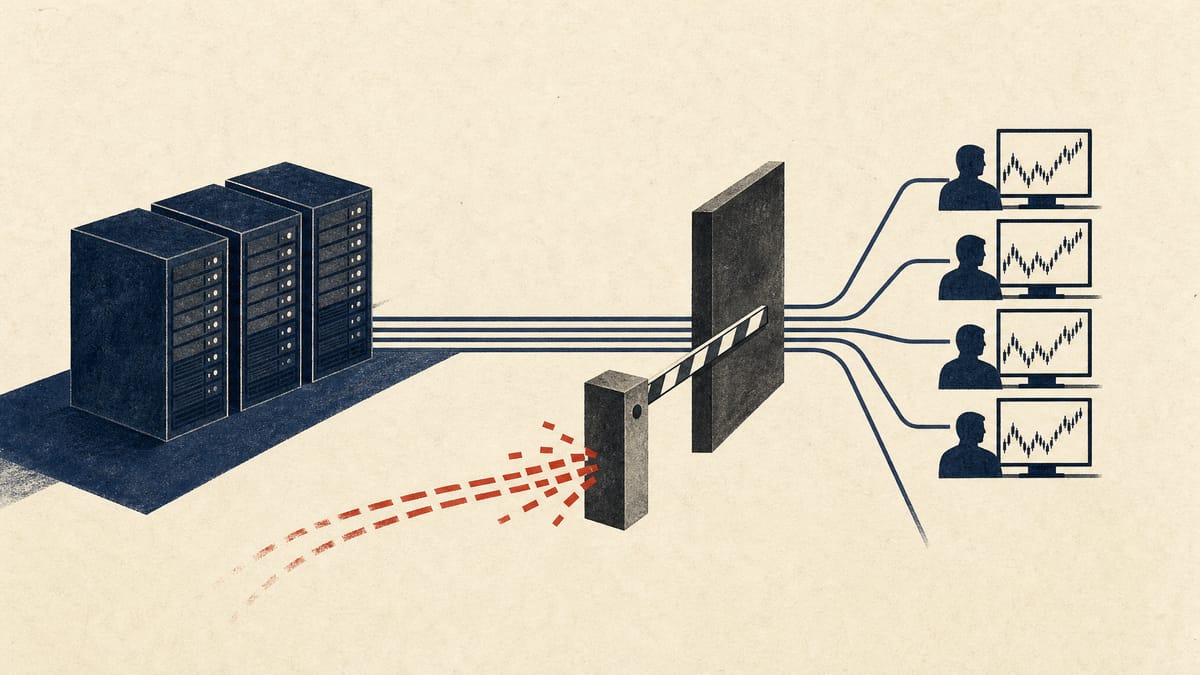
Finance minister says five FX brokers reported customer damage tied to GMO Internet servers
The five brokers have suspended FX trading for affected customers, and the Financial Services Agency (FSA) has received no report of new unauthorised trades.
What happened: Japan's finance minister told a press conference on October 27 that five FX brokers have reported customer damage thought to be connected to GMO Internet's rental servers. The minister named Golden Way Japan, OANDA Securities, Avatrade Japan, Gaitame Finest and Dukascopy Japan. As the minister understands it, some customers using automated trading tools had rented servers from GMO Internet, user information on those servers was viewed without authorisation, and trades the customers did not recognise were then placed through their brokers.
The move: Last Thursday the FSA asked all FX brokers, through the Financial Futures Association of Japan, to warn customers to change passwords and check for unrecognised trades, and to step up monitoring. The five brokers have temporarily suspended FX trading for the affected customers, blocked unauthorised orders from overseas believed to come from the attacker, and reset passwords. GMO Internet is not a business the FSA supervises, so the agency worked through the brokers it does regulate.
What to watch: The minister said the Prime Minister told a cabinet-level cybersecurity meeting on October 26 to compile an emergency package by the end of the following week, and that the FSA is working on its input.

FSA draft wants sustainability assurance standards written by March 2027
A draft opinion proposes limited assurance and Japan-specific versions of international standards, a year before mandatory assurance starts for Prime Market companies worth ¥3tn or more.
What changed: The FSA would write Japan's sustainability-assurance standards itself, on the model of international rules, and ideally finish by the end of March 2027, according to a draft opinion prepared for the third meeting of the Corporate Accounting Council's sustainability assurance subcommittee. The draft is undated and says it sets no new requirements.
Why it matters: Under legislation enacted in July 2026, assurance becomes mandatory from the March 2028 fiscal year-end for Prime Market companies with a market capitalisation of ¥3tn or more. For the first two years, the draft says, mandatory assurance would cover Scope 1 and 2 greenhouse gas emissions, governance and risk management, at a limited level, and a move to reasonable assurance is not to be examined. The draft names three Japanese standards, JSSA 5000, JSQM 1 and JESSA, based on the international ISSA 5000 and IESSA. It proposes the FSA as standard-setter because no self-regulatory body exists for assurance providers. It adds three Japan-specific requirements: agreeing in advance which body counts as those charged with governance, engagement quality review modelled on ISQM 2, and explicit rules for handover between providers and joint assurance.
What to watch: The subcommittee meets on October 29, 13:00 to 15:00, with a secretariat explanation and discussion on the agenda.
secondary
Forecasts, Dividends and Buybacks

Advantest lifts its profit forecast to ¥967bn and sets a ¥280bn buyback ceiling
AI-related demand for chip testers pushed first-half sales to ¥845.2bn, and the board paired a higher forecast with a ¥49 interim dividend.
What changed: Advantest raised its operating profit forecast for the year to March 2027 to ¥967.0bn from ¥846.0bn in July. First-half sales were ¥845.2bn, up 60.5%. Operating profit for the six months to September was ¥456.8bn, up 96.5%, and net profit was ¥368.1bn, up 116.8%. The company credits higher AI-related chip volumes, more complex devices and a better sales mix, and also cites yen weakness: the dollar averaged ¥160, against ¥146 a year earlier.
By the numbers: Pre-tax profit of ¥510.2bn includes about ¥57bn of financial income, mainly valuation gains on investment securities, so not all of it is operating income. The second-half operating margin is expected to exceed 50%, about three percentage points above the July forecast. The forecast assumes ¥150 to the dollar in the second half, against the ¥160 first-half average.
The move: The board approved a buyback of up to 11 million shares, 1.5% of shares outstanding excluding treasury stock, for up to ¥280bn, with purchases on the Tokyo Stock Exchange from October 29, 2026 to March 24, 2027. Both figures are limits, not purchases made. The interim dividend is ¥49 a share against ¥29 a year earlier, totalling ¥35.4bn, effective December 1.
What to watch: Advantest plans to file its half-year report on November 13, 2026. It expects tester supply to stay constrained in 2027, barring geopolitical and macroeconomic risks.

Hitachi raises full-year profit guide as Energy lifts margins, but first-half net profit falls
Hitachi lifted its full-year profit forecast to ¥920bn and its interim dividend to ¥32, though first-half profit attributable to owners fell 11.9% against a year-earlier base with reorganisation gains.
What changed: Hitachi raised its forecast for full-year profit attributable to owners to ¥920bn from ¥900bn on October 28, even as first-half profit on that measure fell 11.9% to ¥416.6bn from ¥472.9bn. Revenue for the six months to September 2026 rose 17.3% to ¥5.61tn, and adjusted operating profit rose 26.6% to ¥643.3bn. Pretax profit still fell 7.4% to ¥629.9bn.
Context: Gains and losses from business reorganisations were a ¥95.9bn gain in the first half of last year and a ¥0.2bn loss this year. Second-quarter profit attributable of ¥227.1bn was down ¥53.4bn. The presentation says that figure carries a ¥91.7bn drag from last year's sale of an air-conditioning joint venture, and that excluding it profit rose ¥38.3bn.
The move: Hitachi raised full-year revenue by ¥300bn to ¥12tn and full-year Adjusted EBITA by ¥40bn to ¥1.56tn, led by Energy and connective industries. Energy's Adjusted EBITA forecast rose ¥33bn to ¥609bn. Energy's first-half revenue rose 32% to ¥1.87tn at a 14.7% margin, and the presentation credits several large HVDC projects in Europe and data-centre demand, with a Hitachi Energy order backlog of ¥10.5tn.
Details: The interim dividend is ¥32 a share, up from the ¥28 forecast and ¥23 a year earlier, totalling ¥142.6bn with an effective date of November 27. The year-end dividend forecast is undecided.
NEC's CSG purchase adds ¥81.3bn of revenue and ¥394.4bn of goodwill
NEC raised its Non-GAAP profit guide to ¥460bn while forecasting negative free cash flow of ¥90bn for the year.
What changed: NEC consolidated CSG Systems International from May 14, 2026. CSG contributed ¥81.3bn of revenue and ¥5.9bn of interim profit after the acquisition date, against ¥394.4bn of goodwill. Group revenue for the six months to September rose 11.7% to ¥1.75tn, and Non-GAAP operating profit, NEC's measure that strips out acquisition amortisation and one-offs, rose 47.7% to ¥188.3bn.
By the numbers: NEC paid ¥360.8bn in cash for 100% of CSG, and total goodwill on the balance sheet rose to ¥824.2bn from ¥450.5bn at end-March. On a pro forma basis, with CSG consolidated from April 1, 2025, revenue rose 6.6%, below the reported 11.7%. Free cash flow for the half was minus ¥412.6bn against plus ¥174.2bn, and interest-bearing debt rose to ¥774.7bn from ¥489.2bn.
What to watch: The purchase price allocation is provisional. NEC kept its dividend forecast at ¥40 a share, including a ¥20 interim payment, and left its group financial targets from the May 12 medium-term plan unchanged.
Nomura raises interim dividend to ¥35 as profit rises in all four main businesses
Pre-tax profit rose 21.1% to ¥359.5bn in the six months to September, though the second quarter was softer than the first and Nomura again gave no full-year forecast.
What changed: Nomura reported pre-tax profit of ¥359.5bn for the six months to September 2026, up 21.1%, and set an interim dividend of ¥35 a share against ¥27 a year earlier. Net income attributable to shareholders rose 26.8% to ¥249.3bn, and annualised return on equity was 13.3% against 11.3%.
Details: Pre-tax profit rose in each of the four main businesses, which together earned ¥356.4bn, up 49.5%. The "other" column swung to a pre-tax loss of ¥8.2bn from a profit of ¥56.9bn. Investment management net revenue rose 64.4% but its expenses rose 87.2%, so pre-tax profit grew 38.5%. Wealth management profit rose 62.1%.
The catch: July-September pre-tax profit was ¥148.0bn, down 30% on the previous quarter and up 8% on a year earlier, with wholesale down 51% to ¥46.1bn. The interim dividend totals ¥102.3bn, payable from December 1.
What to watch: Nomura gave no forecast for full-year earnings or the dividend, and its half-year report is due on November 16, 2026.
secondary
Bond Losses on Bank Balance Sheets

Japan Post Bank reports ¥5.676tn unrealized loss on listed held-to-maturity bonds
The loss reached ¥5.676tn at September 30 against a book value of ¥33.17tn, but the bank says its earnings and dividend forecasts are unchanged.
What changed: Japan Post Bank put a number on its bond drawdown on October 28: an unrealized loss of ¥5.676tn at September 30, the end of the second quarter of the year ending March 2027. The figure covers only bonds classified as held to maturity that are listed on a domestic exchange, with a book value of ¥33.17tn and a market value of ¥27.49tn. The bank reports no unrealized gains on the group, so the net loss is the same.
The number: The bank set the loss against profit for the year to March 2026: 747.6% of consolidated ordinary profit of ¥759.2bn, and 1,079.9% of net profit attributable to owners of ¥525.6bn. These are ratios to a closed year's profit, and the notice makes no comparison with any capital measure.
Bottom line: The bank says the item does not change its consolidated earnings or dividend forecast for the year to March 2027. The notice states no cause for the decline in market value.

Shinkin Central Bank profit rises 19% as comprehensive income turns negative
Interim profit rose 19.3% to ¥26.1bn, yet a ¥229.6bn fall in securities valuation differences left comprehensive income at minus ¥8.4bn.
What changed: Profit attributable to owners of the parent rose 19.3% to ¥26.1bn for the half to September 2026, and ordinary profit rose 20.2% to ¥36.4bn. Comprehensive income, which adds unrealised valuation swings to net profit, was minus ¥8.4bn against plus ¥117.9bn a year earlier. Valuation differences on available-for-sale securities subtracted ¥229.6bn, and deferred hedge gains offset ¥195.2bn of that.
The number: Held-to-maturity bonds carry a value of ¥3.97tn against a fair value of ¥3.30tn, an unrealised loss of ¥671.6bn, or 1,195.9% of last year's consolidated ordinary profit of ¥56.2bn. After interest-rate swaps, the net unrealised loss on those bonds is ¥361.4bn.
Details: On a standalone basis, losses on bond sales rose to ¥129.1bn from ¥21.9bn, and ordinary profit fell 6.6% to ¥34.1bn. Consolidated guidance for the year to March 2027 stays at ¥61bn of ordinary profit and ¥44bn of net profit. The consolidated capital ratio was 21.23% at the end of September, 0.72 percentage points below March.
quick hits
Quick Hits
Nidec misses its October 28 target for corrected filings, with no audit completion date set
Read moreNidec will file its internal control confirmation report with the Tokyo Stock Exchange on October 30, but extra auditor-requested checks on 252 sign-off candidates leave no date for audited corrected reports.
Matsui Securities confirms talks with Japan Post Bank on investment, but nothing is decided
Read moreMatsui Securities says it is discussing an alliance with Japan Post Bank that includes a possible investment in Matsui, while the bank says only that it is weighing broker tie-ups; both say nothing is decided.
Japan Post Insurance reports ¥5.045tn of unrealized bond losses, forecasts unchanged
Read moreJapan Post Insurance reported ¥5.045tn of gross unrealized losses on listed held-to-maturity and policy-reserve bonds at September-end, ¥5.025tn net of gains, and left its full-year forecasts unchanged.
Dalton discloses 5.05% of Premium Group and plans to propose a review of all strategic options
Read moreDalton Investments reports a 5.05% stake in Premium Group, says the shares are undervalued, and plans to propose governance changes and a review of all strategic options, including going private and spin-offs.
Kansai Paint completes $93mn purchase of the rest of its Turkish affiliate
Read moreKansai Paint now owns all of Polisan Kansai Boya after paying $93mn for the other half, and a capital injection to repay the Turkish unit's debt is next; the profit effect is still unquantified.
Green slow-mobility grant opens third round at ¥2mn per vehicle, applications to 23 December
Read moreLocal governments, companies and nonprofits can claim up to ¥2mn per low-speed electric vehicle, but only for models the administering association has pre-registered, and projects must finish by 28 February 2027.