The Tokyo Tourism Foundation (TCVB) has opened the second call this year of its grant for digital and management upgrades at small tourism businesses in the city. Applications run from 19 October to 30 November 2026. The catch is sequence: the foundation says it will not fund a plan that firms drew up themselves.
What the money covers
The grant pays two-thirds of eligible costs, rising to three-quarters if the applicant sets a wage-increase plan and meets it. The ceiling is ¥30mn and the floor is ¥1mn, so applications that would earn less than ¥1mn in subsidy are not accepted.
Projects may run from 15 March 2027 to 14 March 2029, at most two years. Only costs contracted, paid and delivered inside that window count, and payment must go by bank transfer.
Eligible spending falls into three groups: digital systems, software and cloud use; equipment; and outsourced development of new products or services, including intellectual-property filings. Software, cloud and data costs cannot be claimed alone. Expert consulting fees, advertising, commercialising the result, used goods and general-purpose office devices are excluded.
The wage-rise condition
The higher rate applies only if payroll in the first business year after the project ends is at least 2.0% above the last accounts filed with the application. The lowest wage at the project's Tokyo site must also reach the regional minimum plus ¥30 in every month of that year. Missing the target can mean the foundation orders part of the grant repaid.
The foundation's example: on ¥12mn of eligible costs, the two-thirds rate gives ¥8mn, and the three-quarter rate would give ¥9mn. The extra ¥1mn arrives in a second payment only after the wage test is passed.
The expert gate
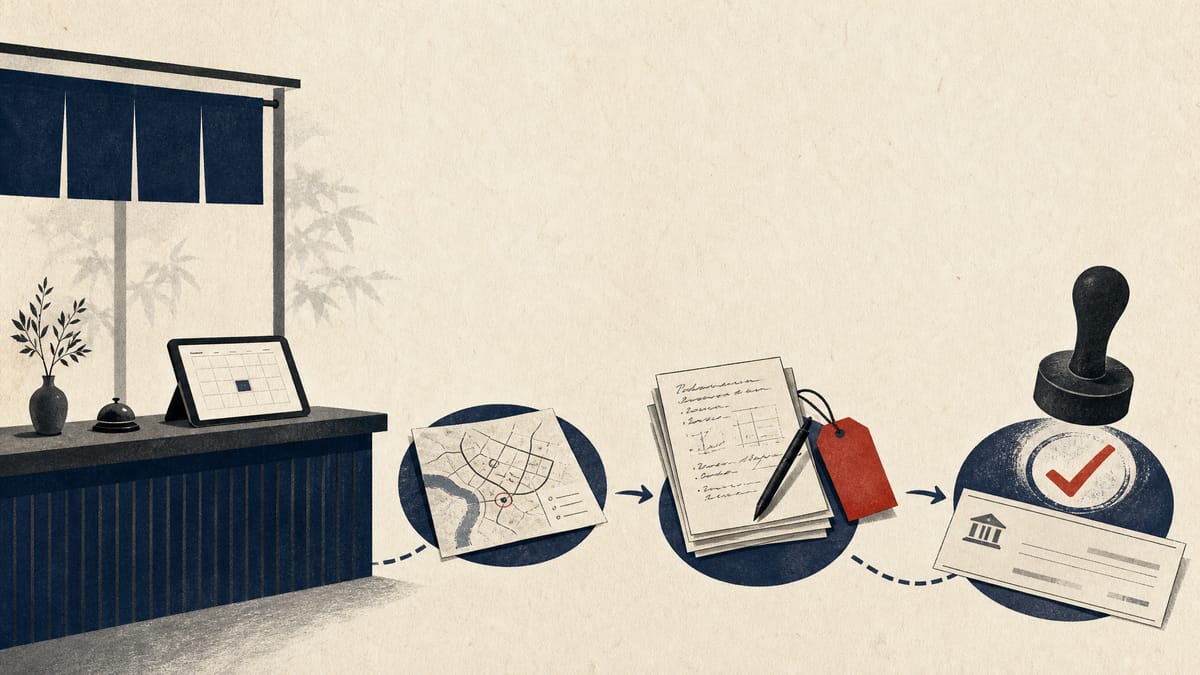
Before applying, a firm needs at least three diagnostic sessions with an expert the foundation selects, covering current position, issues and solutions. Digital projects need two further sessions, for five in all. The expert then writes a support certificate, and anything not listed in it is not eligible. The guidelines ask firms to request an expert at the latest two months before the closing date, and say a decision typically takes about a month. For a 30 November close, a firm starting now is already behind that schedule.
Applicants must be small firms as the guidelines define them, with a registered Tokyo head office or branch and at least two years of trading in the city as of 1 April 2026. They must also have run the relevant business in Tokyo for at least one year. Eligible lines include lodging, restaurants, retail and travel agencies. Projects must mainly serve visitors to Tokyo, and the core concept and specifications must be drafted in-house.
Review has two stages, a paper screening and an interview, and consultants may not attend the interview. Grants are paid only after completion checks, so firms carry the costs until then. The foundation advises filing a week to ten days early, because incomplete applications are rejected at the deadline.